Weekly Perl: A Commercial Real Estate News Recap

Marc Perlof • October 2, 2026
A banner for weekly commercial real estate news recap
A car is parked in front of a sign that says 223

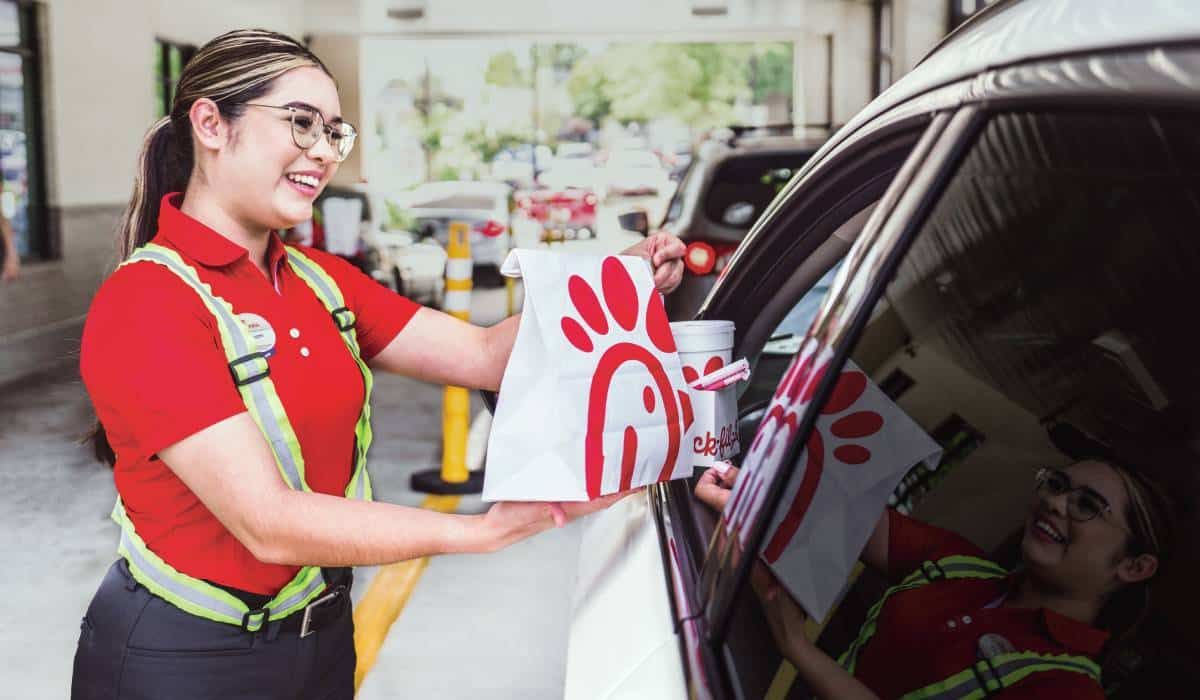
The 2026 QSR® Drive-Thru Report

For years, a 5% yield on the Treasury
looked like a relic from another interest-rate era—where borrowers faced soaring loan rates. Now it's back, capping a six-year surge from pandemic-era lows near 0.5%. The benchmark yield crossed 5% this month for the first time since 2007, but this appears different than the eve of the Great Recession: the Fed is staring down a lose-lose situation combining high inflation and weak economic growth, a catch 22 that economists termed "stagflation" in the 1970s and long feared through the 10-year's climb upward since the pandemic...

The front of an aldi store with a sign in front of it.

U.S. 10-year Treasury yield crosses 5.30% to highest since 2002

On Feb. 27, the day before the United States and Israel attacked Iran, the American economy was on a steady course to lower inflation and attain greater buying power. Gas was cheap and interest rates were coming down.

Today, none of those things are true anymore. When it comes to the U.S. economy, there’s before the Iran war — and since.

Despite assurances from President Donald Trump as early as March that the war would prove a “short-term excursion,” the conflict is about to round its seventh month. On Tuesday, Trump suggested that a deal could arrive after November’s midterm elections...
An elevated outdoor view of a modern shopping mall promenade with manicured greenery, palm trees, and pedestrians.

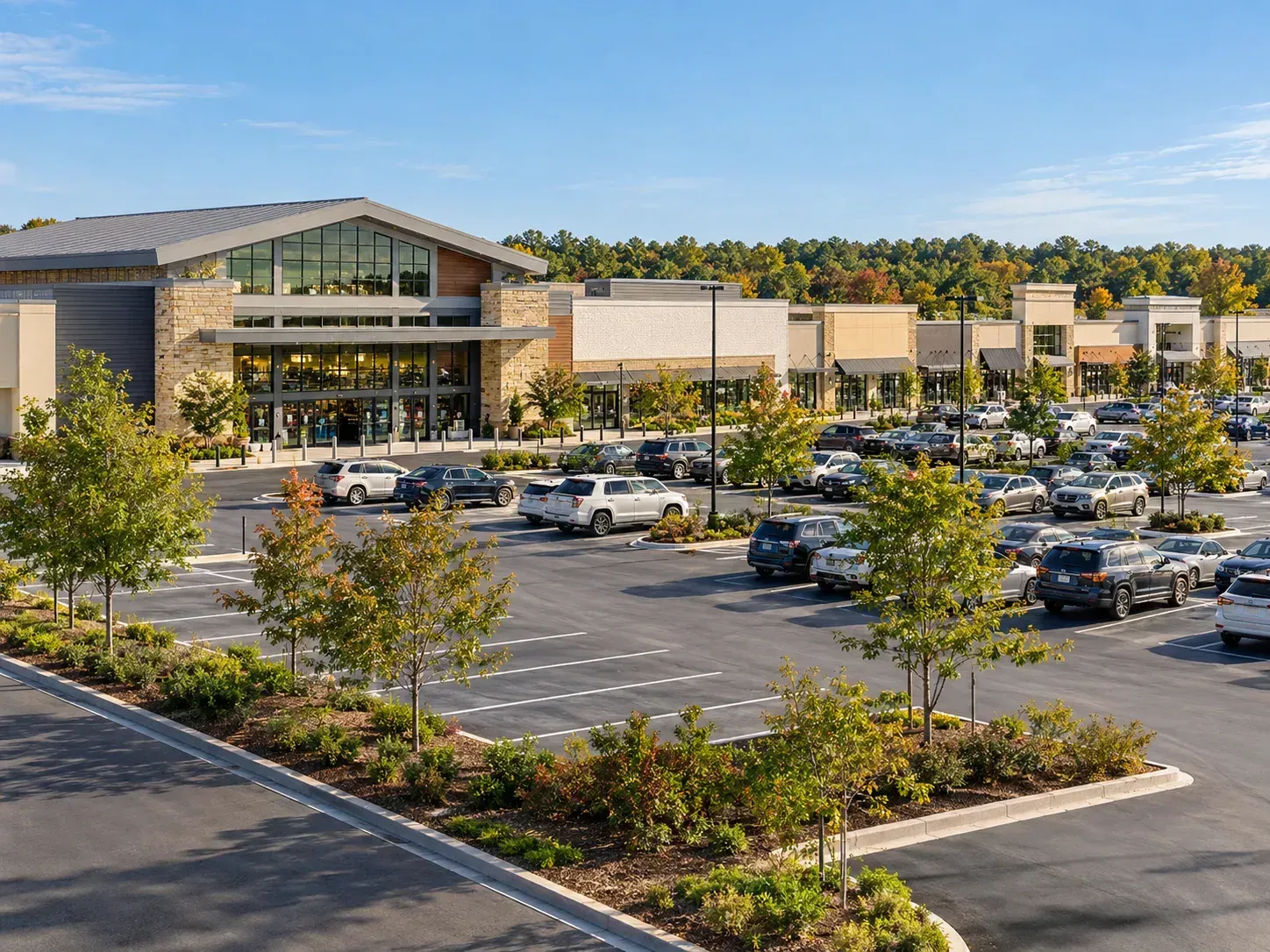
Brixmor, Everview Strike $2.3B Slate Grocery REIT Deal

Business Wire reports in the definitive transaction announcement that Slate Grocery REIT has agreed to be acquired by Brixmor Property Group and Everview Partners. The buyers formed a joint venture for the transaction. They will pay $13 per unit in cash, implying about $2.3B in enterprise value. The deal follows a strategic review and competitive auction process launched earlier this year...


The American flag waves against a bright blue sky between towering glass skyscrapers, viewed from a low angle.

Adobe: U.S. online holiday sales will smash records to reach $275B

A strong Cyber Week is expected to help drive substantial 7% year-over-year growth in U.S. online shopping this holiday season.

Between Nov. 1 - Dec. 31, 2026, Adobe expects U.S. online sales to hit $275.1 billion, growing 6.7% year over year from $257.8 billion during the same period in 2025. Based on Adobe Analytics data, the analysis forecasts Cyber Week (the five-day period between Thanksgiving and Cyber Monday) will drive $47.5 billion online (up 7.4% year over year, similar to Cyber Week 2025 year-over-year growth), representing 17.3% of full holiday season online spend...

A flat, single-story retail building with a

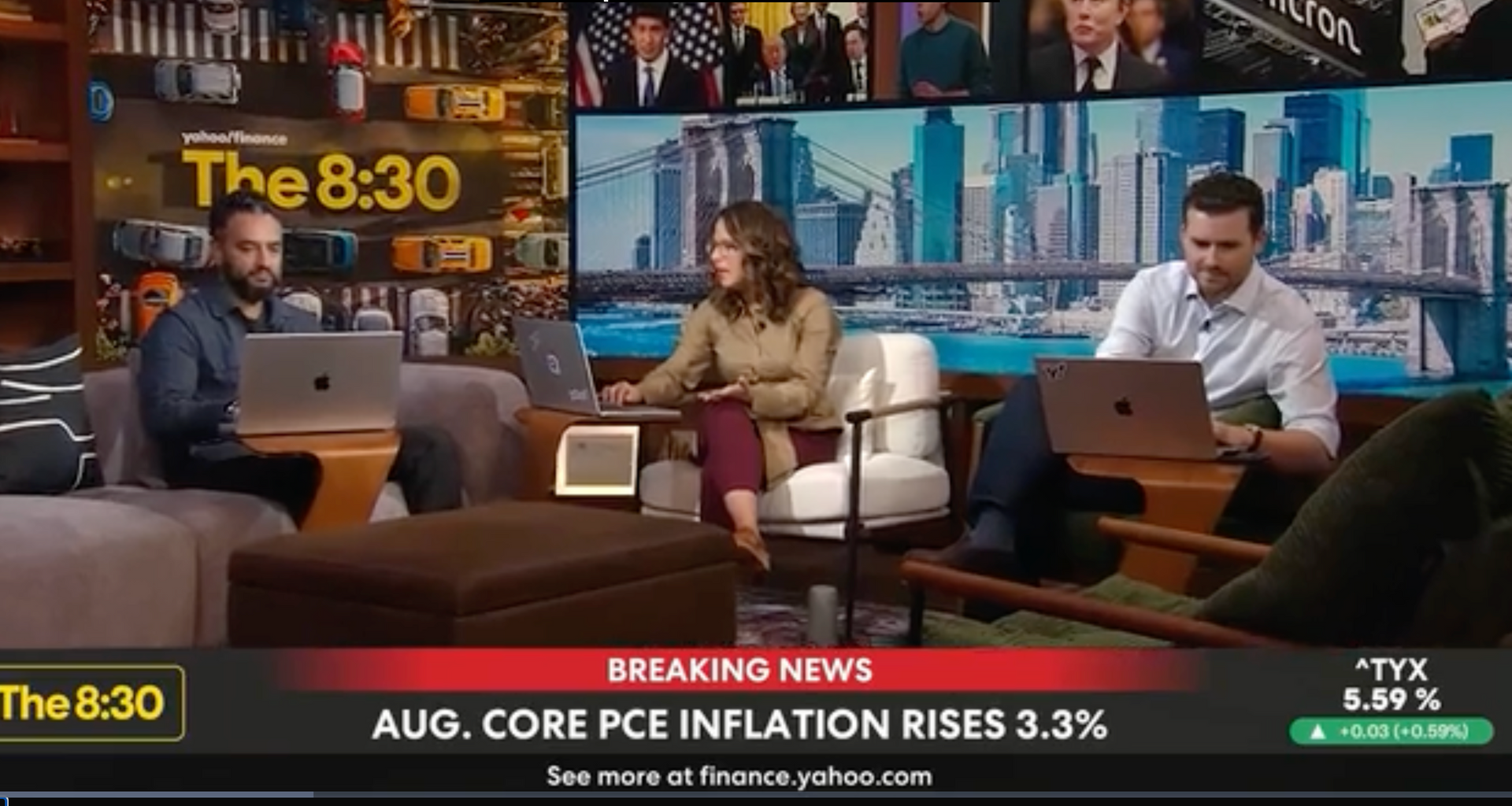
US inflation rises below expectations in August, gives the Fed breathing space

WASHINGTON, Sept 30 (Reuters) - US inflation increased less than expected in August and price pressures were more moderate in the prior month than previously reported, likely reducing the urgency for the Federal Reserve to raise interest rates again in October.

Another rate hike this year, however, remains on the table as the report from the Commerce Department on Wednesday showed consumer spending surging last month. The economy so ‌far appears to be holding up despite headwinds from the US-Israeli war with Iran, which has raised energy prices. With diesel prices at record highs, economists expected inflation to remain high...
The main entrance of the NuHAA building, featuring a modern glass and stone facade, at sunset.

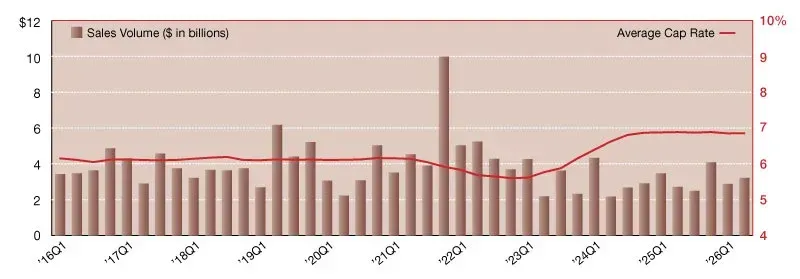
2026 Retail Net Lease Sales Volume and Cap Rates

Single-tenant retail sales slowed sharply in the first quarter, while cap rates edged lower to 6.84 percent.


The single-tenant retail sector posted $2.7 billion in first-quarter sales volume, down 33.9 percent from the prior quarter and 22.4 percent compared to the same period last year. Cap rates recorded slight downward pressure, declining 5 basis points during the quarter to 6.84 percent, and were also down 5 basis points year over year...
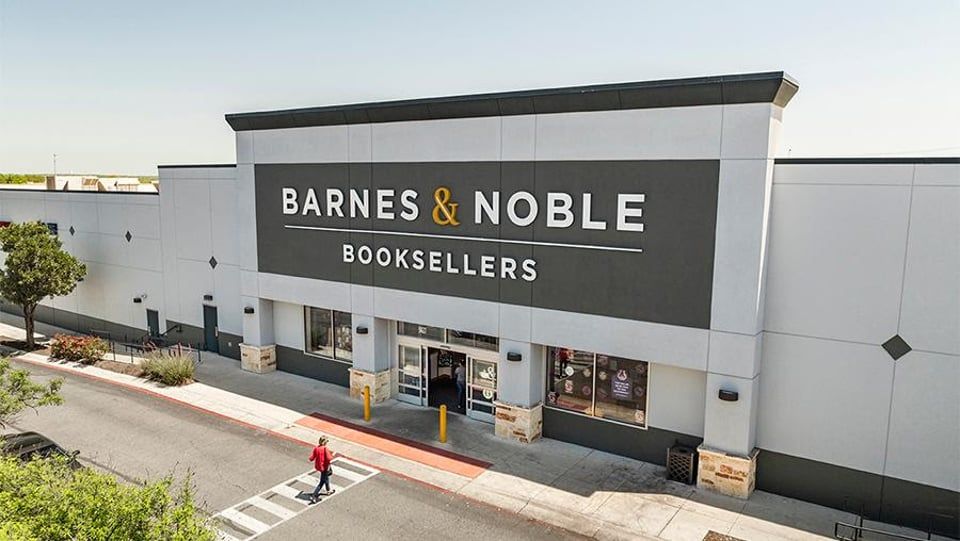

Placer.ai: Barnes & Noble visits surge past 2019 levels

Store traffic to Barnes & Noble has rebounded in a big way compared to pre-pandemic levels.

New data from Placer.ai shows visits to Barnes & Noble now sit 33.6% above 2019 levels, as of the second quarter of this year, while the wider bookstore category has seen visits increase 16.5%. After dropping in 2020, visits reached pre-pandemic levels in the fourth quarter of 2023 and have only continued to increase...
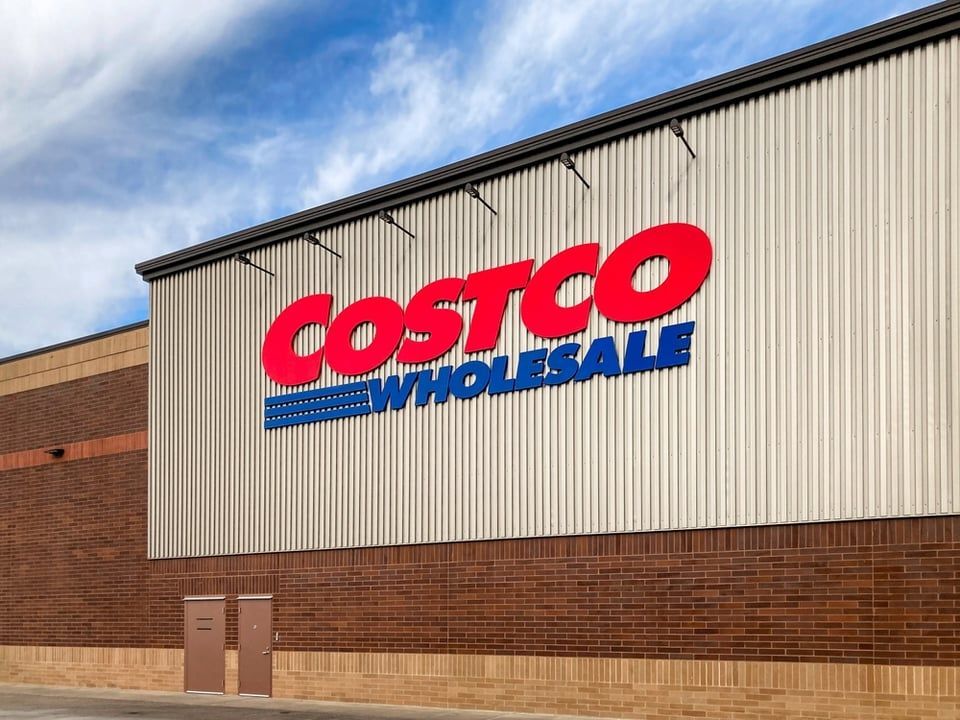

Study: Customers rank Costco, In-N-Out Burger as top retail, restaurant brands

Costco Wholesale Corp. and In-N-Out Burger are the retail and restaurant brands whose physical experiences resonate most strongly with customers.

The membership warehouse club giant and burger chain took the top spots in brand strategy and retail design agency ChangeUp's second annual Experience Report, which ranks the top 100 retail and restaurant brands (separately) across eight “dimensions of experience.” These include memorability, return intent, substitutability, novelty, advocacy, unprompted visit desire, relevance and staleness. (A list of the top 20 retail and top 10 restaurant brands is at end of article...) 
Retail Sales Jump 6% in August, Boosting CRE Property Demand

U.S. retail sales rose 6% year-over-year in August 2026, according to a Marcus & Millichap research brief, extending a run of durable consumer spending despite slower job creation, weak sentiment and elevated inflation.

Year-to-date retail sales growth has averaged 5.2%...

By Marc Perlof • November 16, 2026
By Marc Perlof | @MarcRetailGuy CA #01489206 November 16, 2026 If you own retail real estate, here’s what just changed for you. Disagreement among multiple owners is normal. The real risk is allowing disagreement to delay important investment decisions that affect your property's income, value, financing, or marketability. The goal is not for everyone to agree on everything. The goal is to make timely decisions that support the property's investment objectives. Last week, I explained the hidden cost of waiting. This week, let's look at why ownership groups often struggle to reach a decision in the first place. Why Do Owners Disagree? If you have ever sat around a table with siblings, relatives, or business partners trying to decide what to do with a retail property, you know the discussion is rarely just about the real estate. Each owner may be protecting a different financial need, family responsibility, or long term investment goal. One sibling may depend on the property's income to help pay living expenses. Another may want to sell and diversify into other investments. A business partner may want to renovate the property and increase rents, while another prefers to avoid additional risk or capital contributions. None of these positions are automatically right or wrong. They simply reflect different objectives. The challenge is that one property cannot follow multiple investment strategies at the same time. These issues can also begin while a property still has one owner. A solo owner may make every decision today, but a spouse, children, trust beneficiaries, or other heirs may eventually inherit the property. If the owner has not explained the investment goals, holding strategy, or decision process, the next ownership group may inherit both the property and the uncertainty. Why Doesn't More Discussion Solve the Problem? Many ownership groups believe one more meeting will solve the disagreement. Usually it does not. These meetings can become frustrating because everyone may feel heard, but no one feels understood. The same conversation repeats because each owner is evaluating the property using a different objective. One owner focuses on monthly cash flow. Another focuses on appreciation. Another focuses on taxes. Another focuses on preserving a family asset. No amount of discussion will produce agreement until everyone understands the property's primary investment objective. What Should the Group Agree On First? Before discussing whether to lease, refinance, renovate, redevelop, or sell, the ownership group should first answer several basic questions. What is the property's primary investment objective? How long does the group expect to own it? How much risk is everyone willing to accept? How much additional capital is ownership willing to invest? What financial result is the group trying to achieve? Once those questions are answered, individual decisions become much easier to evaluate because everyone is measuring the options against the same objective instead of personal preferences. What If Owners Still Disagree? Reaching a decision may take time, especially when family history, financial needs, or unequal involvement in the property are part of the discussion. The goal is not to force agreement. It is to create a fair process that gives every owner the same information and a consistent way to evaluate the available options. Sometimes better financial analysis resolves the disagreement. Sometimes reviewing different scenarios changes the discussion. Sometimes the ownership group decides one owner should buy another owner's interest. Every situation is different, but disagreement should lead to analysis, not paralysis. Real Deal Insight The disagreement among the siblings mentioned in the two previous blogs, was not really about whether the property was good or bad. Each owner wanted something different from the investment. One valued current income, another wanted liquidity, and another preferred to continue holding for potential future appreciation. Instead of trying to convince one sibling that another was right, I helped everyone review the same property information and compare the financial consequences of the available options. Once the discussion focused on NOI, lease risk, capital needs, timing, holding costs, and potential sale proceeds, the family could better understand why their priorities differed and what each choice could mean for the property. Strategic Advice for Retail Property Owners When multiple owners disagree, resist the temptation to argue over individual opinions first. Instead, make sure everyone is working from the same financial information and understands what decision needs to be made now. Then define the ownership group's primary investment objective before discussing possible solutions. A solo owner should do the same work before ownership changes. Document the property’s purpose, expected holding period, major risks, and the factors that should guide a future sale, refinance, lease, or capital decision. This gives a spouse, children, heirs, or successor trustees a clearer starting point. Once that objective is clear, compare every option using the same financial measures, including NOI, projected capital costs, financing, taxes, timing, long term value, and risk. Tax decisions should always be reviewed with your CPA before making a final decision. A structured process often turns difficult conversations into informed investment decisions. Owner Self-Assessment If the owners of your property disagree today, is the disagreement based on different investment goals, or because the ownership group has never clearly defined one? Final Takeaway Ownership groups do not need identical opinions, but they do need a common investment objective and a consistent process for evaluating major decisions. Next week, in "Emotion vs. Investment Logic: Making Better Real Estate Decisions," I'll explain how family history, emotional attachment, fear of regret, and personal experiences can quietly influence investment decisions, even when the financial facts point in a different direction. In the final article of this series, I'll also share the decision framework I recommend ownership groups use before making major leasing, refinancing, capital improvement, or sale decisions. If your property has multiple owners with different priorities, I can help your ownership group compare the financial consequences of each option so your decision is based on analysis instead of assumptions. Are your ownership meetings leading to better decisions, or are they simply repeating the same conversation? Based in Los Angeles. Serving Southern California. Active across California. Advising clients nationwide. #RetailRealEstate #CommercialRealEstate #RetailProperty #PropertyOwners #FamilyPartnership #BusinessPartners #FamilyOffice #InvestmentProperty #ShoppingCenters #MarcRetailGuy
By Marc Perlof • November 13, 2026
US inflation rose more than expected last month The cost of everyday necessities continued to climb in October, putting more pressure on Americans already struggling to keep up with grocery bills, housing costs and other household expenses. Consumer prices rose 0.4% from a month earlier, more than the 0.3% increase economists had anticipated, according to data from the Bureau of Labor Statistics released Tuesday. Nearly a third of the overall increase in prices came from shelter costs, which include rent and other housing-related expenses...
By Marc Perlof • November 9, 2026
By Marc Perlof | @MarcRetailGuy CA #01489206 November 9, 2026 If you own retail real estate, here’s what just changed for you. Waiting is not a neutral decision. Every month an ownership group delays an important decision, the property's income, risk, financing, marketability, or value can change. The true cost of waiting usually becomes clear only after the opportunity has passed. Whether the property has one owner or several, delaying an important decision should be evaluated like any other investment choice because the financial consequences continue to change over time. Last week, I discussed why multiple owners often struggle to make timely decisions. This week, let's look at what that delay can actually cost. Why Do Owners Keep Waiting? Most ownership groups do not delay because they are careless. They delay because they believe waiting reduces risk. Some are waiting for interest rates to improve. Others are waiting for property values to increase. Some want to wait until a tenant renews. Others simply cannot reach an agreement. Each reason may sound reasonable on its own. The problem is that the property continues to change while ownership waits. What Changes While You Wait? Retail properties are not static investments. Leases continue moving toward expiration. Buildings continue to age. Deferred maintenance becomes more expensive. Financing markets change. Buyer demand shifts. Elections may also lead to changes in tax policy, regulations, public spending, or development rules that affect ownership decisions. Tenants open, close, expand, and relocate. Every month of delay changes the investment, even if nothing appears different from the street. The important question is not whether waiting changes the property. It almost always does. The important question is whether those changes improve or weaken your financial position. How Can Waiting Reduce Property Value? Many owners assume the property's value will eventually increase enough to offset the cost of waiting. Sometimes that happens. Sometimes it does not. For example, waiting another year may result in: A major lease moving closer to expiration. Higher repair or replacement costs. Less favorable financing. Increased vacancy risk. Lower buyer confidence. Missed redevelopment or repositioning opportunities. A higher property value does not automatically produce a better investment result if income falls, expenses rise, or risk increases along the way. The goal is to evaluate the entire financial picture, not just the future sale price. What Should Ownership Be Measuring? Instead of asking, "Should we wait?" Ask questions such as: What is the financial cost of waiting six months? What could improve during that time? What could become worse? What assumptions are we making? What evidence supports those assumptions? Those questions move the discussion away from opinions and toward measurable investment decisions. Real Deal Insight With the same ownership group mentioned in last week’s blog, one of the main questions was whether waiting would improve the financial result. One sibling believed more time could lead to a higher property value, while another was concerned about what could happen to the property during that waiting period. I helped the family compare the potential benefit of holding against projected income, lease rollover, future capital needs, holding costs, and the risks of changing market conditions. The question was not simply whether the property might be worth more later. It was whether waiting was expected to produce a better overall financial result after considering what could change along the way. Strategic Advice for Retail Property Owners Before deciding to wait, calculate what waiting is expected to cost and what it is expected to produce. Review upcoming lease expirations, projected capital improvements, financing, operating expenses, tenant stability, and market conditions. Then compare those factors against the potential benefits of delaying the decision. Waiting should be an intentional investment strategy, not simply the result of uncertainty or disagreement. Owner Self Assessment If your ownership group decides to wait another year before making a major property decision, can you clearly explain why waiting is expected to produce a better financial outcome? Final Takeaway Waiting is not free. Every delay has potential financial consequences that should be measured before the ownership group decides to postpone an important decision. Next week, in "When Multiple Owners Disagree: How Family and Business Partners Can Move Forward," I'll discuss why ownership groups reach deadlocks and how a structured decision making process can help move important property decisions forward. If your ownership group is deciding whether to hold, lease, refinance, improve, or sell, 1031 exchange, I can help you compare the financial consequences of acting now versus waiting before you commit to either path. Is your ownership group waiting because the numbers support it, or simply because no one is ready to decide? Based in Los Angeles. Serving Southern California. Active across California. Advising clients nationwide. #RetailRealEstate #CommercialRealEstate #RetailProperty #PropertyOwners #FamilyPartnership #BusinessPartners #FamilyOffice #InvestmentProperty #ShoppingCenters #MarcRetailGuy
More Posts