Weekly Perl: A Commercial Real Estate News Recap

Marc Perlof • June 19, 2026
A banner for weekly commercial real estate news recap
A car is parked in front of a sign that says 223

Federal Reserve holds rates steady but signals possible hike before year’s end


US stock markets dropped on Wednesday afternoon after the
Federal Reserve left interest rates unchanged and signaled a possible rate hike before the end of the year.


The Fed was widely expected to keep rates at a range of 3.5% to 3.75%, where they have remained since December. The decision was unanimously supported by the Fed’s voting committee.


“Economic activity is expanding at a solid pace despite elevated uncertainty that owes, in part, to the conflict in the Middle East,” the Fed’s open market committee said in the statement...
The front of an aldi store with a sign in front of it.

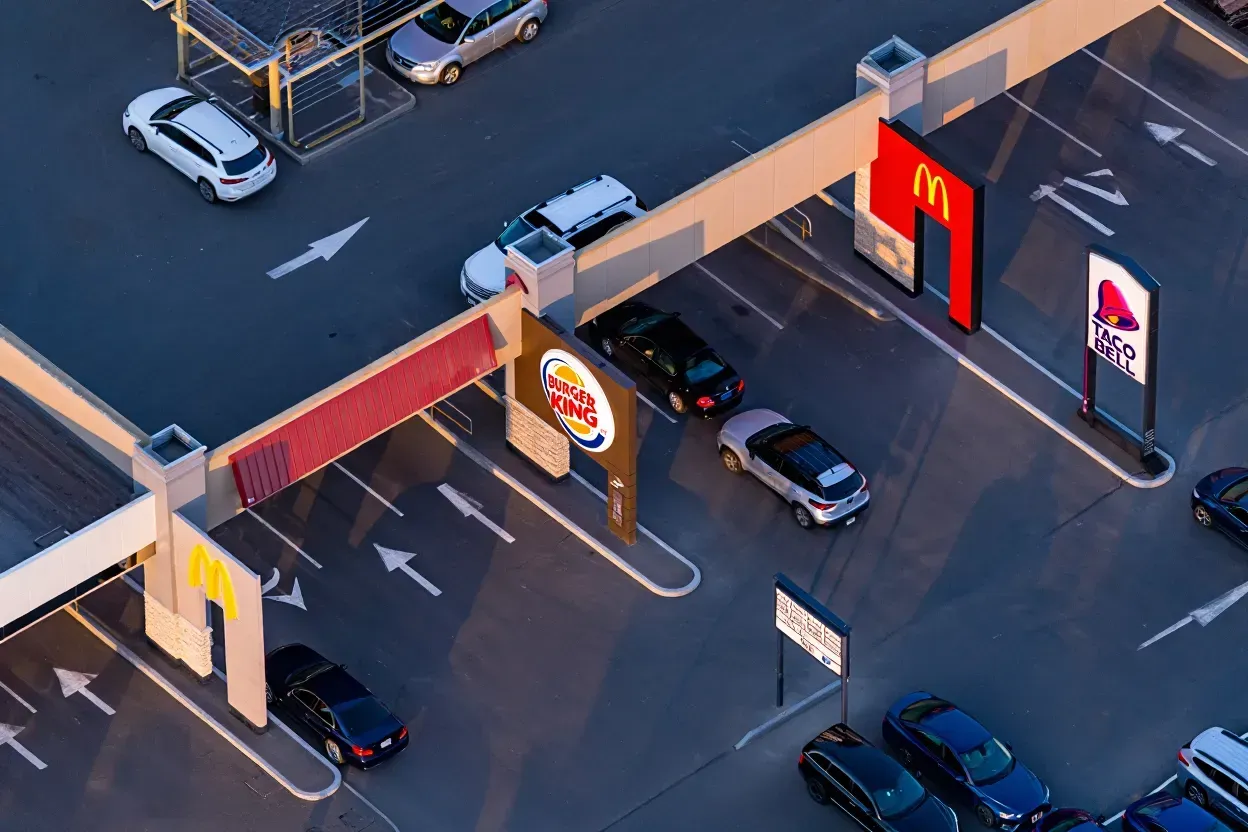
Drive-Thru Traffic Slides, Challenging Net Lease Retail

Globe St reports that convenience-driven restaurant visits, long a safe bet for CRE retail investors, are
showing signs of fatigue. According to the latest Dining Index from Placer.ai, drive-thru and short-duration transactions, which include drive-thru, pickup, and delivery visits under 10 minutes, trailed broader restaurant traffic in May. These findings put a spotlight on net lease and outparcel investments heavily concentrated in quick-turn formats. For years, the drive-thru lane has been regarded as a rent roll backbone and resilient performer, particularly during the pandemic. Now, that assumption is facing its first real test as consumer behavior evolves and overall market headwinds, including inflation and rising fuel costs, begin to reshape habitual dining patterns...
An elevated outdoor view of a modern shopping mall promenade with manicured greenery, palm trees, and pedestrians.

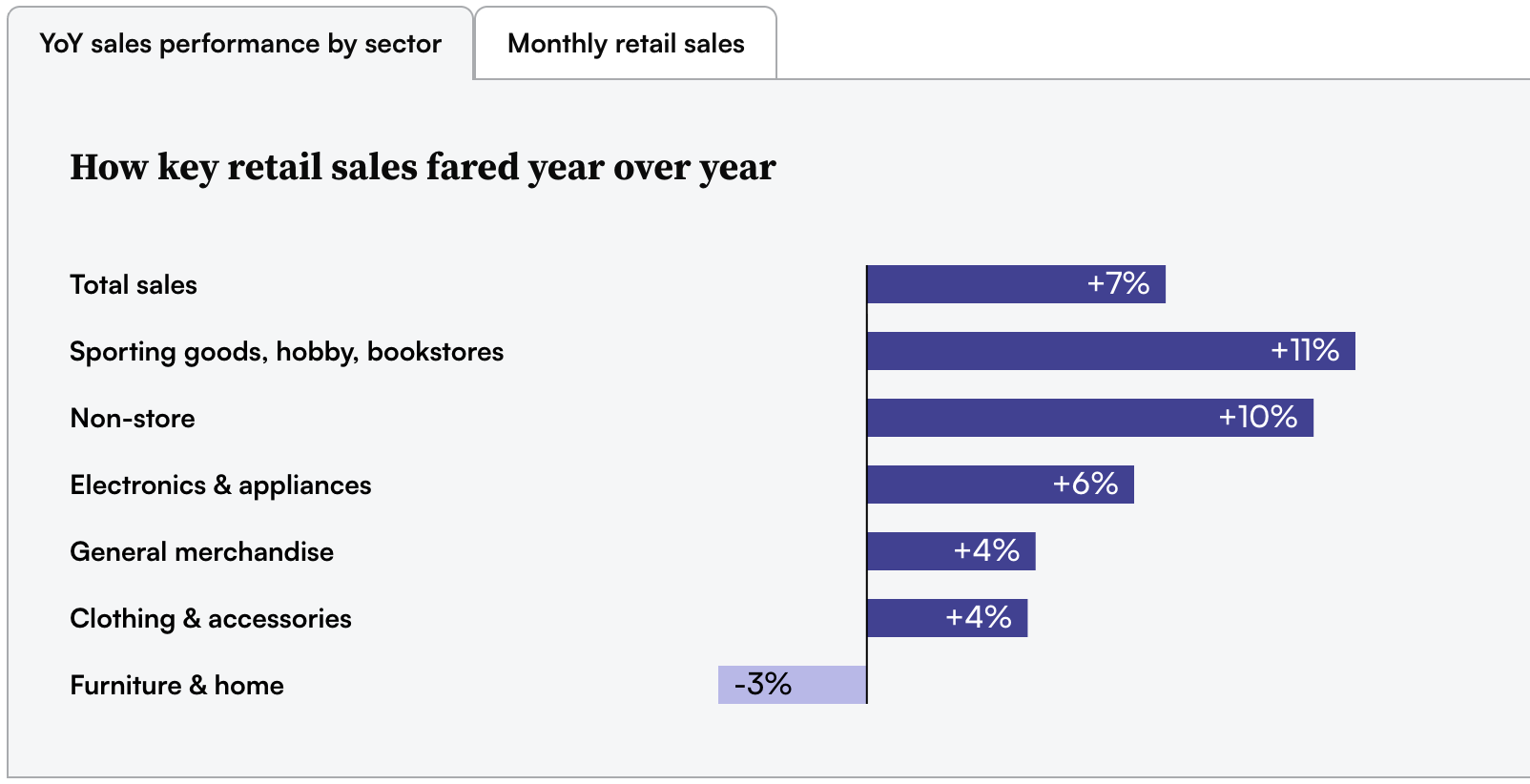
Monthly retail sales from the US Commerce Department

Retail Dive calculates “total retail sales” of core segments, as well as what the Commerce Department calls “Nonstore retailers.” That includes e-commerce, mail order and infomercials, but also revenue from subsectors not generally considered traditional retail, including vending machines, home delivery (including newspapers and home heating oil), door-to-door solicitation, in-home demonstrations and portable stalls like non-food street vendors. Year-over-year comparisons use the most recent revisions to estimates; year-to-date numbers use only advanced numbers...


The American flag waves against a bright blue sky between towering glass skyscrapers, viewed from a low angle.

The most trusted retail brands are…


A new ranking reveals which retail brands consumers trust the most across several categories.

Amazon is the most trusted retail/e-commerce brand as measured by the new Morning Consult's Most Trusted Brands 2026 study. Drawing on Morning Consult's continuous tracking of more than 3,200 brands, the study also finds that the following brands are the most trusted in the following categories:

  • Apparel – Levi’s.
  • Auto service – AutoZone.
  • Convenience store – 7-Eleven.
  • Cosmetic & beauty – Bath & Body Works.
  • Grocery store – Aldi.
  • Home improvement – Home Depot.
  • Mobile & internet – T-Mobile.
  • Oil & gas ....


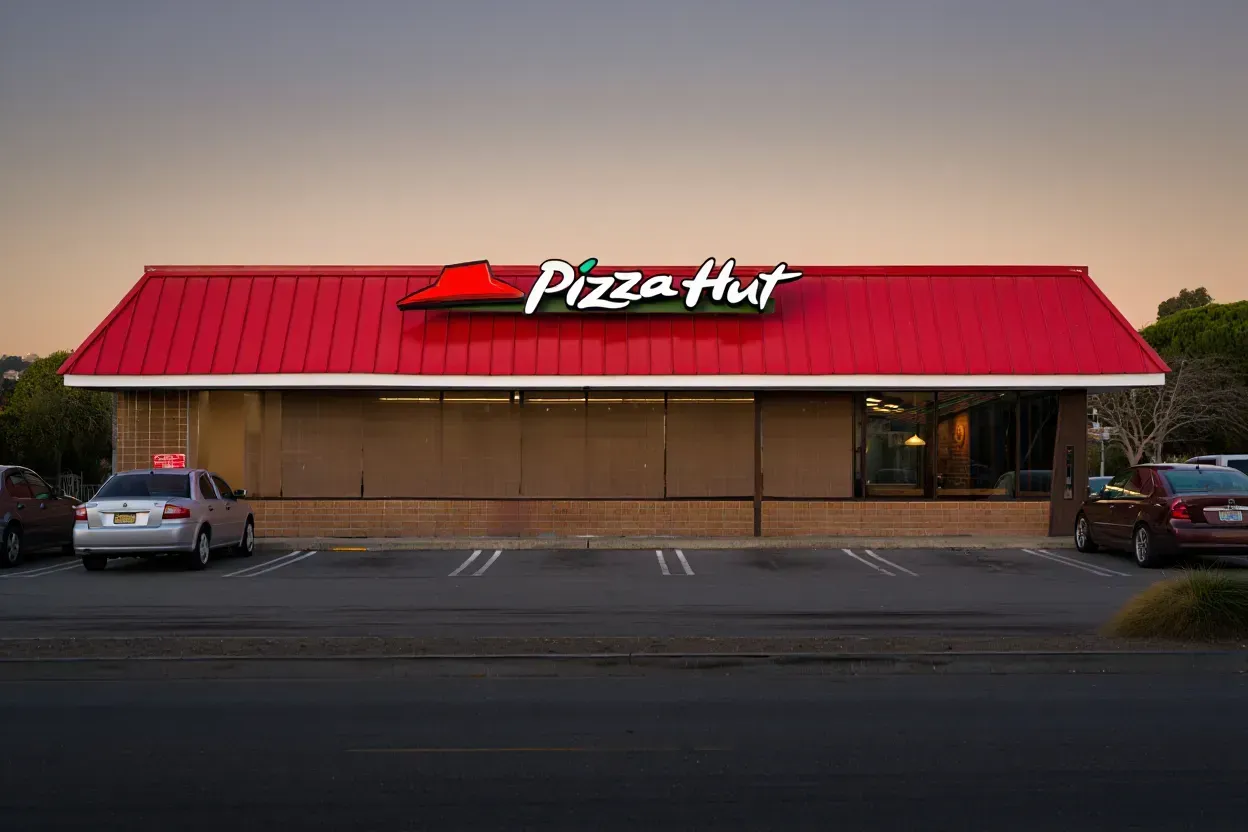
A flat, single-story retail building with a

Yum to Sell Pizza Hut for $2.7B, Refocus on Core Brands


From Market Leader to Weight on Growth

Yum! Brands’ decision to offload Pizza Hut marks the end of an era for one of the most recognized US restaurant chains, Bloomberg reports. In a $2.7B deal announced this week, private equity firm LongRange Capital will acquire global operations (outside China) for $1.5B, while Yum China Holdings will take full control of the Chinese business for $1.2B. The deal is expected to close in Q3 2026.
The main entrance of the NuHAA building, featuring a modern glass and stone facade, at sunset.

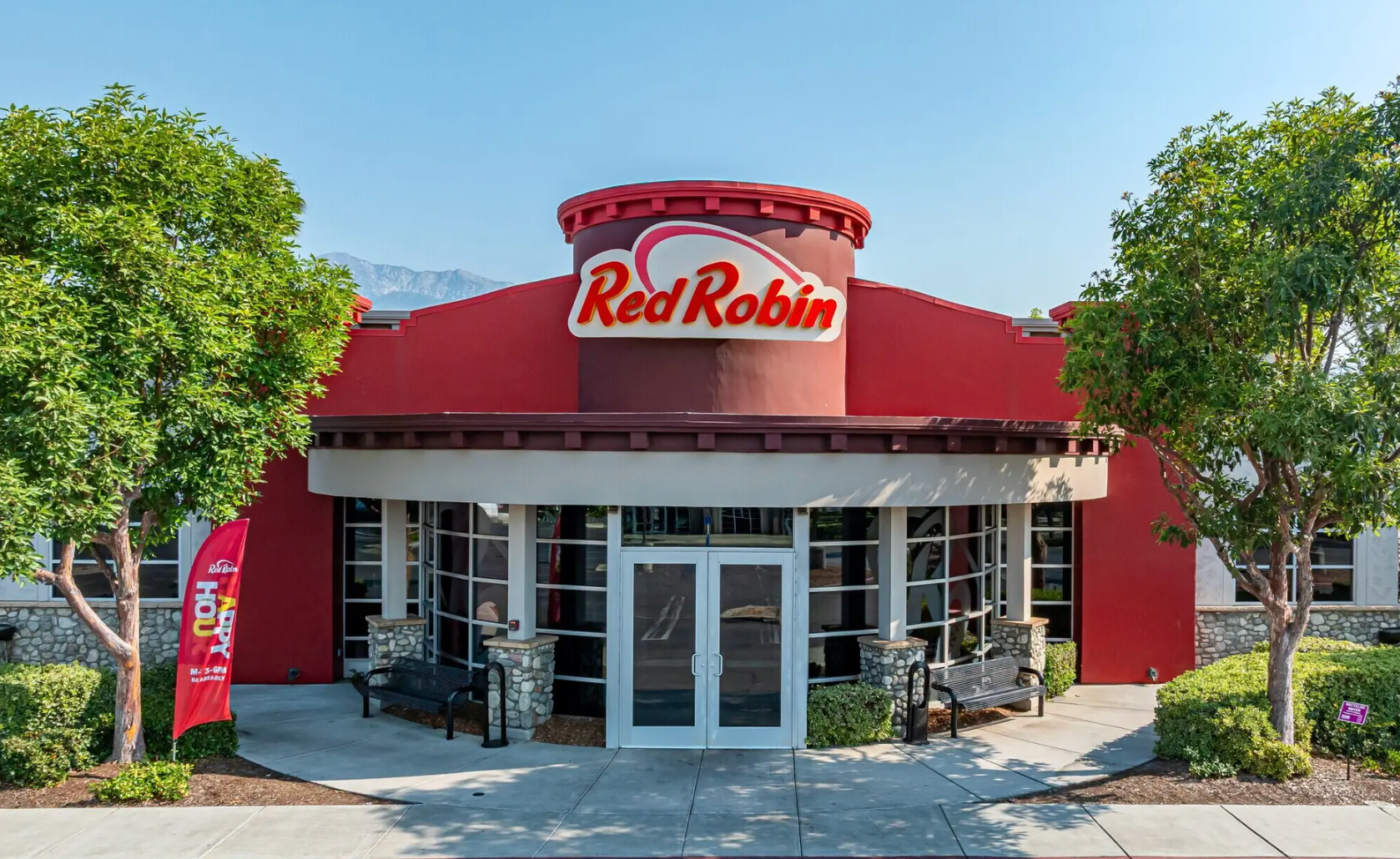
Red Robin to sell 86 restaurants to franchisees

Red Robin Gourmet Burgers is selling 86 of its company-owned restaurants for $72.5 million as part of two separate refranchising agreements with new operators.


The Englewood, Colorado-based casual dining chain has struck deals with Op Burgers and Kuber Oregon and Kuber Washington, with the eateries continuing to operate as Red Robin locations.


The transactions follow last month's announcement of a refranchising deal for 30 locations with Evergreen Dining. The three deals represent a combined value of about $96 million, according to Red Robin....

A green Publix Food & Pharmacy sign mounted on a white and beige building exterior against a blue sky.

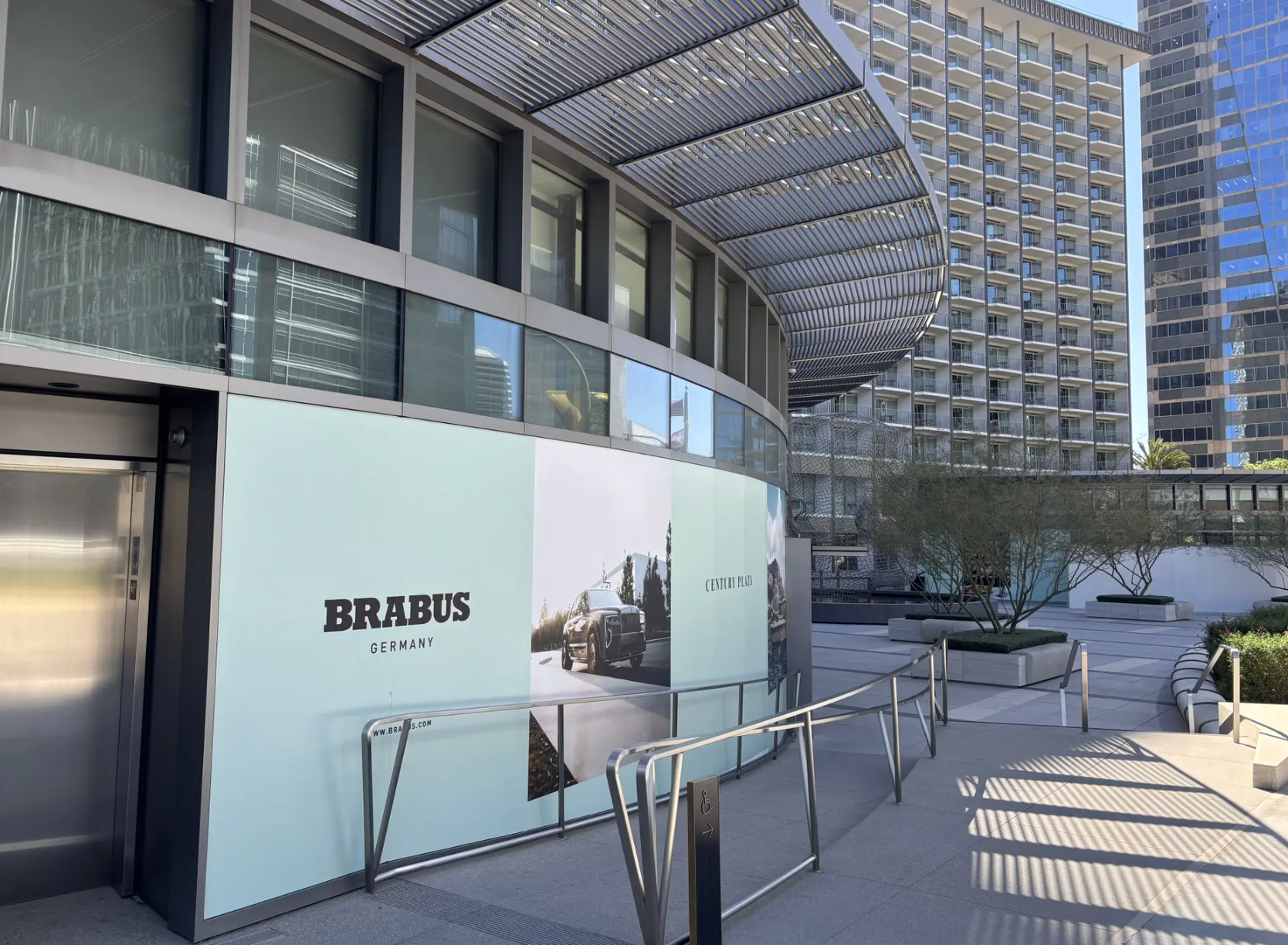
Brabus brings high-end car customization to LA with first US flagship


Luxury car buyers increasingly want to customize their rides with ultra-high-end features they can't get from a dealership or factory — and one company is leaning into that gap with a first-of-its-kind showroom in Los Angeles.

German automotive customization house Brabus has leased a 2,433-square-foot storefront along Avenue of the Stars at Century Plaza for what is expected to be its first Los Angeles flagship — and likely its first permanent showroom in the United States. An opening date has not been announced...


By Marc Perlof August 3, 2026
By Marc Perlof | MarcRetailGuy CA #01489206 August 3, 2026 If you own retail real estate, here’s what just changed for you. When a retail property owner hears that a tenant wants a tenant improvement allowance, the first reaction is often about the amount: “How much are they asking for?” That matters, but it is not the first question an owner should ask. The better question is: Does investing this money make financial sense for this property and this lease? A tenant improvement allowance, commonly called TI, is money the landlord agrees to contribute toward improvements to the tenant’s space. Depending on the deal, that money may help pay for flooring, walls, electrical work, plumbing, HVAC, restrooms, lighting, or other improvements. TI is common in many retail leases. But that does not mean every TI request is a good investment. For the property owner, TI is capital being invested into a lease. The return depends on the rent, lease term, tenant strength, cost of vacancy, and what happens to the space in the future. That is the real underwriting question. The Wrong Question: How Much TI Is Market? Owners often ask, “What is the market TI allowance?” There is nothing wrong with understanding the market. The problem is treating a market number as an automatic answer. Two tenants asking for the same TI allowance can create completely different investments for the landlord. One tenant may sign a long term lease, pay strong rent, provide a solid guaranty, and build improvements that could be useful to a future tenant. Another tenant may want the same TI allowance but offer weaker rent, limited financial strength, a shorter lease term, and highly specialized improvements that could be expensive to remove later. The TI amount may be the same. The risk is not. That is why TI should never be reviewed by itself. TI Is Part of the Entire Lease Investment A landlord should look at the entire economic package. That includes total TI dollars, starting rent, annual rent increases, lease term, free rent, leasing commissions, tenant credit, personal or corporate guaranties, options to extend, rent during option periods, reuse value of the improvements, and the cost and risk of continued vacancy. For example, an owner may agree to a larger TI allowance because the tenant is signing a longer lease with stronger rent increases and a strong guaranty. In another deal, even a smaller TI allowance may be too risky because the tenant is financially weak or the lease does not give the owner enough time to recover the investment. The TI number alone does not tell you whether the deal is good. The full lease economics do. Saying No to TI Can Also Be Expensive Some owners take the position that they will never pay TI. That may feel financially conservative, but it is not always the lowest risk decision. Vacancy has a cost. An empty space may mean lost base rent, lost NNN reimbursements, continued ownership expenses, maintenance, security concerns, and uncertainty about when the next qualified tenant will appear. If an owner refuses a reasonable TI investment and the space remains vacant for another year, the cost of that vacancy may be greater than the TI allowance that could have completed the lease. This does not mean an owner should accept every TI request. But saying no to TI does not always mean the owner avoids the cost. A tenant may agree to take the space without a TI allowance but require lower rent, more free rent, or other concessions instead. The Existing Condition of the Space Matters Not all retail spaces start from the same position. A second-generation space may already have usable flooring, restrooms, electrical systems, HVAC, lighting, plumbing, and a functional layout. A tenant may need only limited changes before opening. A shell space or heavily damaged space may require much more capital. The type of improvements also matters. A specialized user may require a buildout that has little value to the next tenant. A more general retail buildout may have broader reuse value. Owners should ask a simple question: If this tenant leaves, what am I left with? If the improvements are likely to help lease the space again, part of the TI investment may create longer term value. If the improvements are highly specialized, the owner may face another large capital expense when the tenant leaves. That risk should be considered before the lease is signed, not after the tenant moves out. Lease Term Matters A larger TI investment generally requires enough lease term and income to justify the risk. If an owner spends significant money improving a space but the lease term is too short, the owner may not have enough time to recover the investment before facing another lease negotiation. A longer lease does not automatically make a bad TI deal good. The owner still needs to understand how much capital is being invested and how much income the lease is expected to produce. This is where owners can make mistakes by focusing only on the monthly rent. A lease can produce attractive rent and still require a large upfront investment. The question is not only how much rent will be collected. It is how much capital and risk were required to create that income. Tenant Strength Changes the Risk The same TI investment can have very different risk depending on the tenant. An established tenant with strong financials may create one risk profile. A new business with limited operating history may create another. This does not mean a landlord should never invest in a new business. It means the investment should match the risk. If the landlord is putting substantial money into the space, the owner should pay closer attention to the lease term, security deposit, guaranty, rent structure, TI payment process, and what happens if the tenant never opens or defaults early. A landlord investing heavily into a tenant’s space is doing more than filling a vacancy. The landlord is taking investment risk. That risk should be priced and structured accordingly. TI Should Be Compared with the Cost of Doing Nothing One of the most useful exercises for an owner is comparing the TI request against the cost of staying vacant. For example, assume a 2,000 square foot retail space can be leased for $4.00 per square foot per month. That is $8,000 per month, or $96,000 per year, before expenses. Now assume the tenant asks for a $40,000 TI allowance. At first, the $40,000 may feel expensive. But if the owner rejects the deal and the space sits vacant for six more months, the owner may lose $48,000 in base rent alone. That does not include lost NNN reimbursements, maintenance, insurance, taxes, utilities, or the risk that the next tenant also asks for TI. That does not mean the owner should automatically say yes. It means the owner should compare the TI cost against the real cost of waiting. A strong retail location with multiple interested tenants may give the owner more leverage. A difficult vacancy with fewer qualified tenants may require a different strategy. The goal is not to be generous with TI. The goal is to make the decision that produces the best result after rent, time, risk, and capital are all considered. Think Like an Investor, Not Just a Landlord The best TI decisions come from treating the allowance as an investment. Before agreeing to the amount, ask: How much total capital am I investing? What lease income and term am I receiving in return? How strong is the tenant and the guaranty? What happens to my investment if the tenant defaults? What is the realistic cost and risk of staying vacant? These questions move the discussion away from whether a TI allowance is “normal” and toward whether the lease makes financial sense. That is where owners should focus. Final Thought A tenant improvement allowance is not automatically good or bad. It is an investment decision. Paying too much TI for weak lease economics can create unnecessary risk. Refusing reasonable TI and allowing a space to remain vacant can also hurt the property. The right answer depends on the rent, lease term, tenant strength, property condition, vacancy risk, and long-term value of the improvements. Before agreeing to TI, understand what you are investing, what you are receiving in return, and what happens if the lease does not go as planned. If a tenant asked you for a large TI allowance today, would you know how to determine whether it is a good investment or just an expensive way to fill a vacancy? In next week’s blog, “ How TI Allowances Are Paid and Why the Details Matter” , we will look at reimbursements, draw schedules, invoices, lien releases, cost overruns, and why the payment process should be clear before construction begins. Based in Los Angeles. Serving Southern California. Active across California. Advising clients nationwide. #RetailRealEstate #CommercialRealEstate #RetailLeasing #TenantImprovements #TIAllowance #CREInvestment #MarcRetailGuy
By Marc Perlof July 31, 2026
Tractor Supply trims expansion; will close 75 Petsense stores Tractor Supply Co. reported a tough second quarter and reduced its outlook for the year. The nation’s largest rural lifestyle retailer cited “unusually adverse” conditions in May, which drove results below its expectations. On the earnings call, CEO Hal Lawton said fuel prices peaked during the height of its spring selling season, putting “meaningful” pressure on its customers' discretionary spending at the most important time of the quarter...
By Marc Perlof July 27, 2026
By Marc Perlof | MarcRetailGuy CA #01489206 July 27, 2026 If you own retail real estate, here’s what just changed for you. Last week, we looked at how buyers actually evaluate retail properties. They look at income, leases, tenant quality, property condition, financing, future costs, and exit value. That brings us to the most important owner question in this series: should you sell now or wait? This is not a simple yes or no decision. For some retail property owners, selling now makes sense. For others, waiting may protect value. For others, the right answer may be to lease vacant space, clean up property records and title concerns, fix property issues, or refinance. The key is to make the decision based on numbers, risk, and timing. Not emotion. The Wrong Way to Make the Decision Many owners ask, “What price can I get?” That matters, but it is not enough. The better question is: what is the best decision based on my property, family goals, income, risk, tax position, debt, and long term plans? A property may be worth selling even if pricing is not perfect. A property may be worth holding even if the market is active. The right answer depends on the facts. This is also where the owner’s tax and reinvestment plan matters. Selling and cashing out may create liquidity, reduce management, and simplify life, but capital gains taxes, depreciation recapture, and state taxes can reduce the net proceeds. A 1031 exchange may allow an owner to defer taxes and keep more equity working, but it also requires finding a replacement property, meeting exchange deadlines, and adjusting to the new lifestyle. The real question is not just, “What price can I get?” It is, “What do I keep after taxes, what do I do with the money, and am I better off after the sale?” When Selling Now May Make Sense Selling now may make sense if the property has strong current income and a buyer pool that still wants the asset. This is especially true if the leases are long term, tenants are strong, income is clean, repairs are limited, the location is desirable, and the owner wants to simplify, exchange, reduce management, or avoid future rollover risk. Selling now can also make sense when the property is not fully stabilized, but the lease structure creates flexibility for the right buyer. Short term leases may scare off passive investors, but they can attract value add buyers, syndicators, developers, or owner users who want the ability to raise rents, retenant space, reposition the property, or plan for redevelopment. Timing matters. A property with 10+ years of lease term may price much better for a passive investor than the same property with 3 years left. But a property with short term leases, below market rents, or future redevelopment potential may appeal to a different buyer pool. The key is knowing whether the short term lease structure is a weakness, an opportunity, or both. When Waiting May Make Sense Waiting may make sense if the property is not ready. If an owner has below market rents and can increase them, waiting may create value. If a vacancy can be leased, waiting may improve Net Operating Income (NOI). If records are disorganized, waiting may allow the owner to clean up the file before going to market. If a repair issue is scaring buyers, addressing it first may protect pricing. Waiting may also make sense if selling creates a tax problem and the owner does not have a clear 1031 exchange plan. But waiting is not automatically safe. Waiting has risk. The Risk of Waiting Owners often think waiting is neutral. It is not. Waiting can help, but it can also hurt. Risks include tenant rollover, vacancy, rent collection issues, higher insurance costs, higher repair costs, capital improvements, interest rate changes, buyer demand changes, lending pressure, new competing listings, and local market changes. Some owners also wait because they believe the market will feel clearer after an election, after interest rates move, or after major global uncertainty settles. That may be reasonable, but it is still a bet. Elections, wars, tax law changes, and economic shocks can affect buyer confidence, capital flow, lending, and pricing. The market may improve, stay flat, or get worse. Waiting should be based on a clear reason, not just the hope that uncertainty disappears. A property can look stronger today than it will in 3 to 12 months. That is why waiting should be a strategy, not a default reaction. The Financial Question Sellers Should Ask Before deciding to sell or wait, owners should ask: what needs to happen for waiting to create more value? For example, assume a retail property has $250,000 of NOI and could sell today at a 6.50% cap rate. That value is about $3,846,154. If the owner waits and increases NOI to $275,000, but the market later prices the property at a 6.75% cap rate, the value is about $4,074,074 . That is an increase of about $227,920 . That may sound good, but the owner still needs to consider how much money was spent to create the higher NOI, how long it took, whether there was vacancy risk, whether tenant improvements and/or free rent were required, and whether market risk increased during the wait. Sometimes waiting creates value. Sometimes it creates more work for a small net gain. Selling Now Versus Leasing First Selling now with vacancy may attract value add buyers. The price may be lower, but the owner avoids leasing time, tenant improvement costs, commissions, carrying costs, contractor issues, delays, and the risk of choosing the wrong tenant. That has its own value. Sometimes accepting a lower price and transferring the value add work to the buyer is smarter than spending months dealing with leasing, construction, negotiations, permits, and uncertainty. For those owners, peace of mind can have real internal value, even if it does not show up as a line item on the closing statement. Leasing first may increase NOI and attract more buyers, but the owner needs to invest time and money before selling. The question is not just whether leasing increases value. The question is whether leasing increases value enough after costs, time, and risk. Selling Now Versus Fixing Issues First Some repairs should be handled before going to market. Others should be disclosed and priced into the deal. It depends on the issue. If a smaller repair removes a major buyer objection, it may be worth doing. If a larger repair is expensive and uncertain, the owner may choose to sell as is to a buyer who understands the work. Common items to review include roof, HVAC, parking lot, plumbing, electrical, ADA, environmental, structural issues, and deferred maintenance. The goal is not to make the property perfect. The goal is to avoid surprises that create price cuts during escrow. Selling Now Versus Refinancing Some owners do not really want to sell. They want cash or liquidity. In that case, refinancing may be an option. But refinancing only works if the numbers support it. The owner needs to review current NOI, loan amount, interest rate, debt service coverage, loan costs, prepayment penalty, future cash flow, property risk, and their current lifestyle. If refinancing creates tight cash flow, selling may still be the better decision. If refinancing gives the owner liquidity and allows them to keep a strong asset, holding may make sense. The Decision Should Be Based on Net Outcome Owners should not only ask, “Can I get a higher price later?” They should ask: will I be better off later after time, cost, taxes, risk, and effort? Sometimes the highest price is not the best outcome. A clean sale today may be better than chasing a slightly higher price with more risk. Other times, waiting 3 to 12 months may be smart if there is a clear path to improve income or reduce buyer concerns. The decision has to be specific to the property. Final Thought The question is not always, “Is now the perfect time to sell?” There is rarely a perfect time. The better question is, “What decision puts you in the strongest position moving forward?” For some owners, that means selling now. For others, it means waiting. For others, it means leasing, fixing, refinancing, cashing out, or completing a 1031 exchange. The real risk is not selling or waiting. The real risk is making either decision without understanding how buyers, lenders, taxes, lease rollover, future repairs, and market timing affect the outcome. This concludes the Execution and Decision-Making series. The main takeaway is simple: understanding pricing is important, but execution, timing, and decision making determine the result. If you are trying to decide whether to sell, wait, refinance, cash out, complete a 1031 exchange, or lease first, I can help you review the numbers and risks before you make a move. Based in Los Angeles. Serving Southern California. Active across California. Advising clients nationwide. #RetailRealEstate #CommercialRealEstate #RetailInvestment #PropertyOwners #RetailPricing #PricingStrategy #HoldorSell #CREStrategy #MarcRetailGuy
More Posts