Weekly Retail Real Estate News

Marc Perlof • February 2, 2024
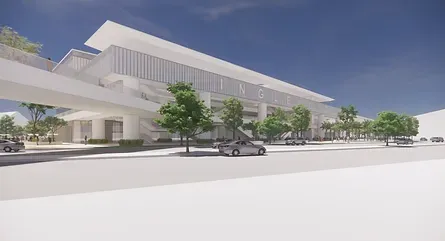
A computer generated image of a building with cars driving underneath it.

Inglewood transit connector project delayed until 2030


Another automated people mover project in Los Angeles has run into its fair share of roadblocks. The $2 billion Inglewood Transit Connector Project, which would connect the Metro K Line to Inglewood and provide easier access to venues like SoFi Stadium, Kia Forum and Intuit Dome, has also ran into several delays in its preliminary stages.

Read Full Article...

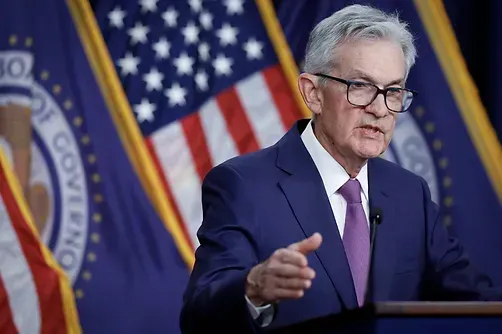
A man in a suit and tie is giving a speech in front of an american flag.

The Fed Declares Interest Rates Have Reached Their Peak


Federal Reserve Chairman Jerome Powell declared the end of the current monetary tightening cycle on Wednesday as policymakers decided to hold interest rates steady. "The policy rate is at its peak in this tightening cycle," Powell told reporters after the Fed's policy-making committee's first meeting of the year. 

Read Full Article...

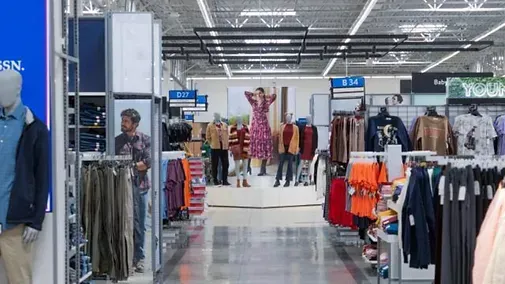
A woman is standing in the middle of a clothing store.

Walmart to add more than 150 larger-format stores during next five years


Walmart is moving back into brick-and-mortar expansion.The retail giant said it plans to build or convert more than 150 larger-format stores during the next five years while also continuing its program to remodel existing locations. During the next 12 months, Walmart expects to remodel 650 stores across 47 states and Puerto Rico. 
 

Read Full Article...

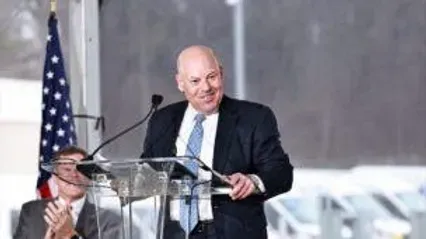
A man in a suit and tie is standing at a podium giving a speech.

USPS installs EV charging stations, plans 66,000 EVs by 2028


The U.S. Postal Service (USPS) is moving forward with plans to deploy one of the nation's largest electric vehicle (EV) fleets. As part of a 106,000-vehicle acquisition plan for deliveries it launched in 2022 (which is included in a larger $40 billion investment strategy to upgrade and improve processing, transportation, and delivery networks), USPS has implemented  its first set of EV charging stations at its South Atlanta sorting and delivery center (S&DC).

 

Read Full Article...

A variety of smoothies and desserts are sitting on a colorful table.

South Block and Savory Fund Ink Deal to Bring Açai to the Masses


He first learned about the company when a friend and mentor shared an article with him. The private equity firm built its reputation on investing in emerging quick-service chains, even through COVID. As the founder and leader of South Block, a rising fast casual in the DMV area known for its selection of made-to-order smoothies, açai bowls, toasts, and cold-pressed juices, Mostafavi seemed to fit what Savory typically looks for.


Read Full Article...

A woman is eating a bowl of food with a spoon.

QDOBA Will No Longer be an ‘Afterthought’ on the National Stage


At 750 restaurants in 45 states, Canada, and Puerto Rico, QDOBA is the No. 2 player in the Mexican fast-casual space. What’s more impressive, according to CEO John Cywinski, is that the brand reached this height while dealing with lackluster ownership. 

Read Full Article...

A collage of three pictures of a target store.

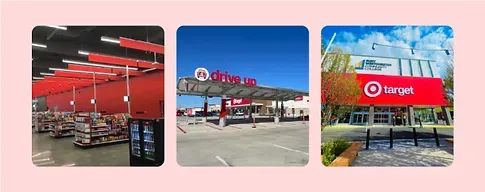
Target’s ‘winning retail format’ includes large — and small — store expansions


Target Corp. is pulling back the curtain on its 2023 new store openings and remodels for a glimpse of what’s to come as the retailer set an ambitious pace moving into 2024.“From more stores to more deliveries, we’ve set an ambitious pace moving into 2024," the company said in a blog post, in which it offered up details about its “winning retail formula.”
 

Read Full Article...

An aerial view of a jack in the box restaurant.

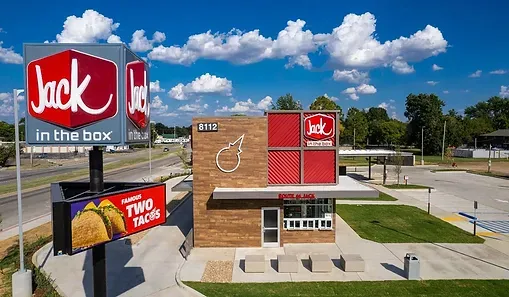
Jack in the Box Believes it’s a Challenger, but that’s Changing Soon


With Jack in the Box being the fifth-biggest quick-service burger chain in the U.S. and Del Taco positioned as the second-largest Mexican brand in the space, CEO Darin Harris honestly can’t think of any other chains that have that type of scale and proof of concept, yet still maintain “such tremendous whitespace across the United States for growth.” 

Read Full Article...

A white truck is parked in front of the dartmouth mall.

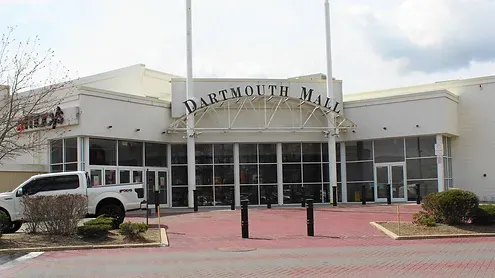
Retailers are finding more of what they want off mall


After decades together, some retailers are redefining their relationships with malls. Stores like Macy's, Dillard's, Belk and J.C Penny have long been seen as pillars of stability for America's indoor shopping malls. But in recent years, those retailers have increasingly been looking and moving-off-malll. The pandemic accelerated

the trend. 

Read Full Article...

The front of an aldi store with a blue sky in the background.

Aldi acquisition of Southeastern Grocers moves forward with divestiture of Fresco y Más


Southeastern Grocers Inc. has completed its divestiture of Fresco y Más to Fresco Retail Group, LLC, the company announced Thursday. Southeastern continues ownership and operation of Harveys Supermarket and Winn-Dixie grocery stores. 

Read Full Article...

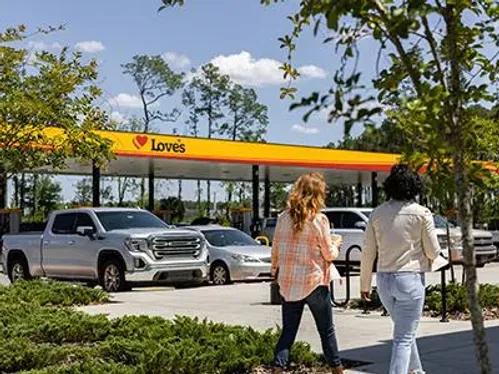
Two women are walking in front of a gas station.

Love’s Travel Stops details 2024 store opening, remodeling plans


Love’s Travel Stops is celebrating its 60th anniversary by continuing to expand its footprint and service offerings. The travel stop and convenience-store retailer plans to add 20 to 25 new locations and update 35 to 40 aging stores and in 2024. It also will completely rebuild four stores in 2024. 


Read Full Article...

By Marc Perlof March 20, 2026
Santa Monica Airport Conversion Project Unveiled By City SANTA MONICA, CA — Following a nearly two-year public engagement process, the city has released a draft Framework Diagram for the Santa Monica Airport Conversion Project. "The Framework Diagram brings many ideas together to find common ground about what should go where and what types of uses belong in different areas of the site," the City of Santa Monica explained in a March 11 news release....
By Marc Perlof March 16, 2026
By Marc Perlof | MarcRetailGuy CA #01489206 March 16, 2026 If you own retail real estate, here’s what just changed for you. Retail property owners are asking a simple question today. Is the market about to change? Several economic signals moved quickly over the past two weeks. Oil prices surged as conflict disrupted major energy supply routes. The U.S. job market also weakened unexpectedly during the same period. Financial markets have become more volatile as investors reassess economic risks. When oil prices rise and hiring slows, real estate investors begin adjusting risk assumptions. These adjustments often appear first in lender loan standards and buyer pricing. For retail property owners, these shifts can influence demand and property values. Owners of strip centers, shopping centers, store front retail, and NNN retail properties (multi-tenant and single tenant) should watch closely. Understanding these signals early can help protect property value and guide decisions. Market Analysis and Trends Energy markets reacted first. Brent crude oil recently surged above $100 per barrel. The increase followed conflict disrupting shipping routes and global oil supply.¹ Much of the concern involves the Strait of Hormuz shipping corridor. Roughly 20 percent of global oil supply normally passes through this route. Even small disruptions there can quickly affect shipping costs and supply chains.¹ Consumers often feel the impact through gasoline prices. Since late February, U.S. gasoline prices increased more than 15 percent. Prices reached roughly $3.47 per gallon in early March.¹ In Southern California, fuel prices are usually among the highest nationally. Drivers in the region are already paying significantly more at the pump. Higher fuel costs can quickly strain household budgets. This often reduces spending at restaurants and other nonessential retail businesses. The labor market also signaled caution. The U.S. economy lost about 92,000 jobs in February 2026. Unemployment rose to approximately 4.4 percent during the same period.² Slower hiring typically leads to reduced consumer spending several months later. When advising retail property owners, I track three important property risks. These include tenant margin pressure, lender loan standard changes, and buyer cap rate expectations. Key signals retail property owners should monitor include: Brent crude oil moving above $100 per barrel during Middle East supply disruptions.¹ U.S. gasoline prices rising more than 15% since late February.¹ The U.S. economy losing roughly 92,000 jobs in February while unemployment increased.² Essential Retail vs Nonessential Retail Retail categories respond differently during periods of economic stress. Essential retail includes grocery anchored centers, pharmacies, and daily service tenants. These businesses usually remain stable during economic disruptions. Consumers still need basic goods even when household budgets tighten.³ Nonessential retail categories are more sensitive to economic pressure. Restaurants, entertainment venues, and similar tenants often experience softer sales first. This usually happens when consumers reduce spending. For property owners, tenant mix becomes especially important during economic uncertainty. Centers anchored by essential tenants often remain more stable. Properties dominated by nonessential retail may experience greater sales volatility. Strategic Advice for Retail Property Owners Economic uncertainty is a good time to review several property fundamentals. 1. Review tenant stability Evaluate tenant sales performance, credit strength, and upcoming lease expirations. 2. Monitor capital markets Lenders and investors may begin tightening loan standards as risks increase. 3. Evaluate sale timing carefully Markets sometimes offer short windows before buyer pricing adjusts to new conditions. Even a 1/4% to 1/2% increase in cap rates can affect property values. For example, a $6 million retail property valued at a 6% cap rate generates about $360,000 in annual income. If buyer expectations move to a 6.5% cap rate, value could fall near $5.5 million. If you own retail property and are wondering how these economic signals could affect buyer pricing or cap rates for your asset, this is exactly the type of analysis I help owners evaluate before making a sale or hold decision. If investor cap rates in your market moved just 1/2% higher, how much would the value of your retail property change? Investor Behavior During Uncertain Markets Market volatility often changes how investors evaluate retail properties. Research shows that investors prefer assets with stable income during uncertain periods. Properties with strong tenants and longer lease terms usually attract the most buyer interest.³ Assets with predictable cash flow often perform better during market uncertainty. Properties with weaker tenants or short lease terms may face greater scrutiny. For retail property owners, tenant quality and lease structure matter even more in volatile markets. What This Means for Retail Property Owners Retail property values depend on more than location. Energy prices, employment trends, and capital markets also influence buyer demand. If oil prices stay elevated and hiring slows, investors may become more selective. Properties with weaker tenants or short lease terms may see pricing pressure first. Well located shopping centers with strong tenants and long leases usually remain more resilient. Owners who monitor these signals early often have more strategic options. If economic uncertainty continues over the next twelve months, how strong are the tenants in your retail property? #RetailRealEstate #CommercialRealEstate #NNNProperties #ShoppingCenters #RetailPropertyOwners #CREInvesting #RealEstateInvestors #CREMarketInsights #RealEstateTrends #CaliforniaRealEstate #LosAngelesRealEstate #CapRates
By Marc Perlof March 13, 2026
US consumer inflation steady before Iran conflict drives up oil prices WASHINGTON, March 11 (Reuters) - U.S. consumer prices rose moderately in February as rents maintained a steady pace of increases, though households paid more for gasoline and at the supermarket and higher costs are in store because of the escalating war in the Middle East .  The Consumer Price Index report from the Labor Department on Wednesday, which also showed underlying inflation muted ​last month, covered the period before the U.S. and Israel launched strikes against Iran. The attacks at the end of February were met with retaliation by Tehran and have boosted oil prices...
More Posts