Weekly Perl: A Commercial Real Estate News Recap

Marc Perlof • March 8, 2024
A banner for weekly commercial real estate news recap
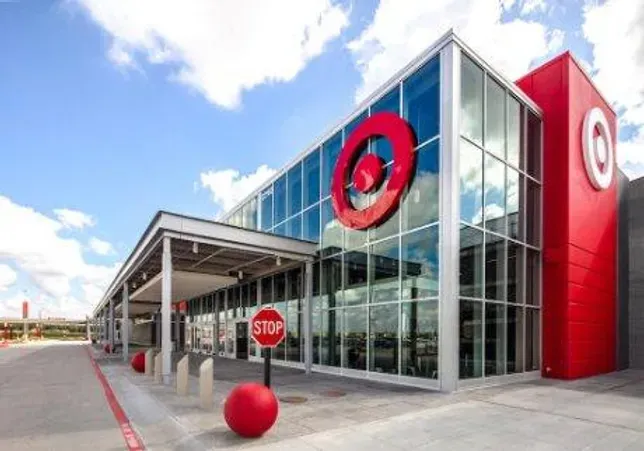
A target store with a stop sign in front of it

Target to open 300 stores over next decade


Target Corp. reported fourth-quarter sales and earnings above Street expectations amid lower markdowns and improved in-stocks, but warned of sluggish sales for the current year. Separately, the retailer said it will launch a paid membership program, called Target Circle 360, in April. The program, announced at Target's investor day,  will include unlimited free same-day delivery for orders over $35 in as little as one hour and two free-day shipping, along with other perks. 
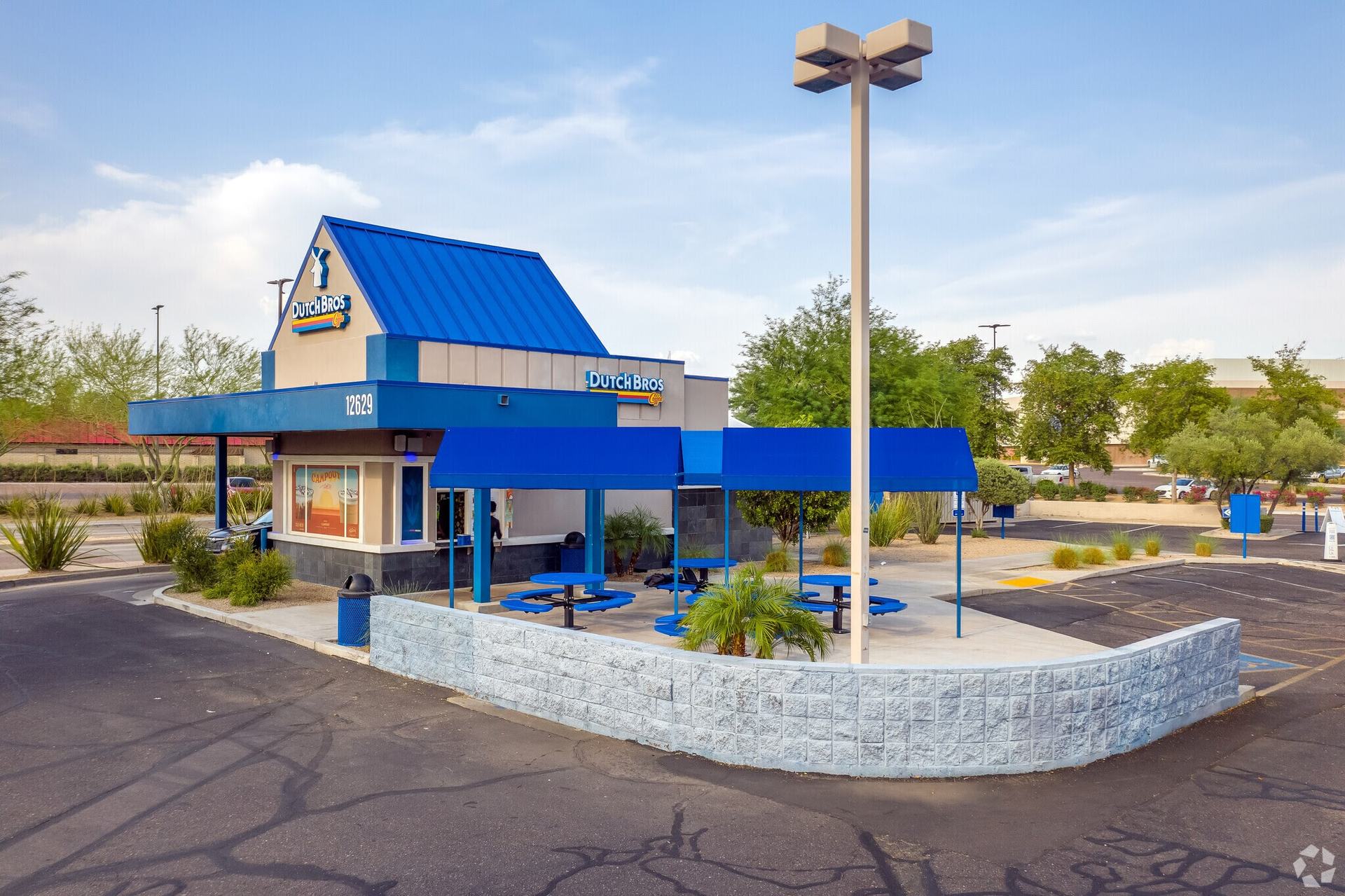

A fast food restaurant with a blue roof and blue awnings

Regional Dutch Bros Coffee Chain Brews Up National Expansion


When Dutch Bros debuted its first coffee shop last month in California's Orange County, throngs of people were waiting. Some had arrived the night before, and others traveled from as far as Arizona for the grand opening that morning. The line to get served "stretched for more than a mile," Christine Barone, the chain's CEO, said during the company's call to discuss its fourth-quarter earnings.
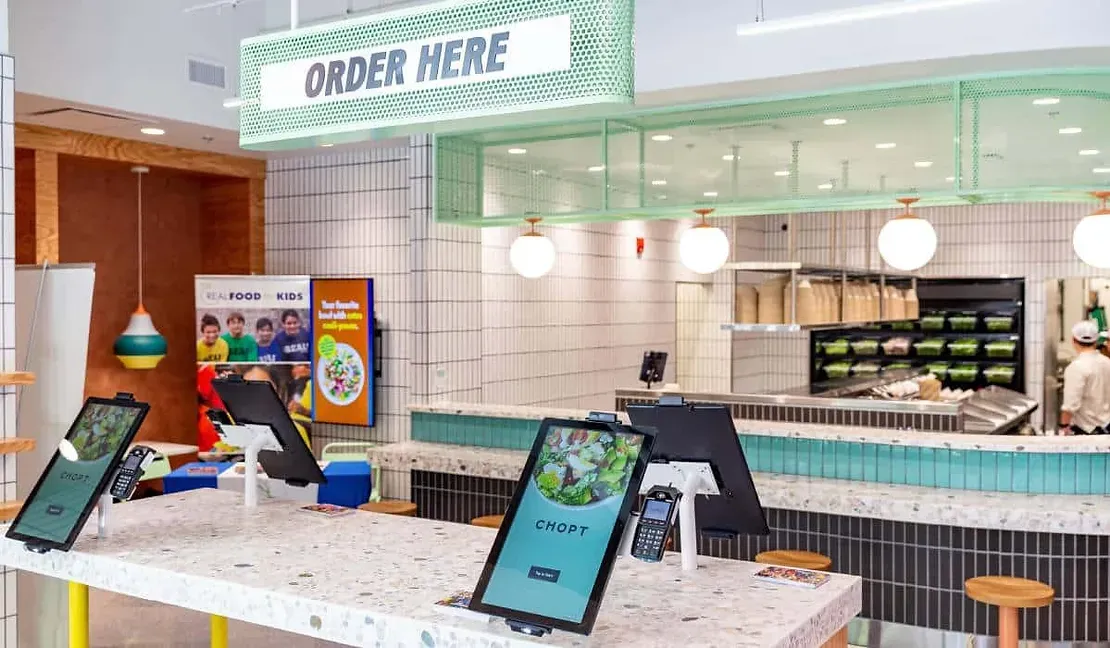

A restaurant with a sign that says `` order here ''.

Founders Table Forges Growth Plan for Collection of Premium Fast Casuals


Founders Table Restaurant Group comprises concepts created by operators who never let go of their curiosity. Chopt cofounders Tony Shure and Colin McCabe wondered why salad couldn’t be a side dish. Brothers Liam and Oliver Kremer wanted to know why they couldn’t find a decent mission-style burrito in New York, which led to Dos Toros. FIELDTRIP founder and James Beard Award-winning chef JJ Johnson had a vision to bring healthy rice bowls to Harlem when no one else did. 
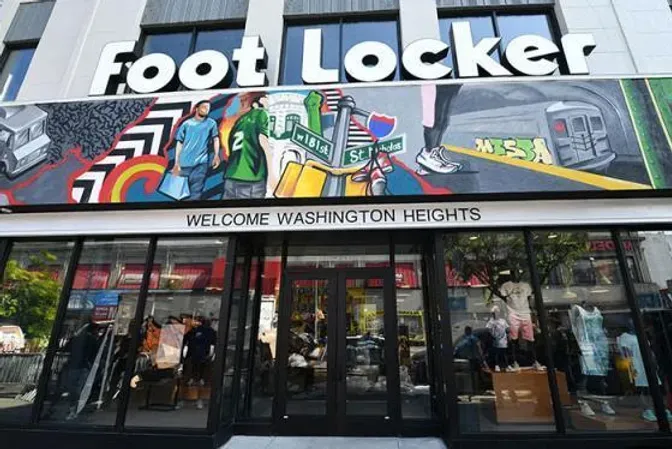

The front of a foot locker store in washington heights

Foot Locker in Q4 loss; to unveil store of the future, revamp existing stores


Foot Locker ended its fiscal year on a slightly downbeat note, reporting a loss for the fourth quarter and issuing weak guidance. Despite the loss, the athletic shoe and apparel retailer still beat analysts’ expectations. But it warned that it would not meet the  profitability goal — to reach an EBIT margin of 8.5% to 9% by 2028 — it disclosed at its March 2023 Investor Day on time 
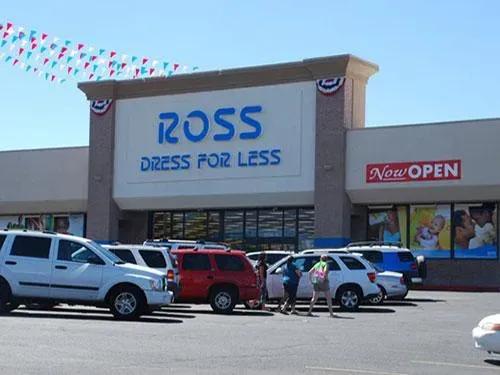

Cars are parked in front of a ross dress for less store

Ross Stores to open 90 new stores in 2024


Ross Stores easily topped expectations for its fourth quarter, but warned that housing, food and gasoline costs continue to put pressure on its customers. In a statement, CEO Barbara Rentler cited the “sustained” sales momentum that began in its second quarter and continued through the holiday season, but cautioned there remains “ongoing uncertainty in the macroeconomic and geopolitical environments.” 

A club sandwich is stacked on top of each other on a plate on a table.

McAlister’s Cracks $1 Billion, but Best is Yet to Come


For the first time in company history, McAlister’s surpassed $1 billion in sales in 2023, fulfilling a prediction the chain tracked for a few years now. It’s a big number, but chief brand officer Mike Freeman says the accomplishment boils down to a handful of key pillars. The first is decision-making and leading with the guest experience. The second is legacy franchise ownership and brand leadership working harmoniously to drive the company forward. 


A fried chicken sandwich with lettuce , tomato , onions and french fries on a plate.

Roots Chicken Shak Unveils a Unique Path to Expanding Beyond Food Halls


Tom Foley typically doesn’t eat fried food. Yet, during a menu tasting for chef Tiffany Derry’s duck-fat fried chicken concept Roots Chicken Shak, Foley took one bite of the Big Bird sandwich, “and I didn’t stop. I finished it,” he recalls. “And then Tiffany comes out with a Spicy Bird, the spicy version of it. I took a bite and finished it. At one point she looks at me, because we still have chicken wings and tenders to go through, and Tiffany goes, ‘you know this is a tasting, right?’ I’m not so sure if that’s how you’re supposed to have a tasting.”
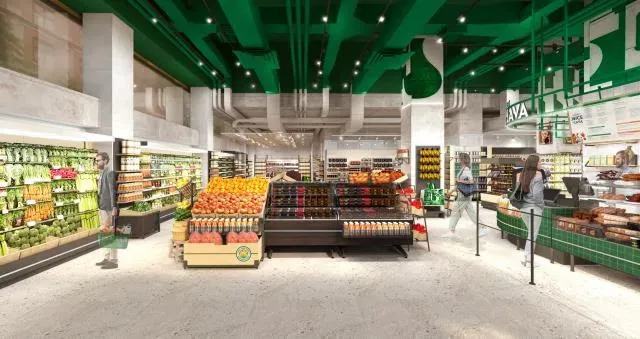

An artist 's impression of a grocery store with a green ceiling.

Whole Foods to roll out small-format store concept — here’s what it will look like


Whole Foods Market is going small with a new concept for dense metro areas.The natural and organic foods grocer is launching a “quick-shop” store format that’s designed to provide customers in urban neighborhoods a quick and convenient shopping experience. Dubbed “Whole Foods Market Daily Shop,” the stores will range between 7,000 sq. ft. to 14,000 sq. ft., which is about a quarter to half the footprint of an average 40,000-sq.-ft. Whole Foods location. 
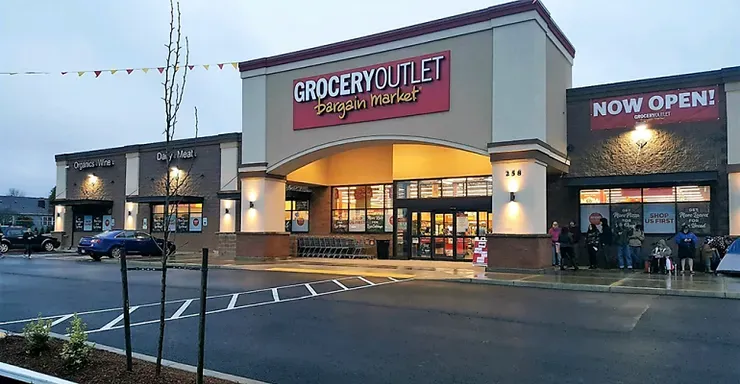

A grocery outlet is now open in a shopping center.

Grocery Outlet to open 15 - 20 stores in 2024; 100 approved sites for 2025 and 2026


Grocery Outlet Holding Corp. is expanding its reach.The extreme discount grocer opened 13 new stores during its fourth quarter, including its first location in Ohio, for a total of 468 stores in nine states. It plans to open 15 to 20 new stores in 2024.
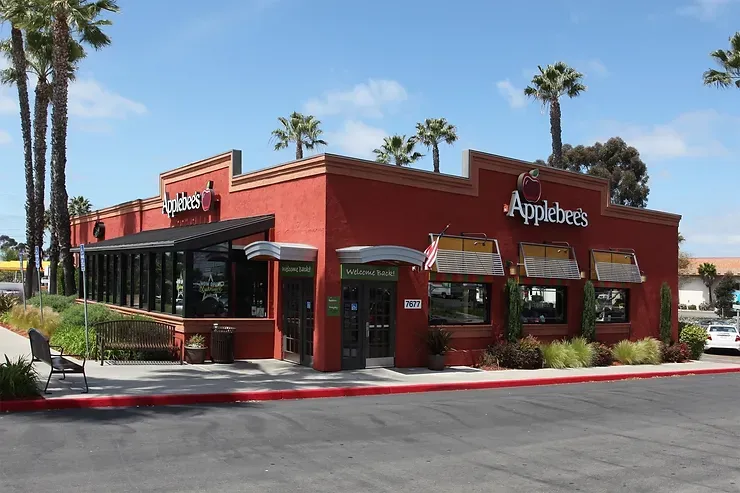

A red building with the word appetizers on it

Ribs With Your Pancakes? Applebee’s and IHOP Placed Under One Roof As Eateries Test Formats


Dine Brands Global is looking to develop more dual-branded restaurants, blending some of its new Applebee’s and IHOP restaurants into one eatery under the same roof to save money on real estate and supplies while driving more sales. Competitors including Outback Steakhouse and the Cheesecake Factory are also looking for property efficiencies. They are planning expansions and remodeling restaurants to capitalize on steady restaurant spending of the past three years after dining room shutdowns of the COVID-19 pandemic’s early months. 
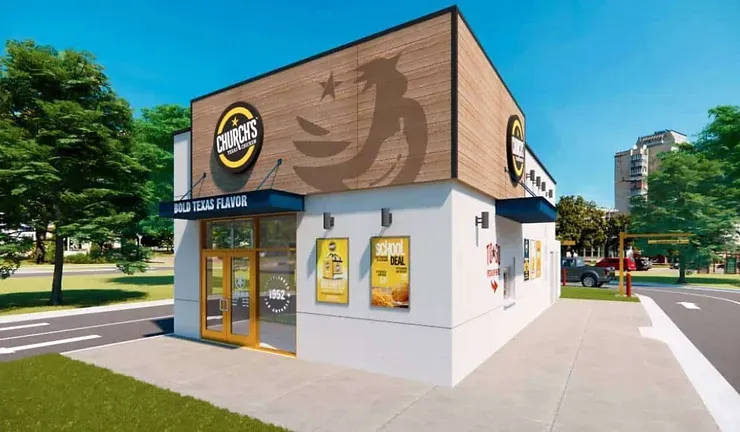

An artist 's impression of a burger king restaurant

Church’s Road Back Began with Finding Itself Again


This compass—“who we are”—has served as the central theme in the 72-year-old brand’s turnaround since Guith, a former GoTo Foods (then Focus Brands) executive, arrived in early August 2022. Church’s was founded in 1952 in San Antonio, Texas, by George W. Church. It was a walk-up stand located a block south of the Alamo that sold two pieces of chicken and a roll for 49 cents. It began as “Church’s Fried Chicken-To-Go.” 
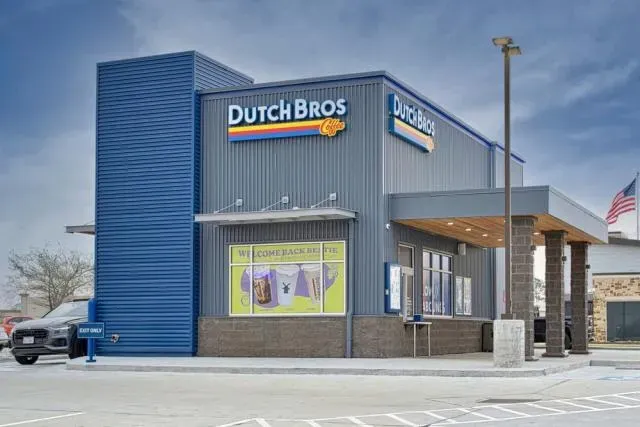

A dutch bros store with a truck parked in front of it.

Dutch Bros to open 150 to 165 shops in 2024; moving some corporate jobs to Phoenix


Dutch Bros ended the year on an upbeat note as it continues to drive new store growth. The fast-growing drive-thru coffee chain’s total revenue rose 25.9% to $254.1 million in the fourth quarter (ended Dec. 31). For the full year, total revenue grew 30.7% to $965.8 million.



By Marc Perlof May 4, 2026
By Marc Perlof | MarcRetailGuy CA #01489206 May 4, 2026 If you own retail real estate, here’s what just changed for you. Pricing your retail property is not about picking a number. It is about choosing the right strategy to drive buyer demand and maximize your final sale price. If you use the wrong approach, you limit your buyer pool and your outcome. Retail property pricing has become more strategic. Buyers are more selective and move quickly when deals are positioned correctly. Properties that are not positioned well are being ignored. What is causing it? Higher interest rates and rising operating costs have made buyers more disciplined. At the same time, demand still exists for well-located assets, especially in Southern California. This creates a gap. Strong deals get attention. Weakly positioned deals sit. How does pricing affect your property value? Pricing determines how many buyers engage. More buyers create competition. Competition drives stronger offers and higher pricing. If your property attracts only one buyer, that buyer controls the negotiation. If multiple buyers engage, you control the process. How are buyers responding today? Buyers are prioritizing deals that feel well positioned from the start. If pricing creates hesitation, they move on quickly. If pricing creates opportunity, they act. What should you do right now? Start by understanding that pricing is a strategy, not just a number. Different approaches create different outcomes depending on your asset and buyer pool. What should you focus on? Match your pricing approach to your property. A stabilized NNN asset, a strip center with upside, and a redevelopment site should not be brought to market the same way. Buyers are actively pursuing deals that feel correctly positioned and ignoring those that feel priced without strategy. There are several ways to bring a retail property to market, including an exact asking price, pricing guidance, request for offers, submit offers, and off-market sales. Each approach attracts a different buyer mindset and leads to a different outcome. In retail real estate and select commercial opportunities, including development sites, pricing strategy plays a direct role in the final outcome. Pricing controls demand. Demand controls price. In the next three weeks, I will break down how each pricing strategy works and when to use it. Start with “Should You List Your Retail Property With an Asking Price?” (Part 2) , where I explain when pricing helps and when it hurts your result. If you listed your property today, would your pricing strategy attract multiple buyers or just one? Call or DM me for more information. If pricing drives demand, are you using the right strategy for your property? Based in Los Angeles. Serving Southern California. Active across California. Advising clients nationwide. #RetailRealEstate #CommercialProperty #NNN #StripCenters #ShoppingCenters #CRE #LosAngelesRealEstate #InvestmentProperty #PropertyValue
By Marc Perlof May 1, 2026
Fed's Powell says he'll stay on as governor after term as chair ends - as it happened Powell said he'll be staying on the Fed Board of Governors after his term as chair ends in May. He said his choice reflects his concern over a series of legal attacks on the Fed. "I worry that these attacks are battering the institution and putting at risk the thing that really matters to the public, which is the ability to conduct monetary policy without taking into consideration political factors," he said...
By Marc Perlof April 27, 2026
By Marc Perlof | MarcRetailGuy CA #01489206 April 27, 2026 If you own retail real estate, here's what just changed for you. Every warning this year has sounded the same. Oil prices are up. Jobs are slowing. Inflation is high. Cap rates are rising. If you have been paying attention, none of that is new. This is different. Ray Dalio is not warning about a recession. He is warning that the system itself is breaking. That is a bigger problem. And it should change how you think about when to sell. What Dalio Actually Said Ray Dalio runs Bridgewater Associates, one of the biggest hedge funds in the world. In interviews covered by major financial outlets in 2026, he said the U.S. is "very close to a recession." But a recession is not what worries him most. He said something bigger is happening. "We have a breaking down of the monetary order," he said. "We are going to change the monetary order because we cannot spend the amounts of money... We are having profound changes in our domestic order... and we're having profound changes in the world order."¹ He compared today to the 1930s. Not 2008. Not 2001. The 1930s, when tariffs, debt, and countries fighting over power caused a collapse that took over a decade to fix. He has also warned that rising tensions between countries could trigger a "capital war," where money is used as a weapon and the flow of global investment breaks down.² These are not warnings about next quarter. They are warnings about the next era. A Recession You Can Wait Out. This You Cannot. This is the part most retail property owners are missing. A recession is a cycle. It goes down and then it comes back up. Owners who held through 2008, through COVID, through rate hikes know how this works. You cut costs, keep tenants in place, and sell when things recover. That works when the basic system stays intact. What Dalio is describing is different. It is not a dip. It is a shift in how the whole economy is valued. When the U.S. dollar loses strength, when other countries stop buying U.S. debt, when the federal deficit is headed toward $1.9 trillion this year more than double what Dalio says is safe,³ interest rates do not fall the way they do after a normal recession. They stay high, or go higher, because the government needs to keep borrowing. That keeps cap rates up. And it does not fix itself on a normal timeline. In a recession, waiting can be smart. In a reset, waiting is the risk. A recession self-corrects because the Fed can cut rates, credit loosens, and buyers come back. A reset does not self-correct because the government cannot cut rates when it needs to keep borrowing just to stay solvent. What This Means for Your Tenants Not every tenant feels this the same way. Tenants who sell physical goods: clothes, electronics, furniture, home products, are already paying more because of tariffs. Their costs are up and their profits are shrinking. If several of your tenants are in this category, your risk is real if things get worse. Service tenants are more insulated. Food, hair salons, auto repair, medical, and personal services generate most of their income from serving people locally. Yes, some of their supplies are imported and tariffs add cost pressure, but they are not dependent on imported inventory the way a clothing store or electronics retailer is. Their business survives because people need those services every week regardless of global trade conditions. Across Los Angeles and Southern California, these tenants have held up through every major downturn. Know which type of tenants you have. In a reset, that difference matters more than ever. Net lease owners are not off the hook here. A net lease protects you from paying the bills, not from a tenant going under. In a long downturn, even strong tenants can get squeezed. If your tenant closes or restructures, you are left with an empty building in a market where finding a new tenant and selling are both harder than they were two years ago. And lease term matters too. Buyers pay more for properties with long leases remaining. Every year you hold, you burn off term you cannot get back. What This Means for Your Property Value Consumer prices rose 3.3% in the 12 months ending March 2026. Energy costs jumped 10.9%. Gas prices alone went up 21.2% in a single month, the biggest one month jump since records started in 1967.⁴ U.S. employers added just 181,000 jobs in all of 2025. That is an 88% drop from the 1.46 million jobs added in 2024. Hiring picked up a little in March 2026, with 178,000 jobs added, but unemployment is at 4.3%, the highest since 2024.¹ These numbers matter because they make it very hard for the Federal Reserve to cut interest rates. Goldman Sachs expects core inflation to still be at 2.5% by the end of 2026 and sees only one rate cut this year at best.⁵ That means buyers will keep demanding higher returns. Cap rates stay wide. And the math hits hard. If your property brings in $100,000 a year in net income and buyers are pricing it at a 5.5% cap rate, it is worth about $1.82 million. If buyers move to a 6.5% cap rate, an 18% increase in the cap rate, that same income is worth about $1.54 million. That is $280,000 gone, a 15% drop in your dollar property value. No vacancy. No bad tenants. No change in your rent roll. Just an 18% shift in how buyers price risk that wipes out 15% of what your property is worth. In a recession, you can reasonably expect that gap to close when things recover. In a reset, you are betting on a system fixing itself that Dalio says is actively breaking down. In a recession, you can reasonably expect that gap to close when things recover. In a reset, you are betting on a system fixing itself that Dalio says is actively breaking down. What You Should Do Right Now First, look at your tenants. Which ones sell goods and which ones sell services. Which ones are paying below market rent. Below market tenants are likely to stay, but buyers will discount your price because they are taking on the risk of getting rents up to market when those leases expire. In a tight capital environment, buyers want stable income, not a re-leasing project. Second, get a real valuation based on where buyers are today. Not 2022 numbers. Not 2025 numbers. Not what sold nearby 18 months ago. Today's buyers, today's cap rates, today's market. Real Deal Insight Buyers in Southern California retail are pushing cap rates wider and looking harder at tenant credit than at any point in the last two years. Properties with goods based tenants or short leases are taking longer to price and drawing fewer buyers. Necessity retail with long leases are still trading, but only when sellers price it where the market actually is, not where it used to be. The Question You Should Be Asking Right Now Cap rates are moving. Buyer pools are shrinking. Pricing windows close quietly. If you are thinking about selling in the next one to three years, now is the time to find out where you actually stand. Not next quarter. Not after the next Fed meeting. Call or DM me and let's look at your property with today's buyers and today's numbers. Don't let uncertainty make this decision for you. #RetailRealEstate #MarcRetailGuy #CommercialRealEstate #RetailInvestment #SouthernCaliforniaRealEstate #LosAngelesRealEstate #NNNProperties #StripCenters #RetailPropertyOwners #CapRates #CREInvesting #MomAndPopInvestors
More Posts