Weekly Perl: A Commercial Real Estate News Recap

Marc Perlof • August 28, 2026
A banner for weekly commercial real estate news recap
A car is parked in front of a sign that says 223

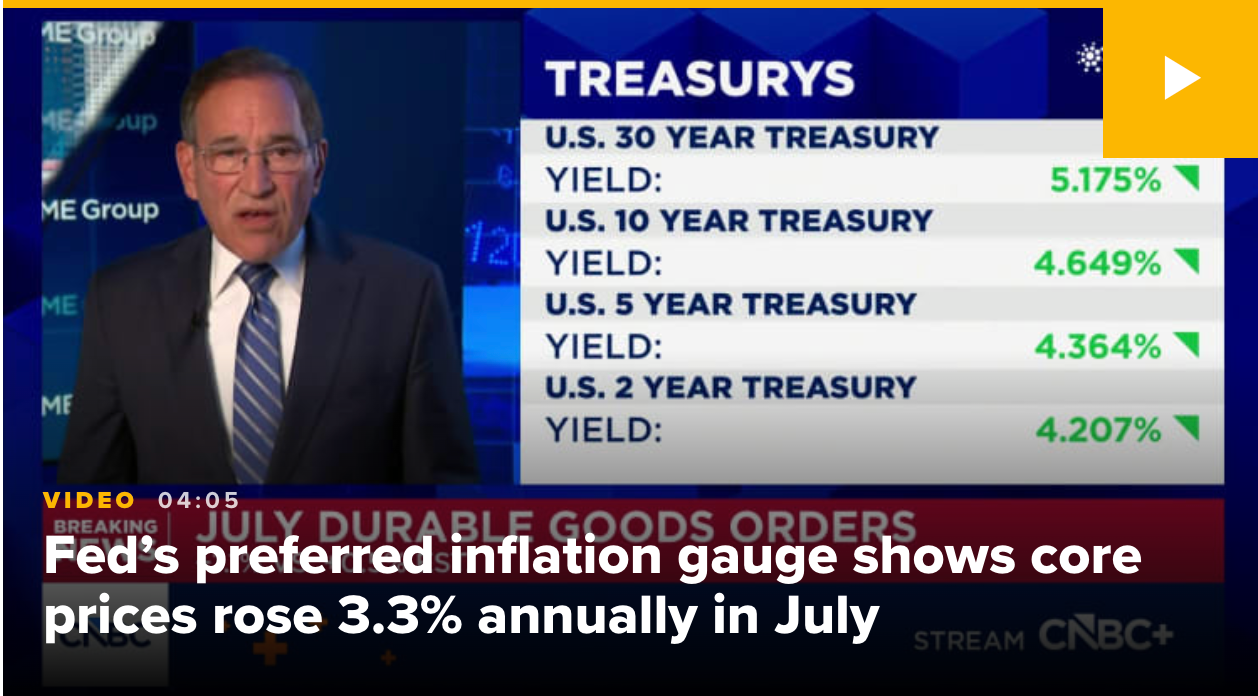
Fed’s preferred inflation gauge shows core prices rose 3.3% annually in July

Prices consumers pay for a variety of goods and services rose slightly in July, according to the Federal Reserve’s main inflation gauge.


The personal consumption expenditures price index, which the Fed uses as its preferred forecasting tool, increased a seasonally adjusted 0.2% for the month, putting the annual inflation rate at 3.7%, the Commerce Department reported Wednesday. Both were 0.1 percentage point above the Dow Jones consensus...
The front of an aldi store with a sign in front of it.

BJ’s beats Wall Street on Q2 profit, revenue; new Texas store to open

BJ’s Wholesale Club Holdings reported strong earnings and sales results for the second quarter of fiscal 2026 and announced plans for a new store.


The membership warehouse club giant exceeded Wall Street expectations with adjusted net income of $173.87 billion, up 15% from $150.7 billion the quarter ended Aug. 1. Adjusted earnings per share (EPS) rose to $1.36 from $1.14 and total revenue climbed 16% to $6.23 billion from $5.38 billion...

An elevated outdoor view of a modern shopping mall promenade with manicured greenery, palm trees, and pedestrians.

Nike Closes 15 Small Format Nike Live Retail Stores


According to Bisnow, Nike is closing at least 15 stores it opened under the Nike Live banner. The format was built to serve shoppers in their own neighborhoods. Retail Dive reported that the locations are now permanently closed. The list spans 12 states and includes the original Melrose Avenue store in Los Angeles...
The American flag waves against a bright blue sky between towering glass skyscrapers, viewed from a low angle.

Ross Stores earnings, sales soar in Q2; 115 new stores planned in 2026

Ross Stores continued a strong fiscal 2026 performance trend that began in the first quarter of the year.

The off-price giant reported a stellar second quarter as strong customer traffic drove its second consecutive quarter of double-digit comparable sales growth. According to a report by Placer.ai., Ross store visits rose 16.4% year over year during the period. Visits to the company's other banner, DD's Discounts grew 8.4%. (Neither brand operates a digital storefront...)

A flat, single-story retail building with a

Retail Regains Its Footing as Demand Returns and Supply Stays Soft

After a soft first quarter, the retail sector regained positive momentum in Q2 as tenant demand returned, vacancies remained stable and new construction stayed limited.


According to second-quarter reports from CBRE, Colliers, Cushman & Wakefield, JLL and Lee & Associates, the combination is creating a favorable setup for landlords and investors, even as retailers contend with increasingly selective consumers.

Absorption

  • Retail demand returned in the second quarter, reversing the Q1 negative absorption created, in part, by multiple move-outs...
The main entrance of the NuHAA building, featuring a modern glass and stone facade, at sunset.

Raley’s plans to close more stores

Raley’s plans to shutter three locations in California and one in Nevada in the coming months, the company confirmed on Monday.

The closings will bring to seven the total number of Raley’s set for closure in 2026 and early 2027. The West Sacramento, Calif.-based company previously closed a Nob Hill Foods store in Mountain View, a Raley’s in Roseville and another Raley’s in Antioch.

Another Raley’s in Elko, Nev., is slated for closure in December, and a Nob Hill Foods location in Los Gatos is scheduled to close by next June, the reports said. The other two Raley’s that are scheduled to close in the coming months are in Brentwood and Petaluma, Calif...
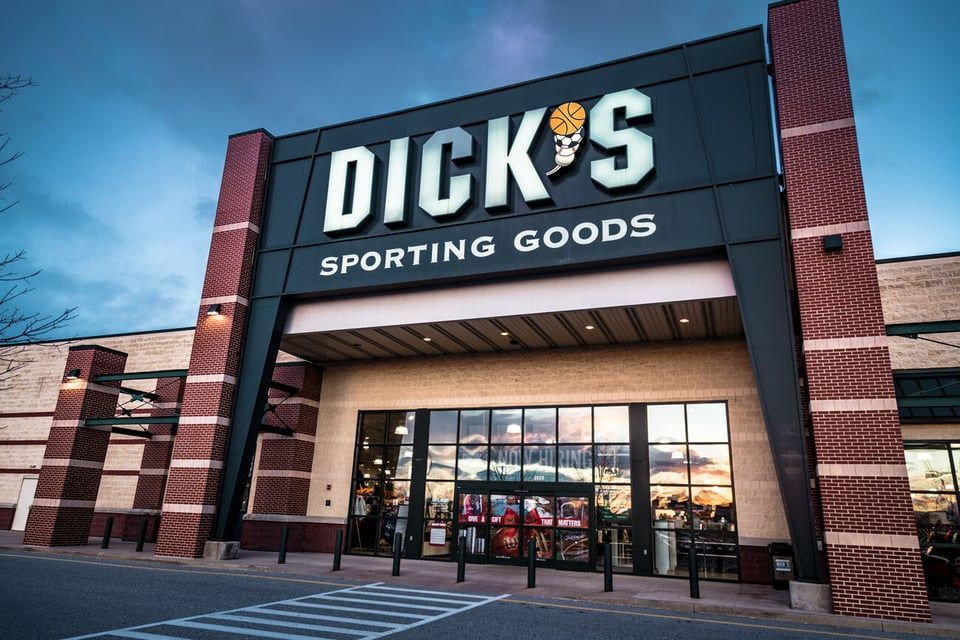
Dick’s lowers outlook citing ‘challenging’ footwear and apparel marketplaces

Dick’s Sporting Goods lowered its full-year sales outlook amid a challenging athletic market that had a “significant” impact on its Foot Locker business.

The sporting goods giant noted it increased promotions during its second quarter to protect its leadership position as it dealt with excess inventory and weaker demand for some legacy footwear silhouettes...
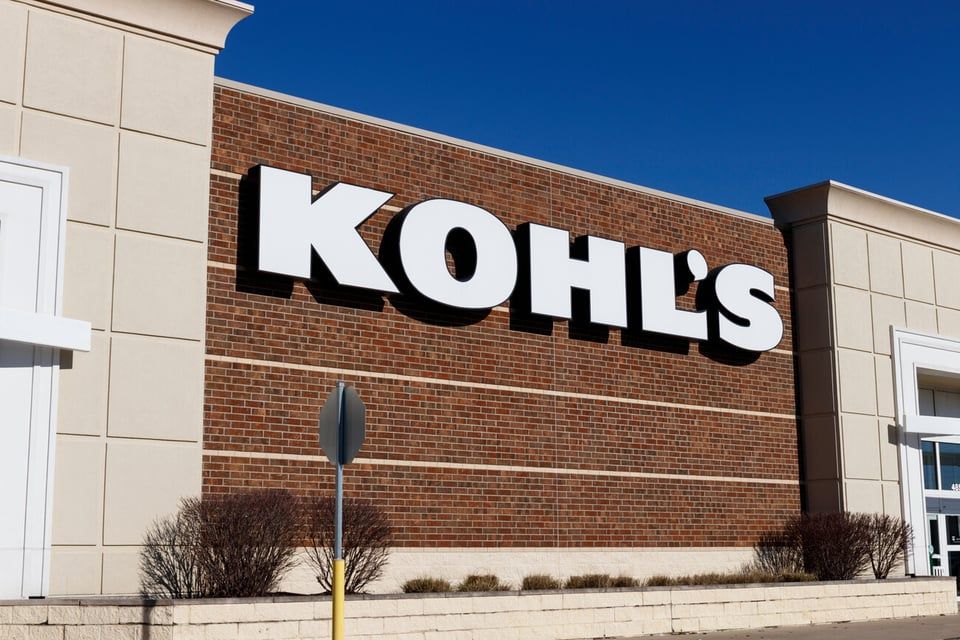
Kohl’s raises outlook on slowing sales declines, tariff refunds

Kohl’s Corp. reported declining profit and sales for its second quarter, but raised its full-year outlook amid tariff refunds and signs that its turnaround was taking hold.

The department store retailer reported $150 million in tariff refunds received during the quarter, of which approximately $100 million flowed through gross margin. Another $40 million in refunds are expected to be received. The company also said it would resume its roughly $100 million share repurchase program this year...
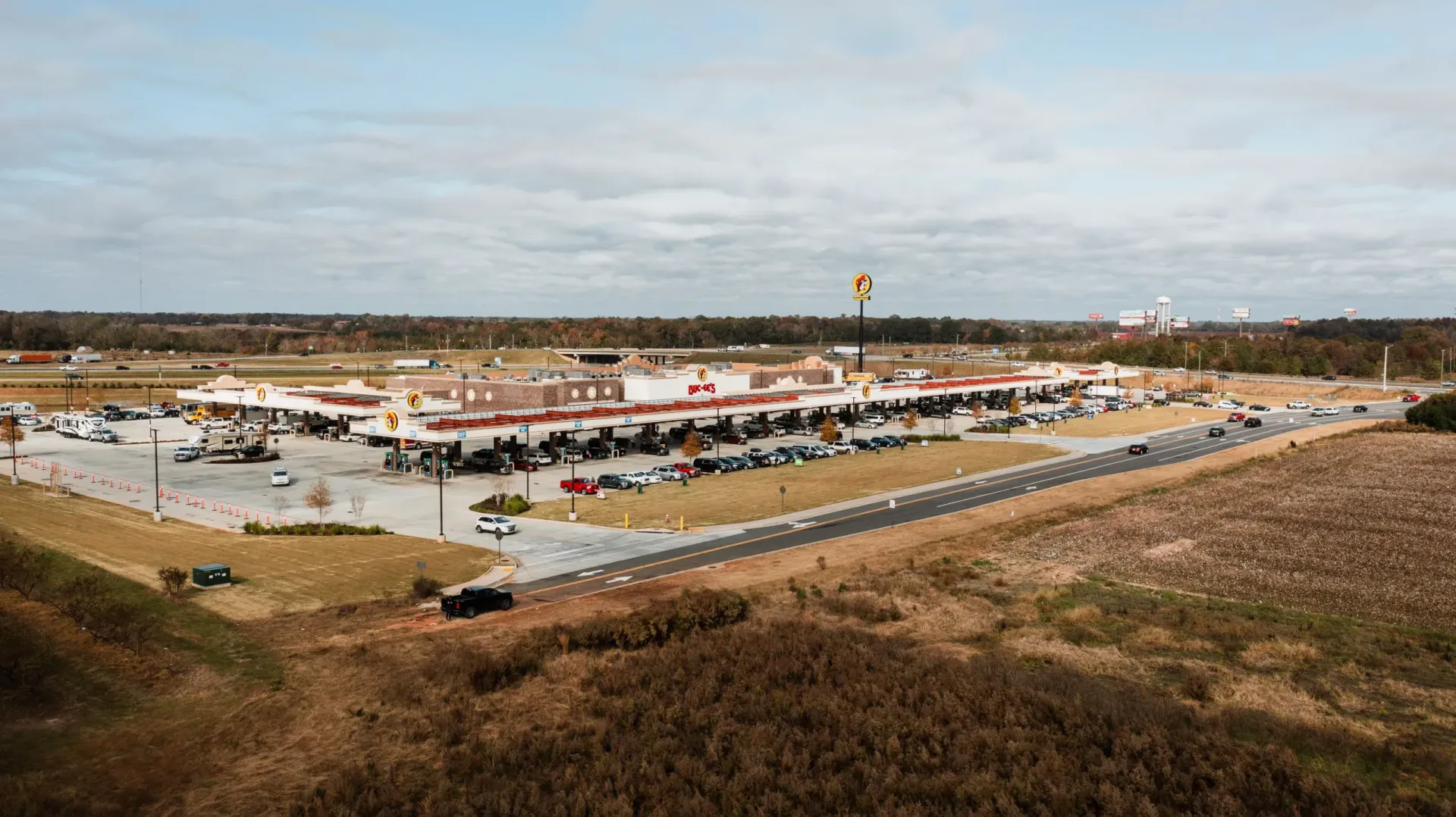
Why Buc-ee’s Is Expanding South, Not the Northeast

Globe St reports that Buc-ee’s is pushing its oversized travel centers deeper into the South, not the Northeast. At a recent opening in Benton, CEO Aplin praised locating in a conservative, business-friendly state with a strong workforce. The chain’s growth map leans heavily toward car-dependent, highway-linked markets...
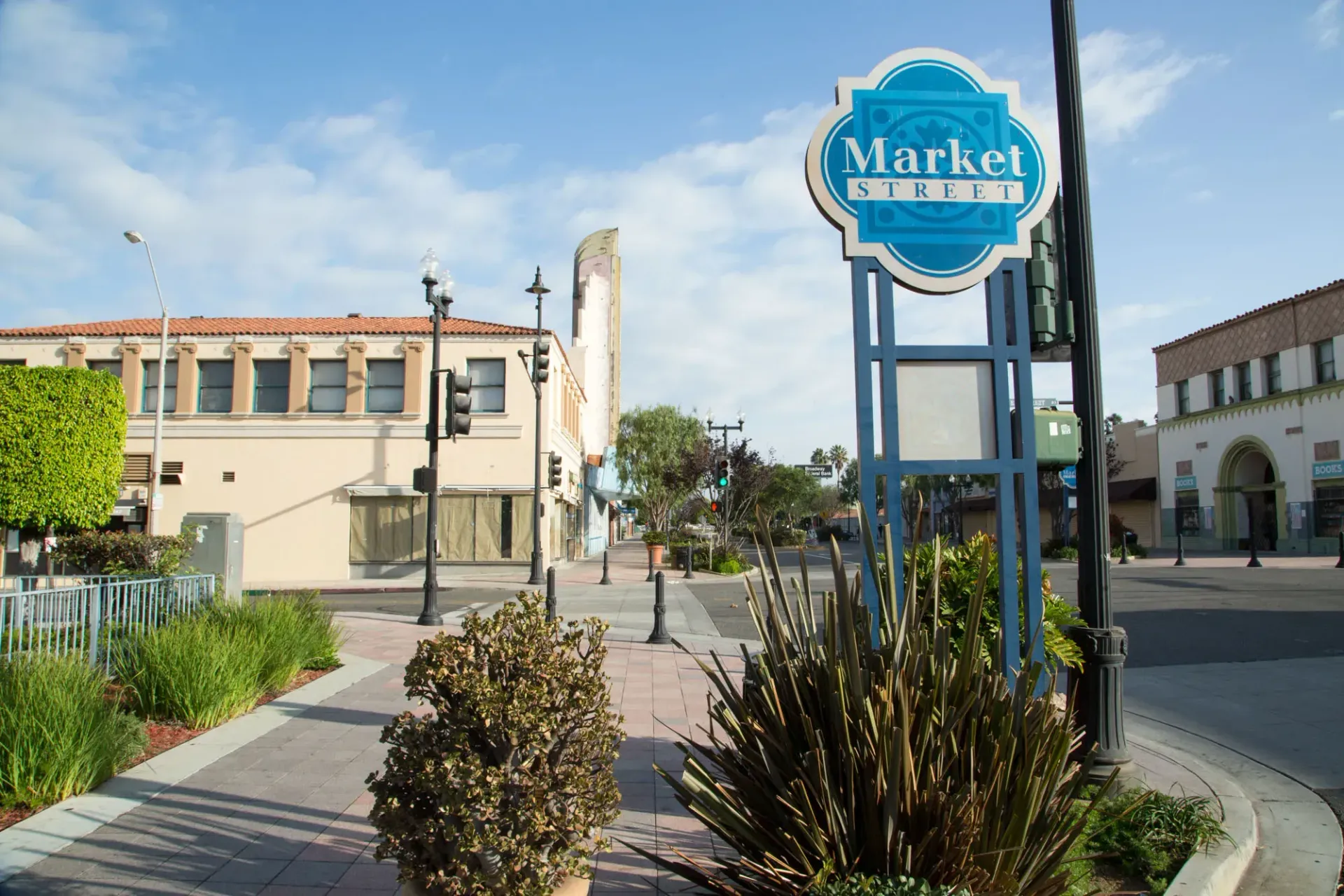
Inglewood Council Approves Partnership to Rebuild Historic Downtown and Improve Citywide Mobility

The Inglewood City Council voted in favor of a public-private partnership that will build the Inglewood Transit Connector’s (ITC) mobility hubs and reenvision the streets of Downtown Inglewood — advancing a solution shaped by robust study, rigorous planning and sustained community input into how this City welcomes visitors on event days while keeping everyday life moving for the people who live here...


By Marc Perlof August 24, 2026
By Marc Perlof | MarcRetailGuy CA #01489206 August 17, 2026 If you own retail real estate, here’s what just changed for you. A tenant asks for a $100,000 tenant improvement allowance. The landlord thinks the request is unreasonable. The tenant thinks it is necessary to open the business. Who is right? Possibly both. The problem is that landlords and tenants often look at tenant improvement allowances, commonly called TI, from different points of view. The tenant sees money needed to build and open the business. The landlord sees money being invested into a property and a lease. Both sides may be looking at the same $100,000 but thinking about it very differently. The TI amount matters, but it should not be negotiated by itself. Rent, lease term, annual increases, free rent, tenant strength, guaranties, options, and TI are all connected. The real question for an owner is not simply, “How much TI am I giving?” It is, “What am I receiving in return?” The Tenant Sees the Cost of Opening Opening a retail business can require a large investment before the first customer walks through the door. Depending on the business and condition of the space, the tenant may need to pay for construction, equipment, signs, permits, inventory, employees, and marketing. From the tenant’s point of view, the TI allowance helps reduce the cash needed to open. That is why the tenant may focus heavily on the TI amount. The landlord, however, has a different concern. The Landlord Is Investing Capital For the landlord, TI is real money going into the lease. The owner should ask what the property receives in return for that investment. Is the tenant signing a longer lease? Is the rent strong? Are there annual increases? Is the tenant financially strong? Is there a guaranty? Will the improvements have value if the tenant leaves? The same $100,000 TI allowance can create very different risks. A $100,000 investment into a strong tenant signing a long term lease may make financial sense. The same investment into a tenant with limited financial strength, a weak guaranty, and improvements with little value to the next tenant may be much riskier. The amount is the same. The investment is not. TI, Rent, and Free Rent Are Connected A lease negotiation often includes several economic items. A tenant may ask for TI, lower rent, free rent, or some combination of all three. An owner should look at the total package because each option affects the property differently. TI requires capital upfront. Free rent delays cash flow. Lower rent can reduce NOI throughout the lease and may affect the property’s value. This does not mean one structure is always better. The answer depends on the lease term, rent increases, tenant strength, cost of construction, cost of vacancy, and the owner’s available capital. The mistake is negotiating each item as if it has nothing to do with the others. A Simple Example Assume a tenant is negotiating a 10 year lease and offers the landlord two choices: Option 1: $100,000 in TI with $10,000 per month in starting base rent. Option 2: No TI with $9,000 per month in starting base rent. At first, Option 2 may look better because the landlord keeps the $100,000. But the $1,000 monthly rent difference equals $12,000 per year. Before considering rent increases or other lease terms, the lower starting rent creates $120,000 less base rent over 10 years. There is another issue. Lower NOI may also affect the property’s value when a buyer underwrites the income. This does not automatically make Option 1 the better deal. The owner still needs to consider the timing of the $100,000 investment, the tenant’s financial strength, default risk, rent increases, the value of the improvements, and whether the owner has the cash available. The point is simple: saving money on TI does not automatically create the better financial result. Free Rent Is Also Part of the Investment Free rent can also be misunderstood. A tenant may view free rent as time to complete construction, hire employees, stock inventory, and open the business before paying full rent. For the landlord, it is income that is not being collected. Assume the monthly base rent is $10,000 and the tenant receives four months of free base rent. That is $40,000 in base rent the landlord does not collect. Depending on the lease, the tenant may still pay NNN expenses during the free rent period, or those expenses may also be reduced or delayed. The details matter. An owner who gives $100,000 in TI and $40,000 in free rent is making a larger investment than the TI number alone suggests. Leasing commissions, landlord work, and other concessions can increase the total investment further. This does not mean free rent is bad. It means the owner should measure the full cost of the lease package. More TI Should Be Supported by the Lease If an owner is being asked to invest more capital, the rest of the lease should support that investment. That may mean a longer lease term, stronger rent, annual increases, better security, a stronger guaranty, or other terms that reduce risk. If the tenant wants more TI, more free rent, lower rent, limited guaranties, and flexible options, the owner should ask whether the total package still makes financial sense. Occupancy alone does not make a lease a good investment. A Simple Payback Test One useful screening test is how long it takes the owner to recover the total lease investment. That should include TI, free rent, leasing commissions, landlord work, and other concessions. As a rough guide, an owner may want the total lease investment recovered within the first 25% to 40% of the firm lease term. On a 5 year lease, that usually means about 1 ½ to 2 years. On a 10 year lease, that may mean about 2 ½ to 4 years. This is not a perfect rule, but it is a useful warning sign. If most of the lease term is needed just to recover the upfront investment, the owner may be taking too much risk. Look at the Whole Deal The highest rent does not always create the best deal. A tenant offering higher rent may require more TI, more free rent, a larger leasing commission, or more landlord work. Another tenant may offer slightly lower rent but require much less capital and have stronger financials. That is why lease negotiations should be viewed as one investment decision, not a collection of separate deal points. Final Thought Landlords and tenants often misunderstand TI allowances because they are looking at the same money from different sides. The tenant is trying to reduce the cash needed to open. The landlord is deciding how much capital to invest and what income, security, and long-term value will be received in return. Before agreeing to or rejecting a TI request, owners should ask one question: What is the total investment I am making, and what am I receiving in return? If a tenant offered you a choice between higher TI and higher rent or no TI and lower rent, would you know which deal creates the better result for your property? In next week’s blog, How TI Decisions Affect Retail Property Value and Buyer Underwriting , we will look at how buyers review tenant strength, remaining lease term, future TI costs, lease rollover, and the durability of a property’s NOI. #RetailRealEstate #CommercialRealEstate #RetailLeasing #TenantImprovements #TIAllowance #CommercialLeasing #MarcRetailGuy Based in Los Angeles. Serving Southern California. Active across California. Advising clients nationwide.
By Marc Perlof August 21, 2026
Retail sales post biggest drop since 2025 as spending momentum fades U.S. retail sales sank to their lowest in over a year in July as consumers pulled back on online shopping and vehicle sales. Retail purchases, not adjusted for inflation, fell 0.6% in July from the previous month in the biggest decline since May 2025, according to the Census Bureau data released Friday. Excluding gasoline and auto, retail sales dropped 0.2%...
By Marc Perlof August 17, 2026
By Marc Perlof | @MarcRetailGuy CA #01489206 August 10, 2026 If you own retail real estate, here’s what just changed for you. A landlord and tenant agree to a $50,000 tenant improvement allowance. The lease is signed. Does the landlord immediately hand the tenant a $50,000 check? Usually, no. Agreeing on the amount of a tenant improvement allowance, commonly called TI, is only part of the negotiation. The lease and work letter should also explain what the money can be used for, who controls the construction, when the landlord pays, what documents are required, and what happens if the project costs more or less than expected. These details matter because TI is not just a lease concession. It is real money being invested into a tenant’s space. A TI Allowance Is Not Always Paid Upfront One of the biggest misunderstandings about TI is when the money is paid. In many lease structures, the tenant completes approved work and the landlord reimburses the tenant after certain requirements are met. For larger projects, payments may be made in stages as construction progresses. Before releasing funds, the landlord may require paid invoices, lien releases, proof of permits or approvals, evidence that the work was completed, and confirmation that the tenant is not in default. The exact requirements depend on the lease and work letter. For the landlord, the payment structure matters because paying the full allowance before work is completed can create unnecessary risk. What happens if construction stops, contractors are not paid, or the tenant never opens? For the tenant, waiting until the end of construction for reimbursement can create a cash flow problem. The tenant may need to fund the project before receiving the landlord’s contribution. Both sides should understand the process before the lease is signed. Construction Draws Can Spread Out the Payments Larger projects may use construction draws instead of one payment. For example, assume a landlord agrees to provide $150,000 in TI for a retail buildout. Instead of paying the full amount at the beginning or waiting until the entire project is complete, the landlord may release funds in stages as work is completed. The tenant may submit invoices, evidence of completed work, and required lien releases with each request. The landlord then reviews the request and funds the approved amount according to the lease. This can reduce the tenant’s need to finance the entire project upfront while protecting the landlord from releasing all the money before the work is completed. The process should be clear. Slow approvals or unclear requirements can delay construction and create conflict. Who Controls the Construction? Another important question is who manages the work. In some leases, the tenant controls construction and the landlord reimburses approved costs. In other situations, the landlord agrees to complete specific improvements before delivering the space. Some deals use a combination of both. Tenant controlled construction gives the tenant more control over design and contractors, but the landlord still needs to protect the property. The lease may address approved plans, contractors, insurance, permits, and changes that require landlord approval. Landlord controlled work gives the owner more control over the improvements but also creates greater responsibility for construction costs, scheduling, and delivery. Neither structure is automatically better. The right approach depends on the property, scope of work, tenant, and experience of the parties involved. What Can the TI Allowance Be Used For? The lease should clearly define eligible TI costs. A tenant may assume the allowance can be used for anything related to opening the business. The landlord may believe the money is only for permanent improvements to the property. Depending on the lease, eligible costs may include construction, electrical work, plumbing, flooring, lighting, HVAC, restrooms, architectural plans, engineering, or permit costs. Other expenses may be excluded or limited. The important issue is clarity. A tenant should not complete work expecting reimbursement only to later learn that some costs do not qualify. What Happens When the Budget Changes? A TI allowance is generally a maximum landlord contribution, not an unlimited construction budget. Assume the landlord agrees to a $75,000 TI allowance and the project ultimately costs $110,000. The lease should make clear who is responsible for the additional $35,000. The opposite can also happen. If the tenant completes the approved work for $55,000, what happens to the remaining $20,000? The answer depends on the lease. The unused amount may disappear, or the lease may allow another agreed use. The tenant should not assume that unused TI automatically becomes a cash payment. This is why the exact lease language matters. An allowance of up to $75,000 can mean something very different from an obligation to pay the tenant $75,000 regardless of the actual cost of the work. Construction Delays Can Affect Cash Flow TI payment and construction timing are closely connected to rent commencement. A tenant may believe rent should not begin until the business opens. The landlord may expect rent to begin on a specific date or after an agreed construction period. The lease should address what happens if construction is delayed and whether the delay was caused by the tenant, landlord, contractor, permit process, or another issue. For example, a two month delay on a space with $10,000 in monthly base rent can mean $20,000 in delayed base rent before considering NNN reimbursements and other costs. For an owner, construction delays are not only construction problems. They can directly affect property cash flow, NOI, and debt service. The TI Amount Is Only Part of the Risk Owners often focus on negotiating the lowest possible TI allowance. The amount matters, but the payment and construction process also create risk. A smaller allowance with an unclear process can lead to delays, disputes, unfinished work, or a tenant that cannot complete the project. A larger allowance with a clear scope, experienced team, strong tenant, and controlled payment process may create less risk. The goal is not simply to spend less money. The goal is to invest the right amount of capital into the right lease with a process that protects the property. Final Thought Agreeing to a TI allowance is only the beginning. The landlord and tenant should understand what costs qualify, who controls construction, when payments are made, what documents are required, who pays for cost overruns, what happens to unused funds, and how construction delays affect rent commencement. If those issues are unclear, a TI allowance that looked simple during lease negotiations can become a source of delays, disputes, and unexpected costs. For the owner, the goal is not to make the payment process difficult. It is to make sure landlord capital is released through a clear process that supports the lease and protects the property. If you agreed to fund a TI allowance today, would your lease clearly explain exactly when you have to pay and what needs to happen first? In next week’s blog, Why Landlords and Tenants Misunderstand TI Allowances , we will look at why both sides often view TI differently and why rent, lease term, free rent, guaranties, and other concessions should be negotiated as part of one economic package. #RetailRealEstate #CommercialRealEstate #RetailLeasing #TenantImprovements #TIAllowance #CommercialLeasing #MarcRetailGuy Based in Los Angeles. Serving Southern California. Active across California. Advising clients nationwide.
More Posts