Weekly Perl: A Commercial Real Estate News Recap

Marc Perlof • September 4, 2026
A banner for weekly commercial real estate news recap
A car is parked in front of a sign that says 223

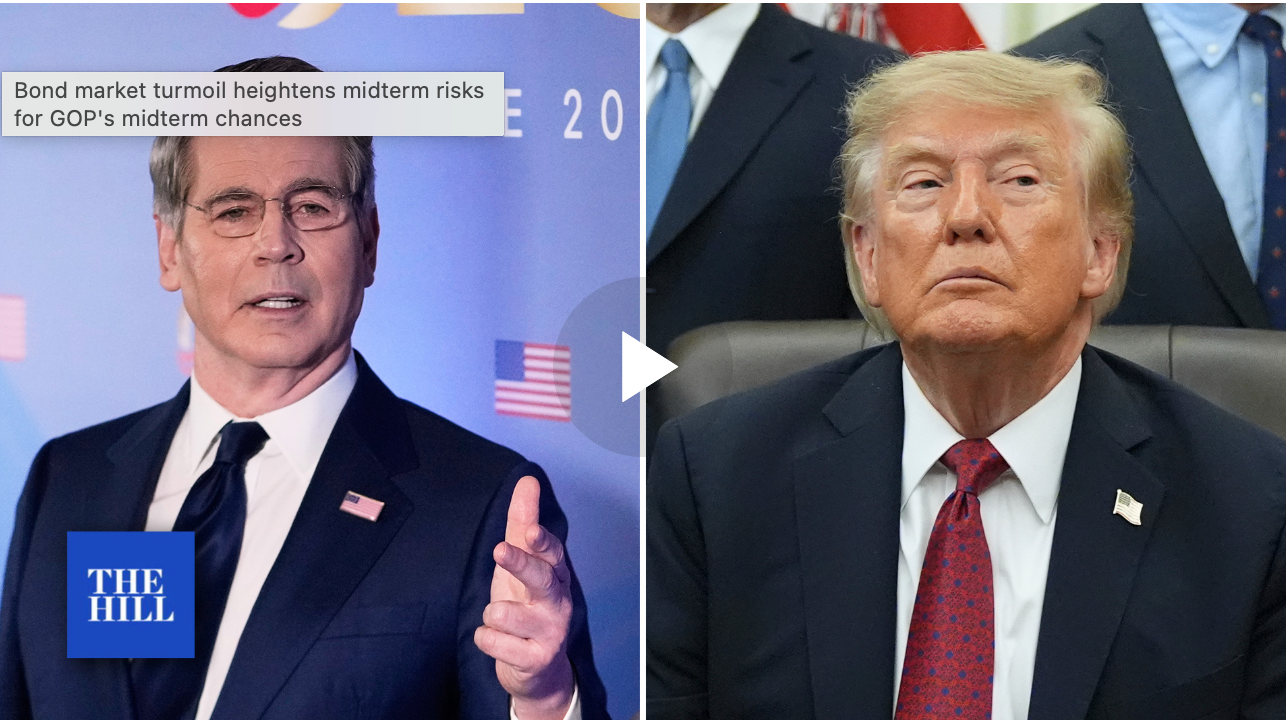
Global bond yields fall after Fed governor says he may back holding rates steady

Bond yields around the world fell Thursday, after Federal Reserve board of governors member
Christopher Waller said he would support holding interest rates steady if economic conditions warrant it.

“If there is continued progress toward our 2 percent goal, then I am willing to support holding the policy rate at its current level,” Waller said Thursday at the Reuters NEXT Newsmaker event in Washington, D.C...
The front of an aldi store with a sign in front of it.

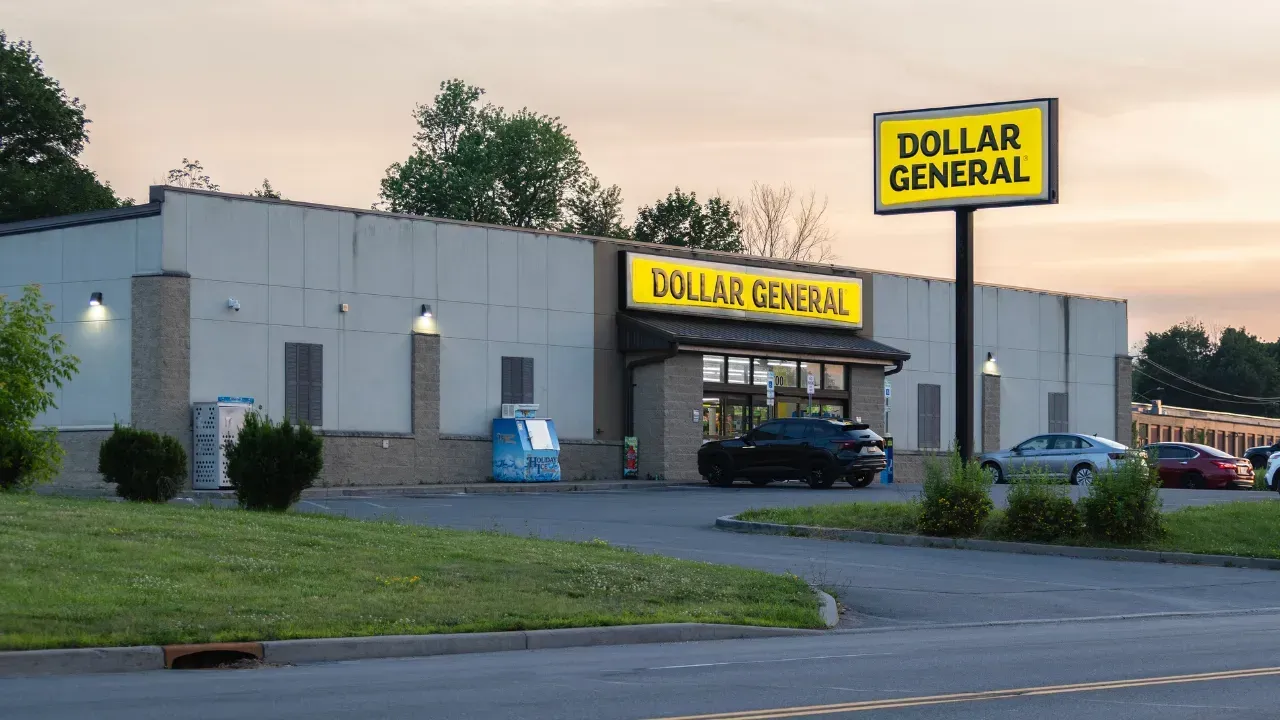
Dollar General gets Q2 boost from tariff refunds, delivery

Dollar General said tariff refunds received in the second quarter helped fuel a 33.8% increase in net income, to about $550.3 million, compared with the year-ago period.


Sales were up 5.2%, to about $11.3 billion, and same-store sales increased 3.5%, driven by a 2% increase in traffic and a 1.5% increase in average basket size.


The company reinvested a “significant portion” of the tariff refunds it received in the second quarter into targeted promotions, particularly around the summer holidays, and lower everyday prices, said Todd Vasos, CEO, in a conference call with analysts...

An elevated outdoor view of a modern shopping mall promenade with manicured greenery, palm trees, and pedestrians.

Consumer sentiment falls in August on inflation, buying power concerns

Consumers fear their purchasing power is eroding among high prices.

Consumer sentiment dropped 6.3% month over month in August amid continued worries that inflation will remain elevated for the foreseeable future, according to the University of Michigan Surveys of Consumers. The August reading is down 11.2% year over year...

The American flag waves against a bright blue sky between towering glass skyscrapers, viewed from a low angle.

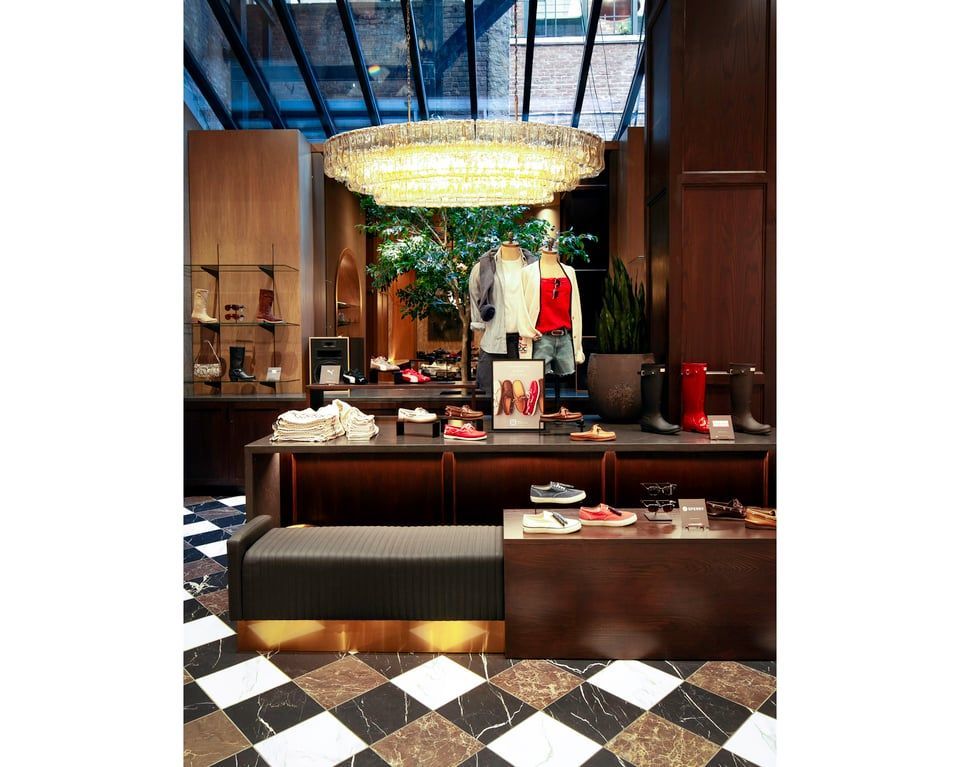
Abercrombie & Fitch in record Q2 sales; plans new store, remodels


Abercrombie & Fitch reported its 15th consecutive quarter of top-line growth on record second-quarter sales, and raised its full-year outlook. 

The retailer also posted its best-ever second quarter sales across brands, led by Abercrombie, up 8%, with Hollister up 2%. Sales increased across all regions, with the Americas up 5%, Asia-Pacific up 19%, and Europe, Middle East and Africa up 2%...

A flat, single-story retail building with a

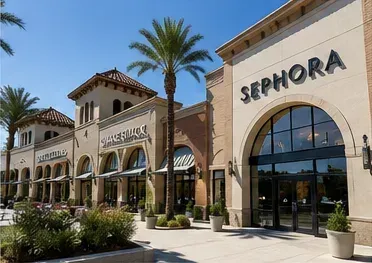
Greater LA Retail Demand Holds Firm as Supply Stays Tight

Greater LA retail fundamentals remain resilient as limited availability supports demand for established properties. According to Globe St, Colliers reported regional vacancy of 6.2% in Q2 2026. Local and international brands continue seeking space, while a constrained development pipeline limits new supply...
The main entrance of the NuHAA building, featuring a modern glass and stone facade, at sunset.

Done Deal: Yum Brands completes $1.5 billion sale of Pizza Hut

It’s official: Pizza Hut is no longer part of Yum Brands.

Yum Brands Inc. said it has completed the sale of the pizza giant to private equity firm LongRange Capital for approximately $1.5 billion, with the opportunity for Yum to receive an additional earn-out of $75 million by 2030 based on future performance.

In August, in a separate transaction, Yum closed on the sale of Pizza Hut China to Yum China Holding, its former Chinese subsidiary, for $1.2 billion. The LongRange deal completes Yum’s sale of Pizza Hut through two separate transactions for $2.7 billion in the aggregate...


Ace Hardware on track to open 170-plus new stores by year’s end

Ace Hardware celebrated a milestone store opening as it continues to expand its footprint.

The world's largest hardware cooperative today marked its 100th new store opening of 2026 and remains on pace to open more than 170 new stores by the end of 2026. The company said its growth reflects strong demand from existing Ace retailers expanding their businesses, independent operators converting to the Ace brand and new entrepreneurs joining the cooperative...

QSR’s 20 Best Franchise Deals for 2026

For many years, franchising rewarded momentum. A compelling concept, solid unit growth, and a polished sales presentation were often enough to attract development interest. 


Not anymore. 

As inflation, higher labor costs, tighter lending standards, and shifting regulations reshaped the operating environment over the past year, prospective franchisees have become far more selective about where they invest. Excitement still matters, but it no longer closes the deal on its own...
Five Below Q2 sales soar; on track for 150 new stores; to enter Puerto Rico

Five Below delivered robust second-quarter results on both its top and bottom line as its value message continues to resonate with consumers.

The tween and teen discount retailer, which reported its fifth consecutive quarter of double-digit comparable sales, said it was raising its full-year sales and adjusted earnings outlook based on its strong first half and the “significant opportunities” that lie ahead...
Lee's Famous Recipe Chicken reached 100 locations six years after it was founded.

Long before Jack Omer became a Lee’s Famous Recipe Chicken franchisee, he was a kid running around the restaurants his grandfather helped build. 


Harold Omer, who cofounded the brand alongside the eponymous Lee Cummings in 1966, wasn’t known for having much of a sense of humor. He was an engineer by trade, impeccably dressed, and serious enough that, according to his grandson, he’d mow the lawn in a coat and tie. But when he’d take Jack through the restaurants, another side of him came through...


By Marc Perlof August 28, 2026
Fed’s preferred inflation gauge shows core prices rose 3.3% annually in July Prices consumers pay for a variety of goods and services rose slightly in July, according to the Federal Reserve’s main inflation gauge.  The personal consumption expenditures price index, which the Fed uses as its preferred forecasting tool, increased a seasonally adjusted 0.2% for the month, putting the annual inflation rate at 3.7%, the Commerce Department reported Wednesday. Both were 0.1 percentage point above the Dow Jones consensus...
By Marc Perlof August 24, 2026
By Marc Perlof | MarcRetailGuy CA #01489206 August 17, 2026 If you own retail real estate, here’s what just changed for you. A tenant asks for a $100,000 tenant improvement allowance. The landlord thinks the request is unreasonable. The tenant thinks it is necessary to open the business. Who is right? Possibly both. The problem is that landlords and tenants often look at tenant improvement allowances, commonly called TI, from different points of view. The tenant sees money needed to build and open the business. The landlord sees money being invested into a property and a lease. Both sides may be looking at the same $100,000 but thinking about it very differently. The TI amount matters, but it should not be negotiated by itself. Rent, lease term, annual increases, free rent, tenant strength, guaranties, options, and TI are all connected. The real question for an owner is not simply, “How much TI am I giving?” It is, “What am I receiving in return?” The Tenant Sees the Cost of Opening Opening a retail business can require a large investment before the first customer walks through the door. Depending on the business and condition of the space, the tenant may need to pay for construction, equipment, signs, permits, inventory, employees, and marketing. From the tenant’s point of view, the TI allowance helps reduce the cash needed to open. That is why the tenant may focus heavily on the TI amount. The landlord, however, has a different concern. The Landlord Is Investing Capital For the landlord, TI is real money going into the lease. The owner should ask what the property receives in return for that investment. Is the tenant signing a longer lease? Is the rent strong? Are there annual increases? Is the tenant financially strong? Is there a guaranty? Will the improvements have value if the tenant leaves? The same $100,000 TI allowance can create very different risks. A $100,000 investment into a strong tenant signing a long term lease may make financial sense. The same investment into a tenant with limited financial strength, a weak guaranty, and improvements with little value to the next tenant may be much riskier. The amount is the same. The investment is not. TI, Rent, and Free Rent Are Connected A lease negotiation often includes several economic items. A tenant may ask for TI, lower rent, free rent, or some combination of all three. An owner should look at the total package because each option affects the property differently. TI requires capital upfront. Free rent delays cash flow. Lower rent can reduce NOI throughout the lease and may affect the property’s value. This does not mean one structure is always better. The answer depends on the lease term, rent increases, tenant strength, cost of construction, cost of vacancy, and the owner’s available capital. The mistake is negotiating each item as if it has nothing to do with the others. A Simple Example Assume a tenant is negotiating a 10 year lease and offers the landlord two choices: Option 1: $100,000 in TI with $10,000 per month in starting base rent. Option 2: No TI with $9,000 per month in starting base rent. At first, Option 2 may look better because the landlord keeps the $100,000. But the $1,000 monthly rent difference equals $12,000 per year. Before considering rent increases or other lease terms, the lower starting rent creates $120,000 less base rent over 10 years. There is another issue. Lower NOI may also affect the property’s value when a buyer underwrites the income. This does not automatically make Option 1 the better deal. The owner still needs to consider the timing of the $100,000 investment, the tenant’s financial strength, default risk, rent increases, the value of the improvements, and whether the owner has the cash available. The point is simple: saving money on TI does not automatically create the better financial result. Free Rent Is Also Part of the Investment Free rent can also be misunderstood. A tenant may view free rent as time to complete construction, hire employees, stock inventory, and open the business before paying full rent. For the landlord, it is income that is not being collected. Assume the monthly base rent is $10,000 and the tenant receives four months of free base rent. That is $40,000 in base rent the landlord does not collect. Depending on the lease, the tenant may still pay NNN expenses during the free rent period, or those expenses may also be reduced or delayed. The details matter. An owner who gives $100,000 in TI and $40,000 in free rent is making a larger investment than the TI number alone suggests. Leasing commissions, landlord work, and other concessions can increase the total investment further. This does not mean free rent is bad. It means the owner should measure the full cost of the lease package. More TI Should Be Supported by the Lease If an owner is being asked to invest more capital, the rest of the lease should support that investment. That may mean a longer lease term, stronger rent, annual increases, better security, a stronger guaranty, or other terms that reduce risk. If the tenant wants more TI, more free rent, lower rent, limited guaranties, and flexible options, the owner should ask whether the total package still makes financial sense. Occupancy alone does not make a lease a good investment. A Simple Payback Test One useful screening test is how long it takes the owner to recover the total lease investment. That should include TI, free rent, leasing commissions, landlord work, and other concessions. As a rough guide, an owner may want the total lease investment recovered within the first 25% to 40% of the firm lease term. On a 5 year lease, that usually means about 1 ½ to 2 years. On a 10 year lease, that may mean about 2 ½ to 4 years. This is not a perfect rule, but it is a useful warning sign. If most of the lease term is needed just to recover the upfront investment, the owner may be taking too much risk. Look at the Whole Deal The highest rent does not always create the best deal. A tenant offering higher rent may require more TI, more free rent, a larger leasing commission, or more landlord work. Another tenant may offer slightly lower rent but require much less capital and have stronger financials. That is why lease negotiations should be viewed as one investment decision, not a collection of separate deal points. Final Thought Landlords and tenants often misunderstand TI allowances because they are looking at the same money from different sides. The tenant is trying to reduce the cash needed to open. The landlord is deciding how much capital to invest and what income, security, and long-term value will be received in return. Before agreeing to or rejecting a TI request, owners should ask one question: What is the total investment I am making, and what am I receiving in return? If a tenant offered you a choice between higher TI and higher rent or no TI and lower rent, would you know which deal creates the better result for your property? In next week’s blog, How TI Decisions Affect Retail Property Value and Buyer Underwriting , we will look at how buyers review tenant strength, remaining lease term, future TI costs, lease rollover, and the durability of a property’s NOI. #RetailRealEstate #CommercialRealEstate #RetailLeasing #TenantImprovements #TIAllowance #CommercialLeasing #MarcRetailGuy Based in Los Angeles. Serving Southern California. Active across California. Advising clients nationwide.
By Marc Perlof August 21, 2026
Retail sales post biggest drop since 2025 as spending momentum fades U.S. retail sales sank to their lowest in over a year in July as consumers pulled back on online shopping and vehicle sales. Retail purchases, not adjusted for inflation, fell 0.6% in July from the previous month in the biggest decline since May 2025, according to the Census Bureau data released Friday. Excluding gasoline and auto, retail sales dropped 0.2%...
More Posts