Weekly Perl: A Commercial Real Estate News Recap

Marc Perlof • June 26, 2026
A banner for weekly commercial real estate news recap
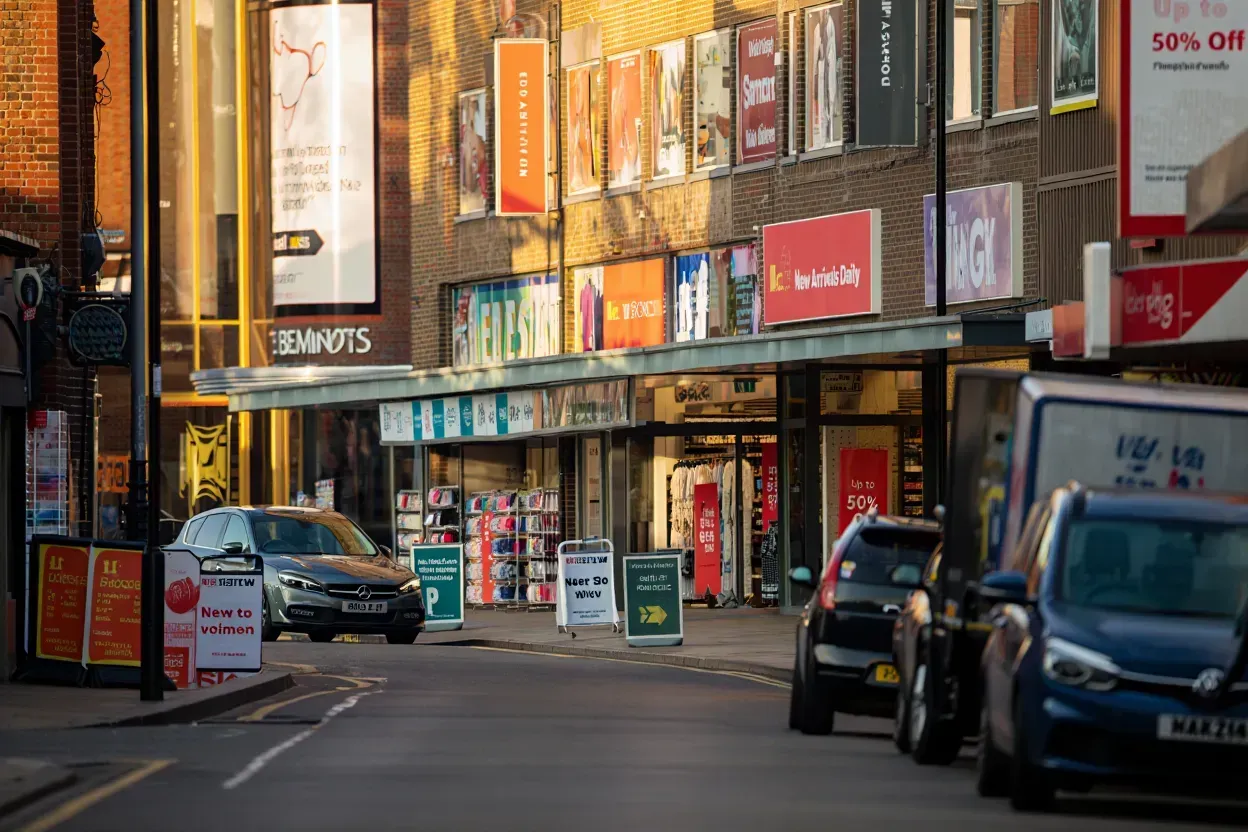
A car is parked in front of a sign that says 223

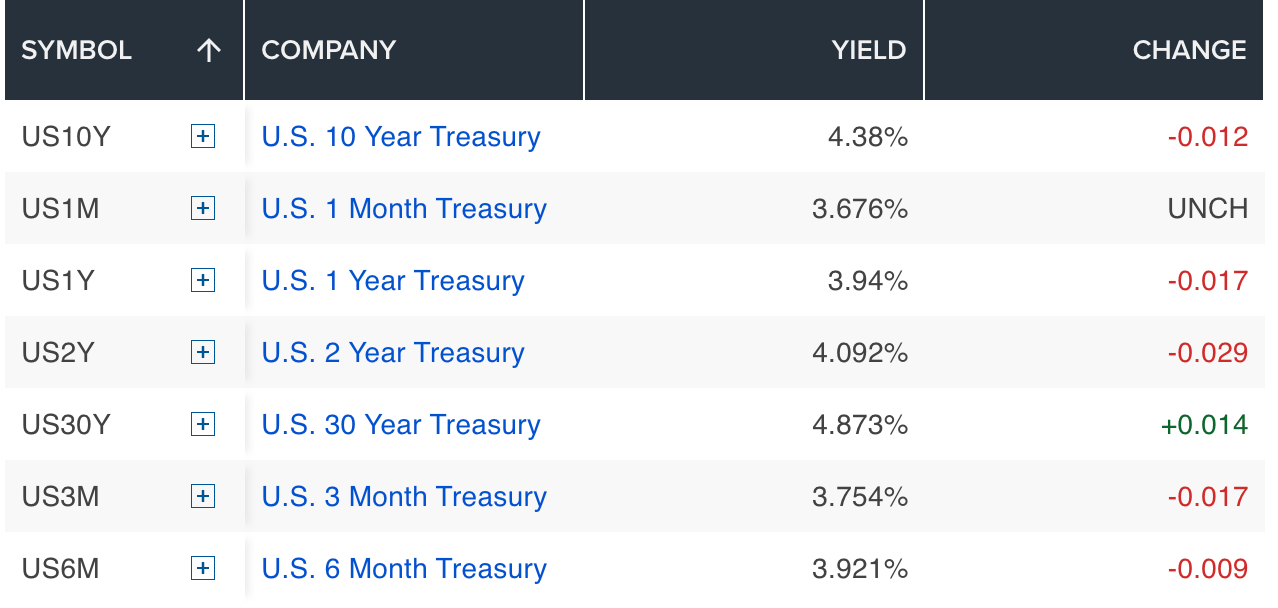
10-year Treasury yield is little changed after May inflation data comes in as expected


U.S. Treasury yields were relatively unchanged on Thursday as Wall Street assessed key inflation data for May.

The yield on the 10-year U.S. Treasury note — the key benchmark for mortgages, auto loans and credit card debt — fell less than 1 basis point to 4.396%.


The 2-year Treasury note yield, which more closely tracks short-term Federal Reserve interest rate policy, declined 1 basis point to 4.127%. The longer-dated 30-year Treasury bond yield was up less than 1 basis point at 4.861%...

The front of an aldi store with a sign in front of it.

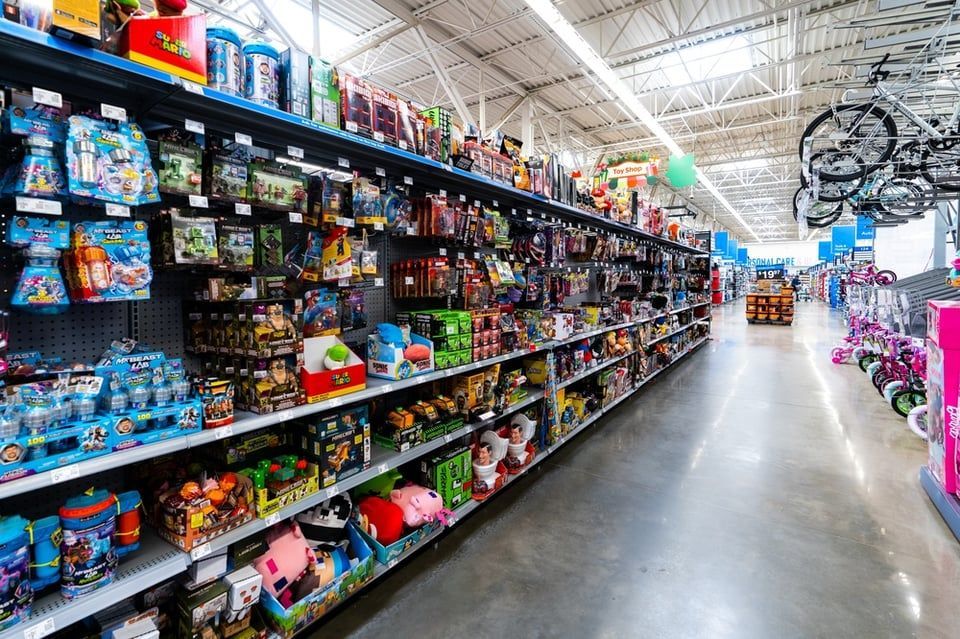
Circana: Toy unit sales increase 5% to start 2026


Despite shaky consumer sentiment, the U.S. toy industry is off to a strong start to the year.

New data from Circana reveals that the toy category posted 13% dollar growth from January through April compared to the same period last year. Unit sales increased by 5%, while average selling price (ASP) grew by 7%.


Seven of the 11 "supercategories" tracked by Circana posted dollar gains, with the majority posting growth in dollars, units and ASP. The top-performing segments were games and puzzles (39% year-over-year increase), driven by Pokémon; explorative and other toys (36%), led by Major League Baseball (MLB) and NeeDoh; and building sets (20%), driven by LEGO Botanicals and Formula 1 sets...

An elevated outdoor view of a modern shopping mall promenade with manicured greenery, palm trees, and pedestrians.

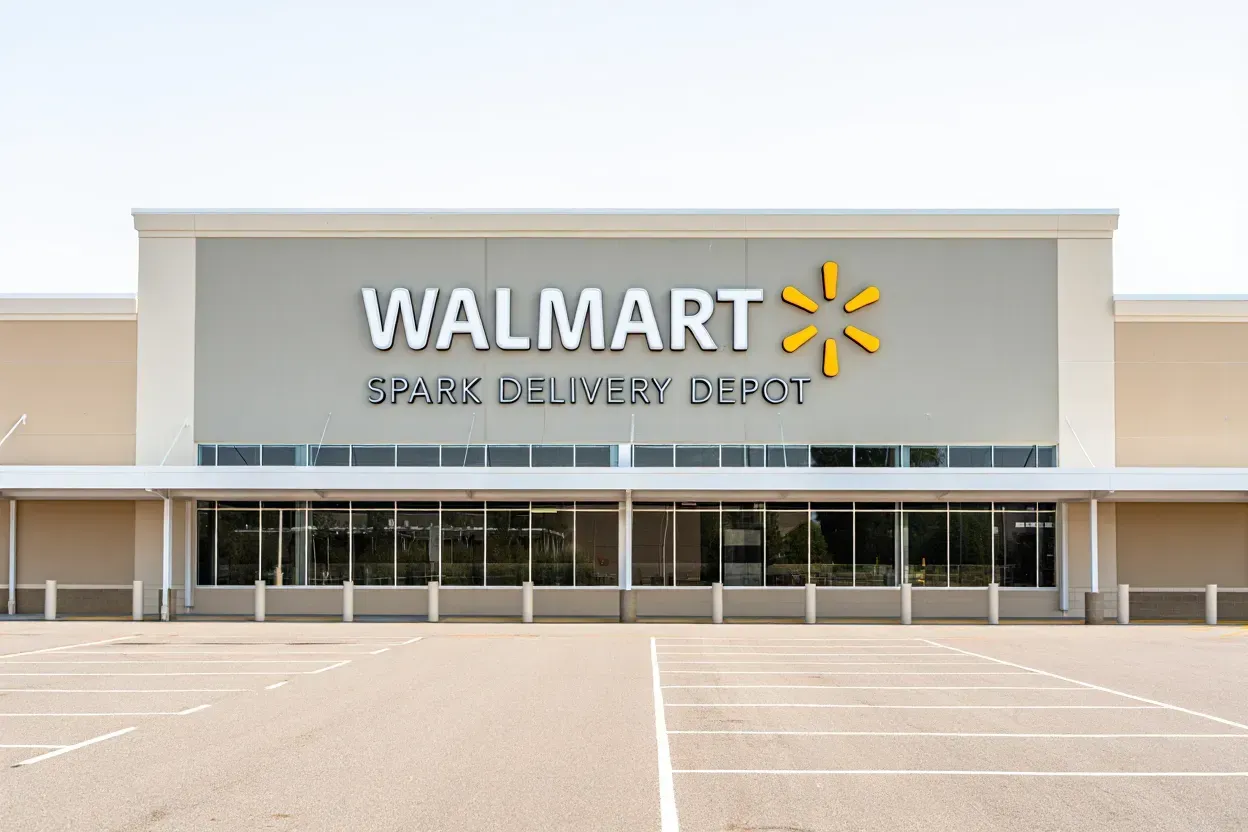
Walmart Pilots Dark Store Depots For Faster Last-Mile Delivery

Walmart is doubling down on last-mile delivery speed by testing so-called “Spark Delivery Depots” in vacant retail locations, according to Talk Business & Politics. The latest dark store was set up in a shuttered Walgreens at 2964 W. Martin Luther King Blvd. in Fayetteville, Arkansas, joining earlier efforts in Dallas and with more planned in Poughkeepsie, NY, and Carlstadt, NJ. These dark stores are closed to walk-in customers and serve as rapid fulfillment points for online orders, targeting delivery speeds as fast as 30 minutes in select markets for a $10 express fee..

The American flag waves against a bright blue sky between towering glass skyscrapers, viewed from a low angle.

Retailer Olive Young's expansion mirrors K-beauty demand in US


For the past decade, a beauty trend from Korea has swept the United States in the form of face creams and other skin care products. The phenomenon, dubbed K-beauty, is moving from social media onto the shelves of national chains — and reshaping commercial real estate.

Olive Young, South Korea’s largest beauty chain, is using the Los Angeles area as a launchpad for national growth, opening this month at Westfield Century City, just a few weeks after it started business at its first U.S. store about 20 miles away, in Pasadena...

A flat, single-story retail building with a

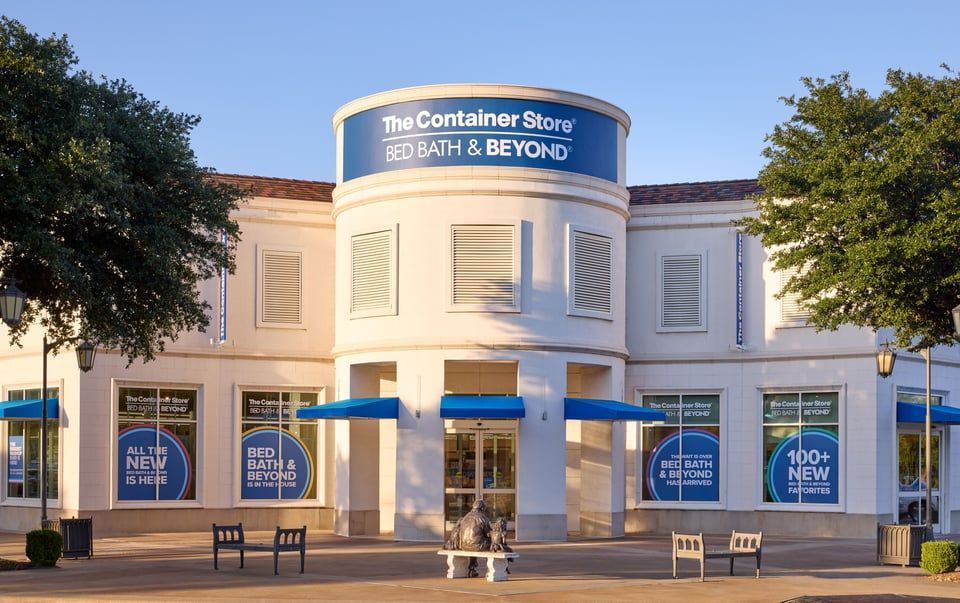
The Container Store + Bed Bath & Beyond concept expands to 22 locations — here's where


Bed Bath & Beyond and The Container Store’s retail co-branding efforts have expanded.

After the two retailers opened their first location in Fort Worth, Texas, on May 16, the concept is rolling out to nearly two dozen stores in “phase one” of the expansion (see locations later in article). In April, Bed Bath & Beyond Inc. announced plans to purchase The Container Store for $150 million in stock and convertible notes, and later announced plans for a “phased integration” of The Container Store’s 98 locations to include Bed Bath & Beyond merchandise...
The main entrance of the NuHAA building, featuring a modern glass and stone facade, at sunset.

US Core Retail Sales Hit Record as Shoppers Shift Online

US shoppers continued to open their wallets in May despite high gas prices and persistent cost pressures, with core retail sales rising 0.5% month-over-month and 5.6% on the year, according to Marcus & Millichap Research Services. The data signals that, even as headline inflation outpaced wage growth for a second consecutive month, households were willing to dig into their savings and spend on day-to-day goods. Yet not all retail categories shared equally; general merchandise, miscellaneous retail, and online stores notched record sales, while spending in restaurants and electronics dipped as some consumers trimmed discretionary budgets...
A green Publix Food & Pharmacy sign mounted on a white and beige building exterior against a blue sky.

Kroger beats Street with Q1 revenues, misses on earnings

The Kroger Co. exceeded analyst projections for sales with help from e-commerce, even as it came in slightly below expectations for profits.

The supermarket giant reported net earnings of $903 million for the first quarter of fiscal 2026 ended May 23, 2026, up 4% from $866 million during the first quarter of the prior fiscal year. On an adjusted basis, the company earned $1.58 per share, just missing consensus estimates of $1.59 per share but up from $1.49 in the previous period...
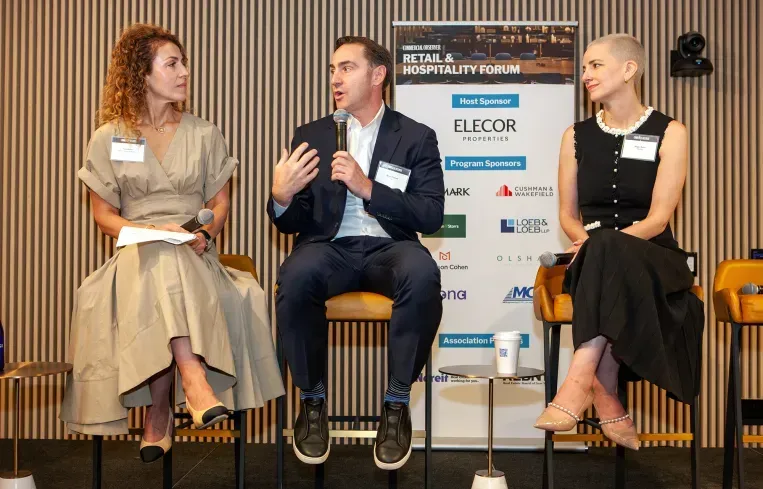


Changes in Retail Real Estate Nationwide Have Accelerated: Forum

Kicking off a panel on the nature of experiential retail and the future of destination developments during Commercial Observer’s recent Retail & Hospitality Forum, Nima Fazeli, senior vice president of development for the H.wood Group, made a statement that should have seemed more shocking than it was.

“I don’t think you can really differentiate the different asset classes anymore,” Fazeli said of commercial real estate in general. “I think everybody in this room would agree that it’s all becoming blended into one homogeneous experience...”

Construction Costs Jump 9.6% as Materials Spike in May

Post-Pandemic Inflation Hits Construction Input Costs


Construction input costs surged in May, with Associated General Contractors (AGC) and Associated Builders and Contractors (ABC) reporting the highest annual increase since the pandemic first disrupted supply chains. According to Multifamily Dive, the 9.6% year-over-year jump is double the growth rate of the broader US consumer price index, signaling a new round of inflationary pressure across the sector. The report shows that contractors are facing faster-rising input costs every month in 2026, a reversal from trends seen during the previous year, when costs had briefly stabilized...


By Marc Perlof June 22, 2026
By Marc Perlof | MarcRetailGuy CA #01489206 June 22, 2026 If you own retail real estate, here’s what just changed for you. In a seller’s market, the strongest pricing results usually come from creating competition, not simply setting the highest asking price possible. Retail property owners who understand how to manage buyer psychology and negotiation leverage usually achieve better results than owners who rely only on aggressive pricing. When buyer demand increases and inventory becomes limited, pricing strategy changes significantly. Buyers move faster, competition increases, and leverage often shifts toward sellers. In the previous article, “How to Price Retail Property in a Buyer’s Market,” I discussed how owners should reduce buyer fear, respond to conservative underwriting, and protect leverage when buyers control negotiations. What Changed What happens in a seller’s market? In a seller’s market, strong retail properties often attract multiple buyers at the same time. When there are fewer properties available for sale, buyers often compete harder for well-located properties with strong tenants and reliable income. That competition can improve both pricing and deal terms. Buyers who move slowly in weaker markets often speed up their decision making once they believe competition exists. That can increase pricing pressure and strengthen seller leverage during negotiations. This is especially true for well positioned NNN properties, shopping centers, and retail assets with strong tenant performance, longer lease terms, stable operating histories, and value add opportunities. Why do buyers behave differently in strong markets? Buyers become more aggressive when they believe quality opportunities are difficult to replace. In stronger markets, investors worry less about finding another deal and more about losing the current opportunity to another buyer. That changes negotiation behavior significantly. Buyers may shorten due diligence timelines, ask for fewer conditions and move forward more quickly, move faster on underwriting, or become more flexible on pricing when they believe competition exists. At the same time, strong markets do not eliminate buyer caution completely. Sophisticated buyers still review lease terms, future repair costs and operating expenses, tenant quality, and long term property risks carefully before making decisions. Why It Matters Why can overpricing still hurt sellers in strong markets? One of the biggest mistakes sellers make in strong markets is assuming buyers will pay any price simply because demand is high. Overpricing too aggressively can still reduce activity and weaken momentum, even when overall market conditions favor sellers. The strongest pricing results usually happen when sellers create competition naturally instead of trying to force pricing higher from the beginning. Properties that attract multiple serious buyers often achieve stronger pricing because buyers begin competing against each other instead of negotiating only against the seller. Are buyers always being honest during negotiations? Not always. Even in strong markets, buyers often try to create leverage by acting less interested than they really are. Some buyers may claim: pricing is too aggressive market conditions are softening future problems may be developing they are prepared to walk away while still requesting documents, touring the property, or continuing negotiations behind the scenes. That does not mean sellers should ignore legitimate concerns. It means owners should evaluate buyer behavior carefully and separate real market feedback from negotiation tactics. Can sellers become overconfident in strong markets? Absolutely. Seller driven markets can create unrealistic expectations. Owners may begin setting unrealistic pricing expectations or assume every property should create aggressive bidding regardless of tenant quality, lease structure, or future risk. Strong markets still reward well positioned properties. They do not eliminate the importance of pricing discipline, professional marketing, or strategic negotiation management. Strategic Advice for Retail Property Owners How do you create stronger competition? The goal is not simply listing the property at the highest possible number. The goal is creating enough qualified buyer interest to generate competitive pressure naturally. That starts with presenting the property the right way, professional marketing materials, targeted buyer outreach, organized financial reporting, and clearly communicating the strengths of the property. Properties with stable tenants, strong lease structures, organized leases, financial records, and property information (due diligence), and predictable expenses are usually much easier to market competitively. Should sellers negotiate with only one buyer? Usually not too quickly. In stronger markets, maintaining conversations with multiple buyers often helps sellers keep negotiating power and improves negotiating outcomes. Once sellers negotiate exclusively with one buyer too early, leverage can shift back toward the buyer. That does not mean every buyer should be forced into a bidding war. It means sellers should manage the process carefully and understand how competition affects buyer behavior. What should sellers focus on most in strong markets? Sellers should focus on maintaining leverage without becoming unrealistic. Strong markets create opportunity, but disciplined execution still matters. Owners who combine strong positioning, realistic expectations, professional marketing, and carefully managed negotiations usually perform much better than owners who rely only on aggressive asking prices. Real Deal Insight During the strong seller driven retail market of 2021 and parts of 2022, we consistently saw the strongest pricing results on properties where sellers created organized competitive processes instead of simply raising asking prices aggressively upfront. Properties that generated multiple qualified buyers often achieved stronger pricing and better terms because buyers competed against each other instead of negotiating only against the seller. Owner Self Assessment If your property entered a stronger seller driven market, would buyers feel urgency to compete for the opportunity or confidence that they could wait for pricing to soften later? If you are considering selling and want to understand whether your property could benefit from a strategy that uses buyer competition to improve pricing, reach out directly. I will walk you through how buyers respond to retail opportunities in stronger markets and how to position your property to maximize leverage. Are you creating real buyer urgency or unintentionally reducing it through unrealistic pricing expectations? This concludes the Market Condition Pricing Series. So far, we've discussed how market conditions affect pricing, how buyers behave in different environments, and how sellers can protect leverage throughout the process. In the next series, “Execution and Decision Making,” we will focus on what many retail property owners struggle with most: applying these strategies to their specific property. We'll cover how to choose the right pricing strategy for your asset, why some properties sit on the market while others sell, how buyers actually evaluate retail properties, and how to decide whether selling now or waiting may create a better outcome. Understanding pricing strategy is important. Applying it correctly is what ultimately determines results. Based in Los Angeles. Serving Southern California. Active across California. Advising clients nationwide. #RetailRealEstate #NNN #ShoppingCenters #StripCenters #CommercialRealEstate #InvestmentSales #CapRates #RetailProperty #LosAngelesCRE #1031Exchange
By Marc Perlof June 19, 2026
Federal Reserve holds rates steady but signals possible hike before year’s end US stock markets dropped on Wednesday afternoon after the Federal Reserve left interest rates unchanged and signaled a possible rate hike before the end of the year. The Fed was widely expected to keep rates at a range of 3.5% to 3.75%, where they have remained since December. The decision was unanimously supported by the Fed’s voting committee.  “Economic activity is expanding at a solid pace despite elevated uncertainty that owes, in part, to the conflict in the Middle East,” the Fed’s open market committee said in the statement...
By Marc Perlof June 15, 2026
By Marc Perlof | MarcRetailGuy CA #01489206 June 15, 2026 If you own retail real estate, here’s what just changed for you. In a buyer’s market, pricing discipline matters more than optimism. Retail property owners who understand how buyers think during weaker markets usually protect more value than owners who continue pricing based on past market conditions. When buyers gain leverage, they become more selective, move slower, and focus much more on risk. That changes how retail properties are priced, negotiated, and sold. In the previous article, “When to Adjust Price vs Hold Firm on Your Retail Property,” I discussed how owners should interpret buyer behavior, pricing feedback, and negotiation pressure once a property hits the market. What Changed What happens in a buyer’s market? In a buyer’s market, buyers gain more negotiating power because there are fewer active buyers compared to the number of properties for sale. Investors know they have more options, which changes how they negotiate. That usually slows down transactions. Buyers take longer to make decisions, ask more questions during due diligence, and review future risks more carefully before making offers. This is especially true for NNN properties, shopping centers, strip centers, and multitenant retail properties where buyers are closely reviewing tenant quality, how soon tenants may need to renew their leases, property repairs that still need to be completed, and future operating expenses. Why are buyers becoming more cautious? Buyers are becoming more careful because the margin for error is smaller today. Higher interest rates, more expensive financing, rising insurance costs, and economic uncertainty are causing investors to focus more on protecting themselves from future problems. Instead of focusing mostly on upside potential, buyers are asking: Will the tenants remain stable? Can rents hold up if the economy slows? Will future expenses increase faster than income? Will future buyers still want this property several years from now? That mindset affects pricing directly. Why It Matters Why do pricing mistakes hurt more in buyer driven markets? In buyer driven markets, aggressive pricing can reduce activity quickly. When buyers believe a property is overpriced, many simply move on instead of negotiating. That can create a difficult cycle for sellers. Limited activity often leads to longer time on market, weaker leverage, and growing buyer concerns over time. Buyers also become more aggressive once they believe a seller may eventually lower pricing. However, that assumption is not always correct. Some retail property owners are financially stable, are not highly motivated to sell, and are willing to wait if pricing does not reflect the property’s long term value. What concerns are buyers focused on most? Buyers today are closely reviewing anything that could create future problems. This includes: short lease terms property repairs that still need to be completed relying too heavily on one tenant for income weak tenant sales rising operating expenses poor common area maintenance (CAM) recovery structures older building systems future repair costs Even if a property is performing well today, buyers may still lower their pricing if they believe future risks are increasing. That is why clean, stable, and predictable retail properties are usually performing much better than properties with uncertainty or operational problems. Strategic Advice for Retail Property Owners Should you lower pricing quickly in a buyer’s market? Not automatically. Owners should avoid repeatedly lowering pricing out of frustration or fear. Frequent price cuts can weaken buyer confidence and make sellers appear desperate. Instead, pricing adjustments should be based on consistent feedback from qualified buyers. How do you reduce buyer fear? In buyer driven markets, reducing uncertainty becomes extremely important. Owners should review anything that could create concerns for buyers. This includes how organized the leases, financial records, and property information are, as well as any repairs that still need to be completed. Buyers will also pay close attention to lease expiration dates, common area maintenance charges and reimbursements, NNN expense responsibilities, lease options, rent increases, guarantor strength, and who is responsible for major items such as the roof, HVAC system, and parking lot. The easier it is for buyers to understand the property and its future risks, the more confidence they usually have during negotiations. When might waiting make more sense than selling? Not every market is ideal for selling. In some situations, extending leases, improving tenant quality, resolving deferred maintenance, increasing NOI, or waiting for financing conditions to improve may create better long term results than selling immediately. That does not mean owners should avoid selling in weaker markets. It means owners should understand whether they are selling from a position of strength or reacting emotionally to market uncertainty. What should sellers focus on most? The goal in buyer driven markets is not simply attracting offers. The goal is building buyer confidence while protecting leverage as much as possible during negotiations. Owners who reduce uncertainty, position their properties correctly, and respond strategically to buyer concerns usually perform much better than owners who rely only on aggressive pricing. Real Deal Insight We are beginning to see buyers usually lower what they are willing to pay when they see uncertainty in today’s retail market. Properties with organized financials, stable tenants, and fewer future concerns are consistently attracting stronger pricing and smoother negotiations. Owner Self Assessment If buyers reviewed your property today, would they see stable long term income or future problems they need to price into the deal? If you are considering selling and want to understand how buyers would likely evaluate your property in today’s market, reach out directly. I will walk you through how investors are reviewing pricing, lease risk, operating expenses, and future value before you make a decision. Are you positioning your property to reduce buyer fear or unintentionally increasing it? In the next article, “How to Price Retail Property in a Seller’s Market,” we will discuss how strong buyer demand changes negotiation strategy, pricing leverage, and competitive bidding environments. Based in Los Angeles. Serving Southern California. Active across California. Advising clients nationwide.  #RetailRealEstate #NNN #ShoppingCenters #StripCenters #CommercialRealEstate #InvestmentSales #CapRates #RetailProperty #LosAngelesCRE #1031Exchange
More Posts