Weekly Perl: A Commercial Real Estate News Recap

Marc Perlof • June 12, 2026
A banner for weekly commercial real estate news recap
A car is parked in front of a sign that says 223

Inflation tops 4% for the first time in 3 years on spike in gasoline prices


Soaring gasoline prices, triggered by the U.S. war with Iran, have pushed inflation to its highest level in more than three years.

A report from the Labor Department on Wednesday showed consumer prices in May were up 4.2% from a year ago. That's the biggest annual increase since April of 2023. By contrast, the Labor Department says average wages have risen only 3.4% over the last year, so workers' real spending power has declined...

The front of an aldi store with a sign in front of it.

The U.S. adds 172,000 jobs. Many are in restaurants, bars and hotels


The labor market is finding its footing.

U.S. employers added jobs for the third month in a row in May, according to a report Friday from the Labor Department. Job gains for March and April were also revised significantly higher.


Restaurants and bars added 48,000 jobs last month in anticipation of strong summer demand, while the overall hospitality industry added 70,000 jobs. Construction companies and local governments were also hiring. Healthcare, which has been a steady source of employment gains, added another 35,000 jobs.


An elevated outdoor view of a modern shopping mall promenade with manicured greenery, palm trees, and pedestrians.

Q226 Burns + CRE Daily Fear and Greed Index


The latest Burns + CRE Daily Fear and Greed Index shows investors remain cautiously optimistic, but transaction activity continues to be constrained by tighter capital markets and economic uncertainty.


Highlights include:

  • The Fear & Greed Index held at 56, signaling a market that remains in expansion mode.
  • 71% of investors kept their CRE exposure unchanged in 2Q26, near a record high.
  • Industrial remained investors’ favorite sector, while office continued to lag...


The American flag waves against a bright blue sky between towering glass skyscrapers, viewed from a low angle.

Black Rock Coffee Bar Adjusts to Life in the Spotlight

Burlington Stores  reported strong, better-than-expected first quarter sales and earnings, and lifted its outlook for the year as consumers continue to seek out value in an uncertain economy.

The off-price retailer continued to grow its footprint during the quarter, with a net increase of 30 stores. For the full year, it now anticipates 115 net new stores for 2026, ahead of its prior guidance for 110...

A flat, single-story retail building with a

SN Super50: Publix sits at No. 2

Despite falling out of a tie for first place in this year’s ACSI, Publix has long cultivated a reputation among consumers for providing a consistently high-level customer experience.

The Lakeland, Fla.-based retailer remains the fastest-growing traditional supermarket company, expanding rapidly beyond its base in Florida. Last year Publix added 42 net new stores, including 16 in its home state and five in Kentucky, its most recent expansion territory...

The main entrance of the NuHAA building, featuring a modern glass and stone facade, at sunset.

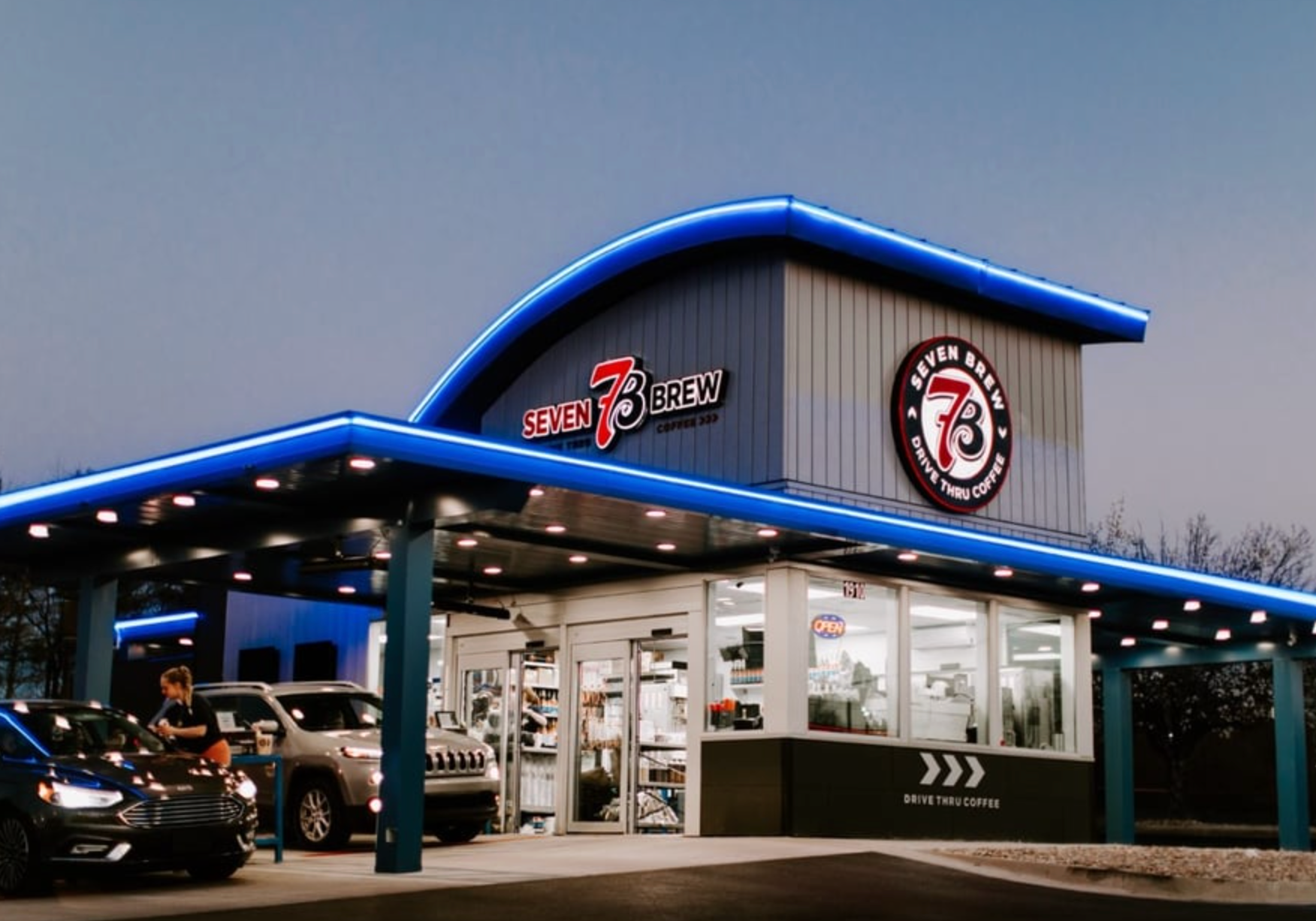
7 Brew, Smoothie King top Yelp's 2026 Fastest Growing Brands list


Beverage chains are increasingly gaining interest from consumers on Yelp.

Drive-thru coffee chain 7 Brew is America's fastest growing brand, with 244% year-over-year increase in consumer interest on Yelp (see full list at end of article), according to the online review platform's 2026 Fastest Growing Brands report. The rise in interest comes after the Arkansas-based coffee chain debuted on the Fastest Growing Brands list last year at #23...

A green Publix Food & Pharmacy sign mounted on a white and beige building exterior against a blue sky.

NRF: Retail sales grow again in May

Consumers continue to show their resilience as retail sales rose for the eighth consecutive month in May despite high gas prices and ongoing inflation.

Total retail sales (including restaurants, but excluding automobile dealers and gasoline stations) increased 0.42% month over month and were up 7.19% year over year in May, according to the CNBC/NRF Retail Monitor released by the National Retail Federation. That compared with increases of 0.34% month over month and 5.73% year over year in April...


Two bundt cakes on small plates: one with chocolate drizzle, one with caramel drizzle, with cinnamon sticks nearby.

TPG, Norges, Canadian Pensions Make $2B Grocery Retail Play

Consumers continue to show their resilience as retail sales rose for the eighth consecutive month in May despite high gas prices and ongoing inflation.

Total retail sales (including restaurants, but excluding automobile dealers and gasoline stations) increased 0.42% month over month and were up 7.19% year over year in May, according to the CNBC/NRF Retail Monitor released by the National Retail Federation. That compared with increases of 0.34% month over month and 5.73% year over year in April...


Interior of a casual restaurant featuring blue chairs, red accents, brick walls, and a

Joining retro trend, Pizza Hut looks to revive sales by serving nostalgia


Hungry customers who walk into Pizza Huts run by franchisee Daland Corp. will soon be jolted back to the 1980s, greeted by Tiffany-style lamps under its bright red roofs from 40 years ago.

The goal: Use nostalgia to boost sales and loyalty of baby boomer and Gen-X customers in an era of digital ordering and touch-pad drive-thrus.


At 38 eateries so far, Daland is tweaking its real estate and menus to follow a retro trend tested in U.S. fast-food chains including Taco Bell, KFC and McDonald's. But it's doing so in a slower atmosphere with checkered tablecloths and different cooking styles...

Study: Texas higher than national average for organized retail crime


Texas retailers are facing repeat and organized retail crime at a higher rate than the national average.

The top 10% of retail crime offenders were responsible for more than 71% of recorded retail crime across Texas stores last year, according to newly released data from global retail crime intelligence platform Auror. In contrast, across the U.S., the top 10% of offenders were responsible for more than 66% of the crime...


By Marc Perlof June 8, 2026
By Marc Perlof | MarcRetailGuy CA #01489206 June 8, 2026 If you own retail real estate, here’s what just changed for you. Most retail properties do not lose value because of the original asking price. They lose value because owners misread buyer behavior after the property hits the market and react emotionally instead of strategically. In uncertain markets, correctly interpreting buyer feedback often matters more than the initial pricing itself. In the previous article, “How to Price Retail Property in an Uncertain Market,” we discussed how changing market conditions are affecting retail property pricing and buyer behavior across today’s market. What Changed What changes after your property hits the market? Once a retail property hits the market, the focus shifts from pricing strategy to market interpretation. Owners are no longer trying to predict value. They are now trying to understand how buyers are responding to the opportunity in real time. Some buyers move slowly even when they like the deal. Others negotiate aggressively just to create leverage. Some disappear completely while they review financing, compare other opportunities, or wait for more market clarity. This creates confusion for many retail property owners. Weak activity can feel like rejection even when some buyers still have interest. At the same time, activity alone does not always mean the pricing is correct. Why It Matters Why are the first 30 to 60 days so important? The first 30 to 60 days on the market usually provide the clearest signal. That is when buyers pay the closest attention to a new listing and when your property has the most visibility. If there are no offers, buyers may believe pricing is unrealistic or the property does not compare well to other opportunities. If buyers are showing interest but not making offers, the issue may involve tenant concerns, future expenses, lease structure, financing assumptions, or how the opportunity is being presented. Does a low offer mean your price is wrong? Not always. Sophisticated buyers often test seller confidence by negotiating aggressively even when they believe the property is attractive. This is especially important when multiple buyers remain engaged. Continued interest, requests for information, and active discussions often show that buyers still see value, even if they are trying to push pricing lower. Does buyer activity always mean your pricing is correct? No. Not all activity is good activity. A property attracting only unrealistic offers, unqualified buyers, or bargain hunters may indicate the wrong buyer pool is being targeted. That does not always mean the property is overpriced. It may mean the property is being marketed to the wrong audience or positioned in the wrong way. Long periods on the market can also create seller fatigue. Owners often become frustrated after months of uncertainty and begin making reactive decisions instead of strategic ones. That can lead to unnecessary price reductions, weaker leverage, and poor negotiation outcomes. Strategic Advice for Retail Property Owners How do you know if the issue is price or marketing? Start by looking at the quality of buyer activity. The goal is not simply generating attention. The goal is attracting qualified buyers who understand the property and have the ability to close. Before making major pricing adjustments, evaluate whether the issue may involve marketing and positioning instead of pricing itself. Weak marketing materials, poor presentation, limited buyer outreach, or failing to communicate the strengths of the property can reduce activity even when pricing is reasonable. When should you hold firm? You may be able to hold firm when multiple qualified buyers are still engaged, reviewing information, touring, or negotiating. Aggressive buyer comments do not always mean your price is wrong. Sometimes buyers are simply trying to improve their position. When should you adjust? You should consider adjusting when qualified buyers consistently identify the same concerns about pricing, lease risk, expenses, or future income stability. Repeated feedback from serious buyers should not be ignored. The key is responding strategically instead of emotionally. Waiting too long can weaken leverage, but overreacting too quickly can leave money on the table. Successful sellers protect leverage, maintain momentum, and keep the right buyers engaged throughout the process. Real Deal Insight We are seeing retail properties lose leverage not because the assets are weak, but because sellers either ignore legitimate market feedback or overreact to temporary uncertainty. Owner Self-Assessment If buyers are not moving forward on your property, are they rejecting the opportunity itself or are they negotiating strategically to improve their position? If your property is not generating the activity you expected, reach out directly. I will help you determine whether the issue is pricing, positioning, buyer targeting, lease structure, future expenses, or negotiation strategy before unnecessary value is lost. Are you interpreting buyer behavior correctly or reacting emotionally to uncertainty? In the next article, “How to Price Retail Property in a Buyer’s Market,” we will discuss how pricing strategy changes further when buyers gain more leverage and begin underwriting deals much more conservatively. Based in Los Angeles. Serving Southern California. Active across California. Advising clients nationwide. #RetailRealEstate #CommercialRealEstate #NNN #InvestmentSales #ShoppingCenters #StripCenters #CapRates #LosAngelesCRE #RetailProperty
By Marc Perlof June 5, 2026
White House Cuts Construction Equipment Tariffs To 15% The Trump administration is dropping tariffs on a range of construction equipment from 25% to 15%, effective June 8, per Bisnow. The measure applies to imports incorporating aluminum, steel, and copper—covering categories like forklifts and residential HVAC systems. The new rates are slated to run through the end of 2027, according to a presidential proclamation released Monday. Some foreign-made products with at least 85% US-sourced steel or aluminum will qualify for an even lower 10% tariff. The stated aim: alleviate cost pressure and stimulate activity in US industrial, construction, and logistics sectors, all challenged by elevated materials pricing and global supply chain stress...
By Marc Perlof June 1, 2026
By Marc Perlof | MarcRetailGuy CA #01489206 June 1, 2026 If you own retail real estate, here’s what just changed for you. Retail property pricing in today’s market requires flexibility, not certainty. Retail property owners who adjust pricing quickly and respond to real buyer behavior usually protect more value than owners who stay stuck on outdated pricing expectations. Many owners are still looking at pricing from a stronger market while buyers are making decisions based on today’s higher costs and higher risks. That gap is causing more stalled listings, lower offers, and longer negotiations across retail real estate transactions. What Changed Why does the market feel so uneven right now? The retail market is not moving in one clear direction. Some shopping centers and NNN properties are attracting strong buyer interest, while others are sitting on the market with little activity even in solid locations. Buyers are reviewing retail properties much more carefully than they were a few years ago. Instead of making quick decisions, they are spending more time evaluating tenant quality, lease terms, future expenses, and how stable the rental income looks long term. In Los Angeles and across Southern California, many retail property owners still expect pricing based on comparable sales from a stronger market. Buyers, however, are focused on what deals look like today with higher interest rates, rising insurance costs, and more uncertainty about the economy. How are higher rates affecting retail property pricing? Higher borrowing costs and elevated 10-year Treasury yields have changed how buyers calculate value. Loans are more expensive, monthly payments are higher, and many investors are becoming more cautious about risk. Buyers are also paying closer attention to future expenses such as maintenance, tenant turnover, insurance increases, and major property repairs. That has changed negotiations significantly. Buyers are moving slower, asking more questions, and pushing harder on pricing whenever they see uncertainty or future risk. At the same time, uncertainty does not automatically mean a property is weak. Some retail properties are still attracting strong interest because buyers see stable tenants, predictable income, and long-term value. The challenge for owners today is understanding whether weak activity is being caused by pricing, property fundamentals, buyer caution, or how the opportunity is being presented to the market. Why It Matters Does your retail property have one exact value today? No. In today’s market, your property usually has a pricing range. Where it falls in that range depends on how safe and reliable buyers believe your future rental income will be. Properties with strong tenants, longer lease terms, stable rent collections, and organized financial records are generally holding value better. Properties with short leases, deferred maintenance, weaker tenants, or unclear expenses are seeing buyers reduce offers much more aggressively. Even small concerns can impact value quickly. If buyers believe future risks are increasing, they usually lower what they are willing to pay right away. What are buyers worried about? Buyers today are focusing more on protection than upside. They want to know whether tenants can continue paying rent if the economy slows, whether future expenses can stay under control, and whether the property will still look attractive to future buyers several years from now. That is why cleaner and more predictable retail deals are performing better in today’s market. Strategic Advice for Retail Property Owners Should you price high and wait? Usually, no. In uncertain markets, waiting too long can hurt your leverage. Your asking price should help attract real market feedback quickly instead of simply reflecting what you hope the property is worth. The first few weeks on the market are extremely important. That is when your property gets the most attention and when buyer feedback is usually the most honest. If activity is weak early, buyers are usually telling you they see either pricing problems or too much risk. Is weak activity always a pricing problem? No. Not every slow period means your pricing is wrong. In uncertain markets, buyers sometimes pause decisions while evaluating interest rates, financing conditions, or broader economic concerns. Before making major pricing adjustments, owners should also evaluate whether the property is being marketed and positioned correctly. Weak marketing materials, poor buyer targeting, limited exposure, or failing to clearly communicate the property’s strengths can reduce activity even when pricing is reasonable. Before going to market, review anything that could make buyers uncomfortable. This includes lease rollover schedules, tenant quality, deferred maintenance, CAM reconciliations, and how organized your financial records are. Buyers are heavily discounting uncertainty right now. In uncertain markets, owners who adapt early usually protect more value than owners who wait too long to respond. Real Deal Insight We are seeing buyers place very different values on properties that would have sold for similar pricing a few years ago. Properties with stable income and lower perceived risk are consistently attracting stronger offers. Owner Self-Assessment If your property came to market today, would buyers see stable income and low risk or future problems that reduce value? If you are thinking about selling or want to understand how buyers would likely price your retail property today, reach out directly. I will walk you through how investors are viewing retail deals right now and where your property may realistically trade before you make a decision. Are you pricing based on today’s market or yesterday’s expectations? In the next article, “When to Adjust Price vs Hold Firm on Your Retail Property,” we will break down one of the biggest pricing mistakes retail property owners make after going to market: reacting emotionally instead of understanding what buyer behavior is actually telling them. Based in Los Angeles. Serving Southern California. Active across California. Advising clients nationwide. #RetailRealEstate #NNN #ShoppingCenters #StripCenters #CommercialRealEstate #InvestmentSales #CapRates #LosAngelesCRE #RetailInvesting #1031Exchange
More Posts