Weekly Perl: A Commercial Real Estate News Recap

Marc Perlof • April 10, 2026
A banner for weekly commercial real estate news recap
A car is parked in front of a sign that says 223

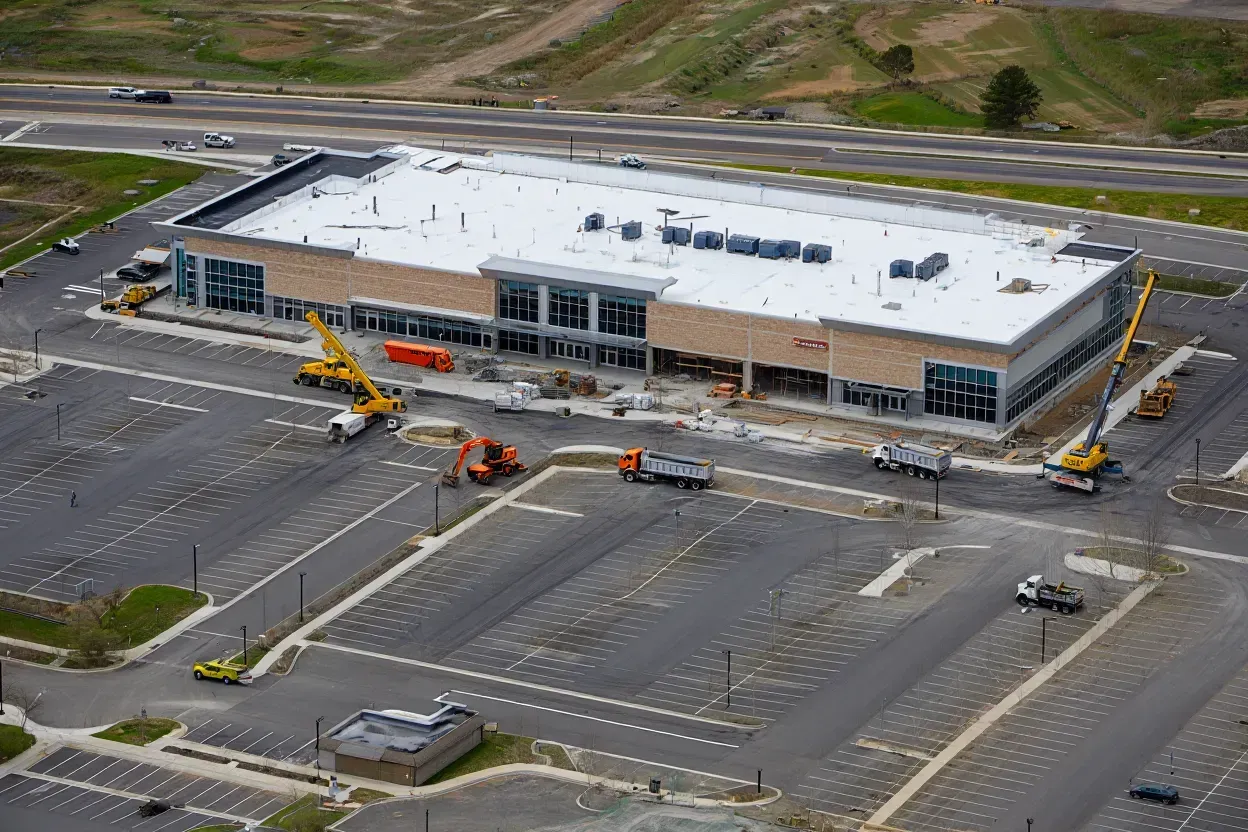
Retail Construction Slows Nationwide in 2026

Limited New Supply

The Commercial Observer reports that retail construction is slowing significantly in the US, with just 64.2M SF underway in Q1 2026, per CoStar Group data. This marks an 8% decline from 2025 and falls far short of the 10-year average of 90M SF. Industry experts point to rising land prices, higher construction costs, and elevated interest rates as key headwinds for retail construction.


The front of an aldi store with a sign in front of it.

C-store retailer Yesway files IPO; plans to open 130 new stores by 2031

Yesway has revived its effort to go public.


The Texas-based convenience store operator, which operates stores under the Yesway and Allsup banners, has filed a registration statement with the U.S. Securities and Exchange Commission for a proposed initial public offering of Class A common stock. The company, which filed to go public in 2021 but subsequently withdrew the effort, applied to list the stock on the Nasdaq under the ticker symbol "YSWY..."
An elevated outdoor view of a modern shopping mall promenade with manicured greenery, palm trees, and pedestrians.

County Launches New Funding to Help Communities Buy Commercial Properties

The program offers forgivable financing to small businesses, nonprofit organizations and developers seeking to acquire commercial buildings. Officials say the goal is to promote local ownership of storefronts.


Los Angeles County officials announced a new round of funding aimed at helping small businesses and community groups purchase commercial properties, part of a broader effort to stabilize neighborhood business districts and reduce displacement...
The American flag waves against a bright blue sky between towering glass skyscrapers, viewed from a low angle.

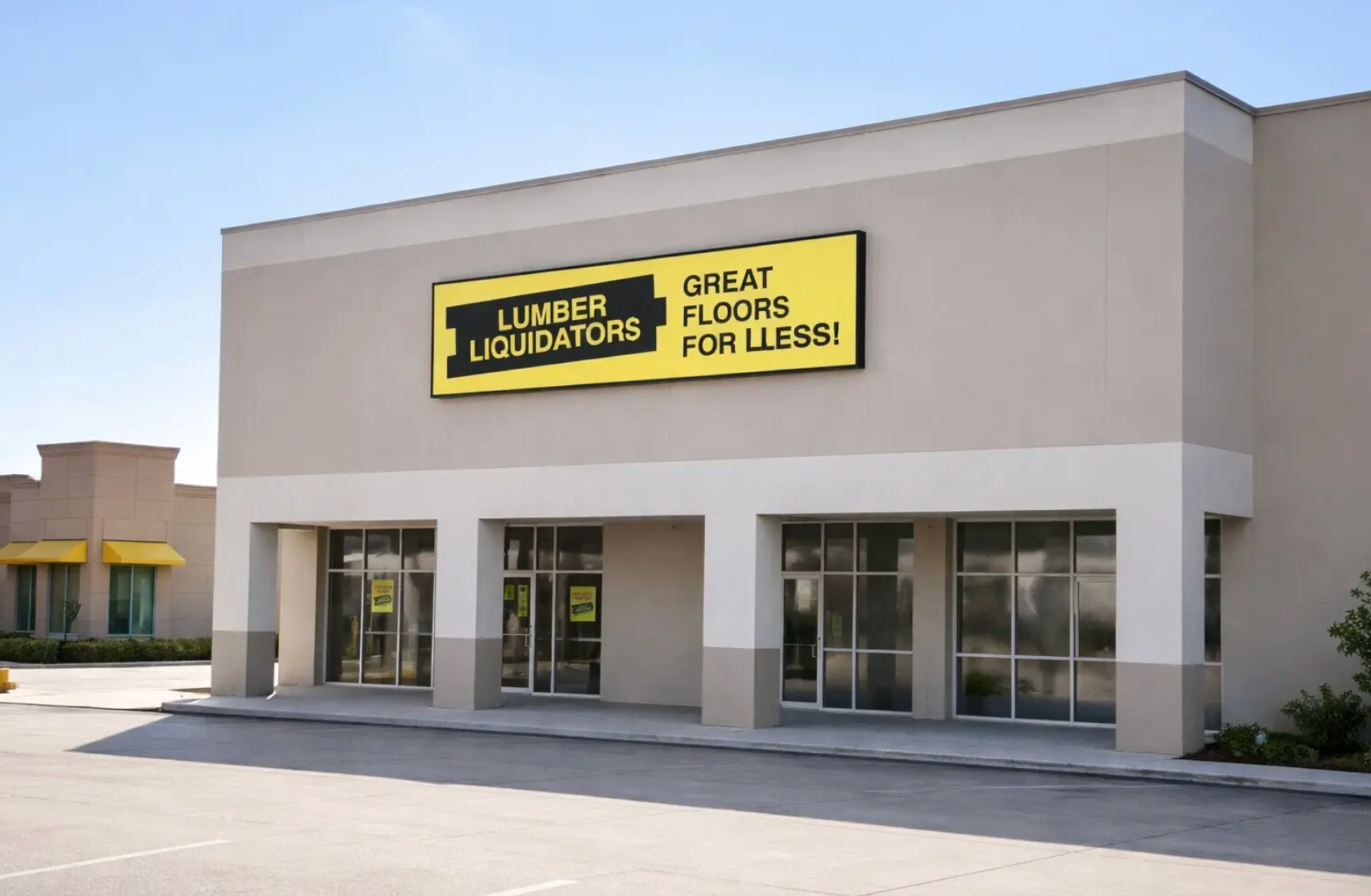
Bed Bath & Beyond, making second pivot, to buy retailers Lumber Liquidators, Cabinets To Go

Bed Bath & Beyond will soon have a second $150 million acquisition under its belt, now striking a deal to buy the company that owns retailers Lumber Liquidators and Cabinets To Go and their roughly 300 stores.


The back‑to‑back acquisitions signal a sharp strategic pivot for Bed Bath & Beyond, underscoring its effort to reinvent itself from a traditional home‑goods retailer into a home‑services company focused on higher‑ticket renovation and installation projects rather than low‑margin merchandise sales...

A flat, single-story retail building with a

Chick-fil-A Dials Up Expansion as Sales Near $24 Billion

Chick-fil-A is in the process of shifting its licensed strategy and eyeing international acceleration. But stateside, growth is ramping up as well. According to its Monday-released FDD, the company expanded by a net of 179 franchised and company-operated stores in 2025 to reach 2,863 total outlets. That was a material lift from 2024’s 132 net openings and the prior year’s 141...

The main entrance of the NuHAA building, featuring a modern glass and stone facade, at sunset.

Store Expansion News: March update


Retailers and restaurants alike made headlines in March with store expansion plans and new formats.

Here are the major stories as reported by Chain Store Age, starting with the most recent.


•CVS opens first of nearly 20 pharmacy-only stores planned for 2026 CVS Health has opened the first of nearly 20 pharmacy-only, “apothecary-style” CVS Pharmacy locations it plans to open this year. Located in Chicago’s West End neighborhood, the new concept aims to help bridge gaps in care and make it easier for community members to access medications, immunizations and other health care services, according to the company...
A modern two-story commercial office building with a stone-accented entrance at dusk, seen from a paved parking lot.

CoStar: Retail space construction down year over year in Q1


Commercial real estate construction remained low to start the year, continuing a long-term trend.

New data from real estate analytics firm CoStar found that in the first quarter of 2026, roughly 64.2 million square feet of retail space was under construction in the U.S., down from approximately 70 million square feet a year earlier. The first quarter total was also well below the 10-year average, which consistently exceeded 90 million square feet during the last expansion cycle...

A green Publix Food & Pharmacy sign mounted on a white and beige building exterior against a blue sky.

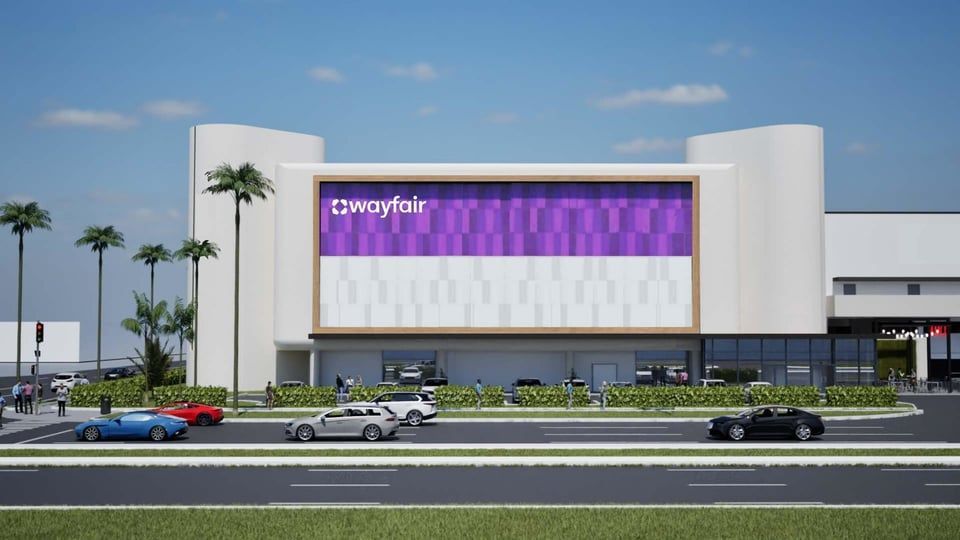
Wayfair to open large-format store at Galleria Fort Lauderdale


Wayfair is expanding its brick-and-mortar plans to the Sunshine State.

The online home furnishings giant will open its first large-format store in Florida at Galleria Fort Lauderdale as part of the center's comprehensive redevelopment...

Two bundt cakes on small plates: one with chocolate drizzle, one with caramel drizzle, with cinnamon sticks nearby.

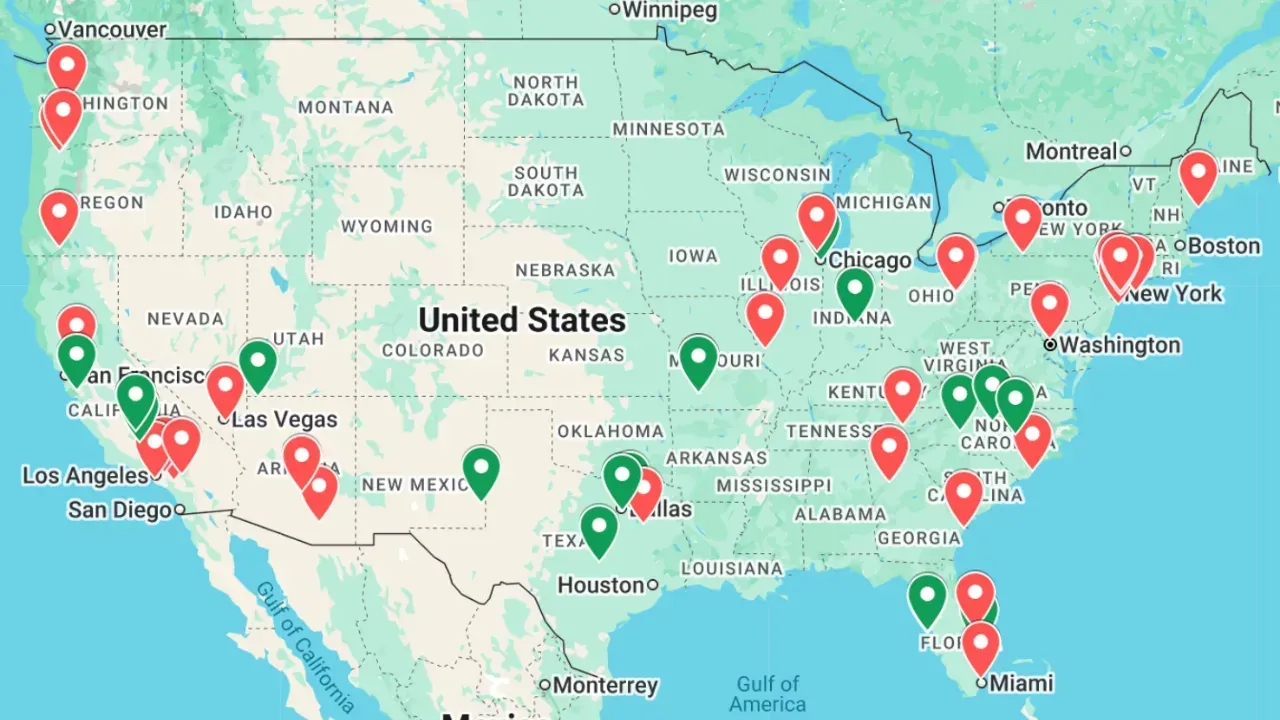
Dollar Tree closed the most stores in March

Dollar Tree closed over a dozen stores during the month of March, including four in New Jersey and another three in New York, according to the latest data provided by 
ScrapeHero


Walgreens closed six locations while both CVS and Family Dollar closed five. Publix powered down three locations. 

CVS led the month for openings with six and Target opened five. Costco celebrated three openings and Dollar Tree cut the ribbon on two openings...
Interior of a casual restaurant featuring blue chairs, red accents, brick walls, and a

Marco's Pizza to open new locations across SoCal


The most populous state in the nation has posted negative population growth once more, according to recently released estimates from the Census Bureau. Los Angeles, the state’s largest market, lost 62,454 people in 2025 on a net basis...

By Marc Perlof April 6, 2026
By Marc Perlof | MarcRetailGuy CA #01489206 April 6, 2026 If you own retail real estate, here’s what just changed for you. The U.S. is not running out of money. But debt is rising and keeping interest rates higher. That is already pushing down retail property values. Higher government debt is keeping borrowing costs high, and that lowers your property value. What Changed What is happening? A recent article from Yahoo Finance claims the U.S. is “insolvent” based on Treasury data.¹ The idea comes from comparing what the government owes to what it owns. What is causing it? The U.S. keeps spending more than it collects. Total debt keeps growing. At the same time, interest rates have gone up. That makes it more expensive for the government to borrow money. This does not mean the U.S. cannot pay its bills. It means the system is under pressure. That pressure affects interest rates across the economy. Why It Matters (Value Impact) How does this affect your property value? Retail property values are tied to income and cap rates. Cap rates follow the 10-year Treasury. When government debt keeps rates higher, cap rates stay higher. Higher cap rates mean lower property values. How are buyers underwriting this today? Buyers are using higher borrowing costs in their numbers. They are also assuming they will sell at higher cap rates later. That lowers what they can pay today. What happens if rates stay high? Your income becomes more exposed. Expenses like insurance and maintenance keep rising. If rent does not keep up, your net income drops. Lower income plus higher cap rates equals lower value. Strategic Advice for Retail Property Owners What should you do right now? Base decisions on today’s borrowing costs. Not past pricing. If you are selling, price to current cap rates. If you are holding, protect your income. What should you review in your lease? Look closely at what expenses you can pass through. Insurance, CAM, and repairs matter more now. If your lease does not fully protect your income, your value is already exposed. What should you prepare for? Plan for rates to stay higher longer. Build in margin for higher costs and slower leasing. Do not rely on rate cuts to fix your deal. Real Deal Insight Buyers are pricing retail deals today based on current debt costs and higher cap rate assumptions. A recent strip center owner in Southern California expected pricing based on a 5.25% cap rate from prior comps. Today, buyers are underwriting closer to 6.25% to 6.75% due to higher debt costs and exit assumptions. On a $1,000,000 NOI: At 5.25% cap → value ≈ $19.0M At 6.50% cap → value ≈ $15.4M That is a ~$3.6M difference, without any change in income. This is the gap sellers and buyers are working through right now. Deals are getting done, but only when pricing reflects today’s cap rates and financing reality. Market POV Pricing is a moving target right now. If you are thinking about selling or completing a 1031 exchange in 2026, looking at your property’s value sooner rather than later is optimal. Waiting for rates to drop may not bring values back to prior peaks. Buyers are already adjusting to a higher rate environment, and pricing is resetting in real time. Owner Self-Assessment If you had to sell today, would your current income support today’s higher cap rates? Market Data and Sources U.S. federal debt is over $34 trillion and continues to grow.² Interest on that debt is now one of the largest government expenses.³ The 10-year Treasury has been around the 4% range, well above prior lows.4 This shift is already showing up in pricing across Los Angeles retail deals today, and it is changing how buyers and sellers are negotiating in real time. If you own retail real estate in Los Angeles or Southern California, this is already showing up in pricing, negotiations, and deal structure across strip centers, shopping centers, and NNN assets. If you own retail real estate, I can show you what your property is worth today based on current cap rates, buyer demand, and real underwriting. Call or DM me for a current value analysis. What happens to your property value if cap rates increase 0.5% to 1.0%? Based in Los Angeles. Serving Southern California. Active across California. Advising clients nationwide. #RetailRealEstate #NNNProperties #CapRates #CommercialRealEstate #RetailInvesting #LosAngelesRealEstate #CREMarket #InvestmentProperty #StripCenters #ShoppingCenters #RealEstateStrategy
By Marc Perlof April 3, 2026
'Mild stagflation': Bank of America rips up economic forecasts, braces for $100 oil all year on Iran war disruptions Bank of America analysts are projecting slower growth, higher inflation, and $100 per barrel oil all year as a result of the Iran war — even if it ends within weeks. "The war dividend so far: mild stagflation," BofA economist Claudio Irigoyen and his team wrote in a note on Wednesday, referring to the economic phenomenon of higher inflation coupled with slower growth...
By Marc Perlof March 30, 2026
By Marc Perlof | MarcRetailGuy CA #01489206 March 30, 2026 If you own retail real estate, here’s what just changed for you. NNN retail is no longer passive income. Rising insurance and CAM costs are reducing NOI and directly impacting property value. For years, the model was simple. Tenant pays taxes. Tenant pays insurance. Tenant pays CAM. Owner collects rent. That model is now breaking in practice. What Changed Insurance premiums have increased sharply across California, driven by carrier exits and wildfire risk.¹ At the same time, CAM expenses are rising across the board. Utilities, repairs, maintenance, and vendor costs are all moving up.² On paper, these are still tenant expenses. In reality, recovery is no longer clean or guaranteed. Why It Matters When expenses rise and are not fully recovered, NOI drops. Lower NOI leads to lower value. Buyers are now underwriting this risk. They are not assuming full reimbursement. They are adjusting pricing based on uncertainty in expense recovery.³ This directly impacts: Sale pricing Refinance proceeds Buyer demand What Is Driving This Shift Three core factors: 1. Insurance volatility Carriers are exiting California or tightening coverage. Premiums are rising, and terms are less predictable.¹ 2. Operating cost pressure Labor, materials, and utilities continue to increase. Maintenance is no longer stable year to year.² 3. Tenant resistance Tenants are pushing back on expense increases. Some delay payment. Others dispute charges or request documentation. How Buyers Are Thinking Today Buyers are no longer treating NNN as clean pass-through income. They are: Stress-testing CAM and insurance assumptions Discounting recoverability of expenses Building reserves for future increases Underwriting more conservative NOI Lenders are also paying closer attention to expense stability and coverage risk. This is changing how deals are priced.³ If you own retail property, focus on your lease structure. Key areas to review: Expense recovery language Make sure insurance, CAM, and all operating costs are clearly recoverable. Control provisions Limit tenant ability to dispute or delay payment. Caps and exclusions Understand where you are exposed. Many leases have limits that reduce recovery. Documentation Keep clean records. You may need to support charges during disputes or a sale. Buyers today are discounting deals where CAM and insurance recovery is unclear. Some are retrading during escrow after reviewing expense history and tenant pushback. Example: A strip center in Los Angeles sees insurance increase by $40,000. If fully recovered, no impact. If only partially recovered, NOI drops. At a 6.5% cap rate, a $40,000 NOI loss reduces value by over $600,000. This is how buyers are underwriting today. If your lease does not fully protect your income, your value is already exposed. If you want, I will walk your lease, identify where you are exposed, and show you how it impacts your value today. What does your lease actually protect? #RetailRealEstate #NNNProperties #TripleNetLease #RetailInvesting #StripCenters #ShoppingCenters #CREInvesting #LosAngelesRealEstate #CaliforniaCRE #CommercialRealEstate #MarcRetailGuy
More Posts