Weekly Perl: A Commercial Real Estate News Recap

Marc Perlof • April 17, 2026
A banner for weekly commercial real estate news recap
A car is parked in front of a sign that says 223

NRF: Retail sales inch up for sixth consecutive month in March

Retail sales rose slightly in March despite inflation and high gasoline prices as many consumers received higher-than-usual tax refunds.


Core retail sales (excluding restaurants, auto dealers and gas stations) were up 0.41% month over month in March and are up 7.05% year over year, according to the CNBC/Retail Monitor released Tuesday by the National Retail Federation. That compared with increases of 0.27% month over month and 5.87% year over year in February...
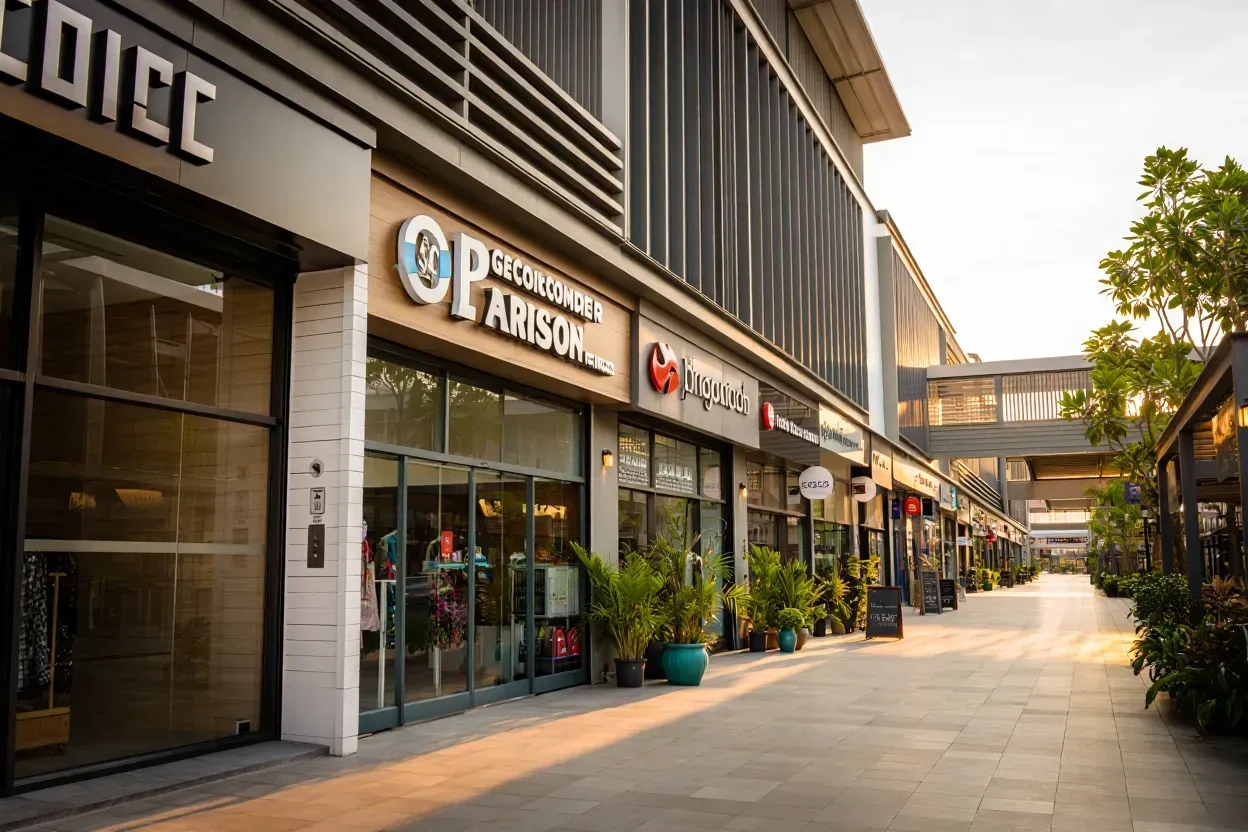
The front of an aldi store with a sign in front of it.

Retail Stabilizes as Store Closures Fade

Market Absorbs Closures


The US retail sector entered 2026 on a more stable footing as the absorption of prior store closures continued. After a rocky period in 2024 and uneven market conditions last year, leasing activity showed resilience and vacancies remained relatively flat, according to Colliers’ Knowledge Leader. Net absorption was negative 4.3M SF in Q1, reflecting lingering impacts from closures. However, robust backfill demand and lower move-outs signaled that the worst may be over for many shopping centers.
An elevated outdoor view of a modern shopping mall promenade with manicured greenery, palm trees, and pedestrians.

Mall owners plot how to fill Saks Global’s abandoned space

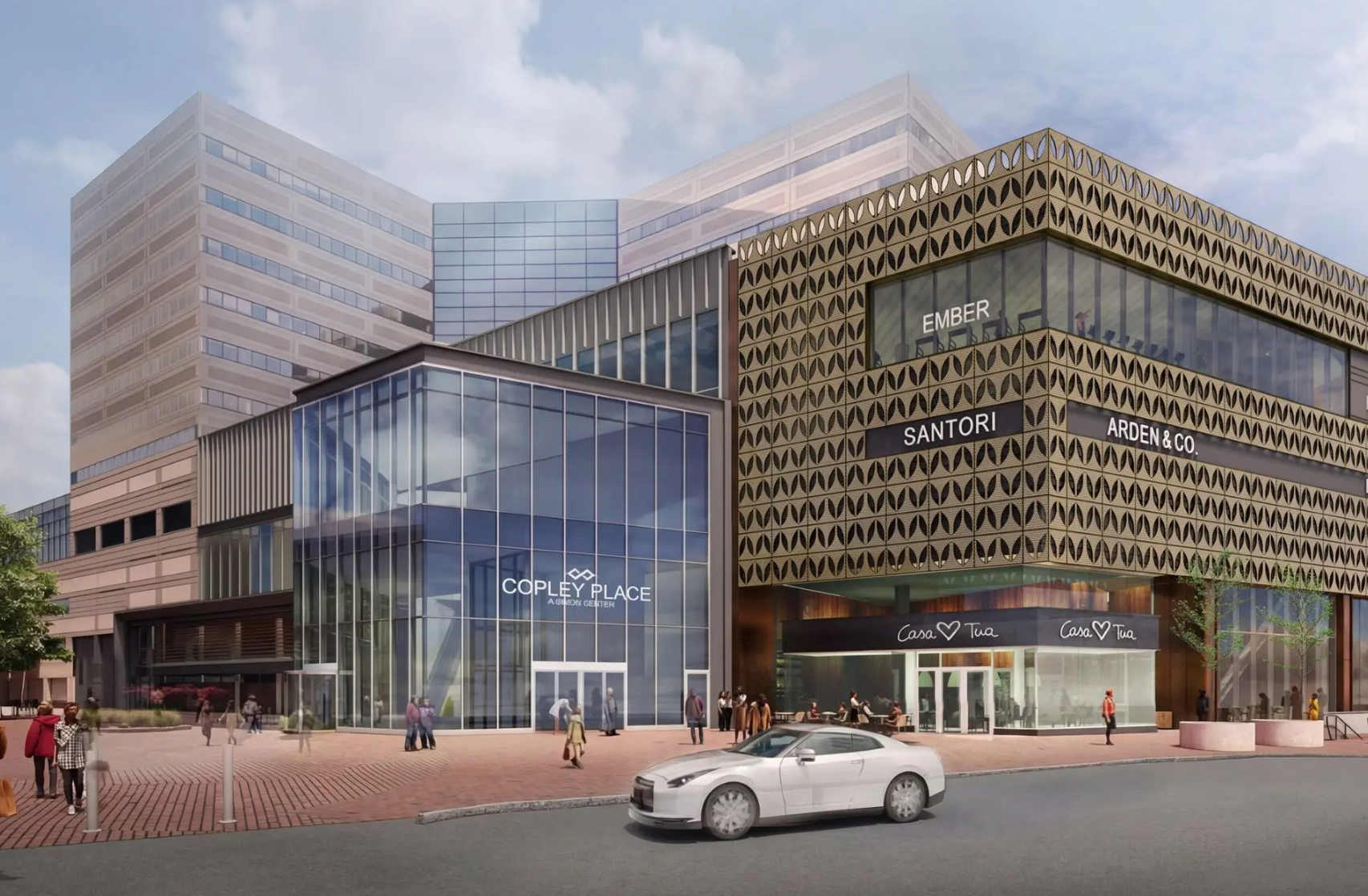
Just hours after Saks Global said it was closing a Neiman Marcus store at a Boston mall, the property's landlord unveiled a plan to redevelop the soon-to-be-vacant space that anchors the retail hub.


Indianapolis-based Simon Property Group, obviously prepared for the tenant exit, said it would carve up the luxury chain's roughly 100,000 square feet of space at Copley Place and fill it with a lineup of new luxury retailers and distinctive restaurants...
The American flag waves against a bright blue sky between towering glass skyscrapers, viewed from a low angle.

Jack in the Box is Coming to Orlando

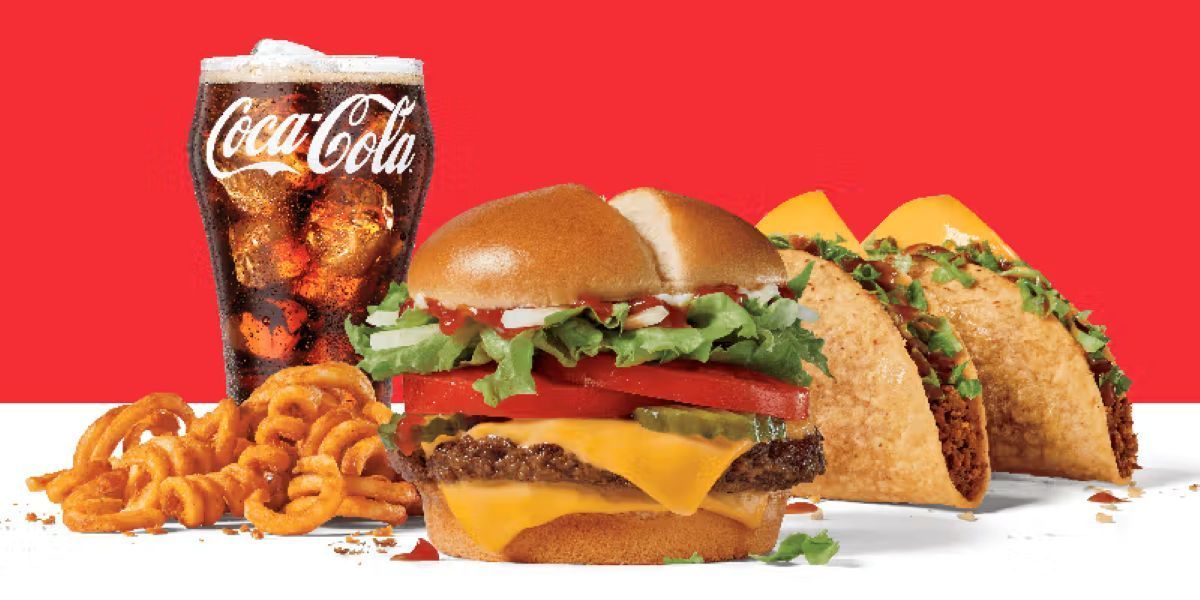
Jack in the Box, the clown-themed fast food restaurant, is coming to Orlando.


The restaurant will open at 5324 S. John Young Parkway in June 2026, according to its official website.

The chain, founded in the 1950s in San Diego by Robert O. Peterson, is known for as much for its burgers and tacos as it is for its Jack in the Box clown mascot. The restaurant had a significant Florida presence in the 1970s and 80s, but closed its Sunshine State restaurants. Now, it’s making a return to Florida...
A flat, single-story retail building with a

Fast food's return to the Promenade draws upbeat reactions from city officials

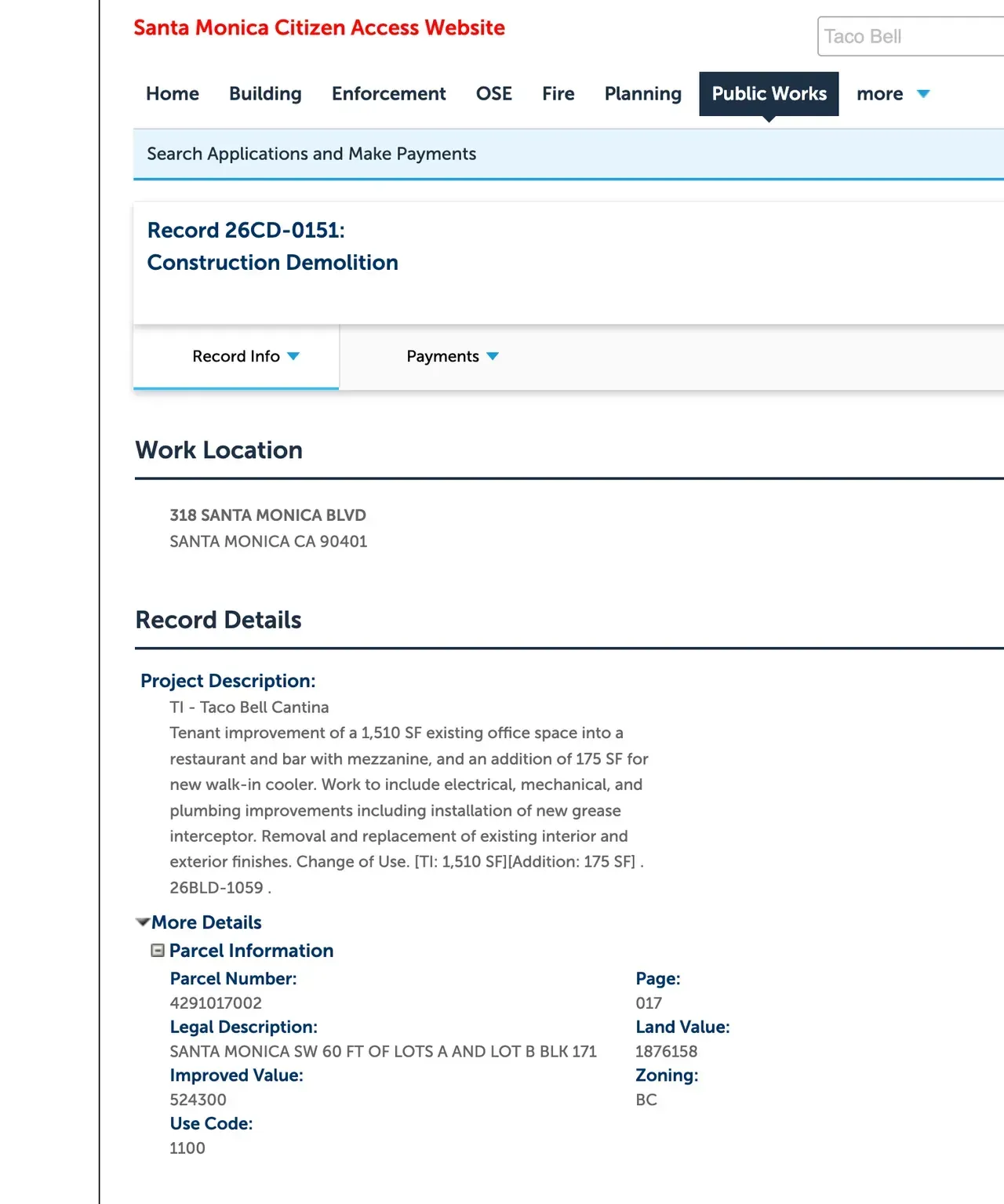
Local officials and business leaders say the planned opening of a Taco Bell Cantina in downtown Santa Monica reflects a pragmatic pivot in how the city thinks about filling its empty storefronts.


The comments come as Taco Bell Cantina has filed for commercial building permits to open at 318 Santa Monica Blvd. Permit filings show the project would convert 1,510 square feet of existing office space into a restaurant and bar with a mezzanine level, valued at nearly $400,000.


The main entrance of the NuHAA building, featuring a modern glass and stone facade, at sunset.

7-Eleven to close hundreds of stores in US, Canada, Mexico in focus on food sales


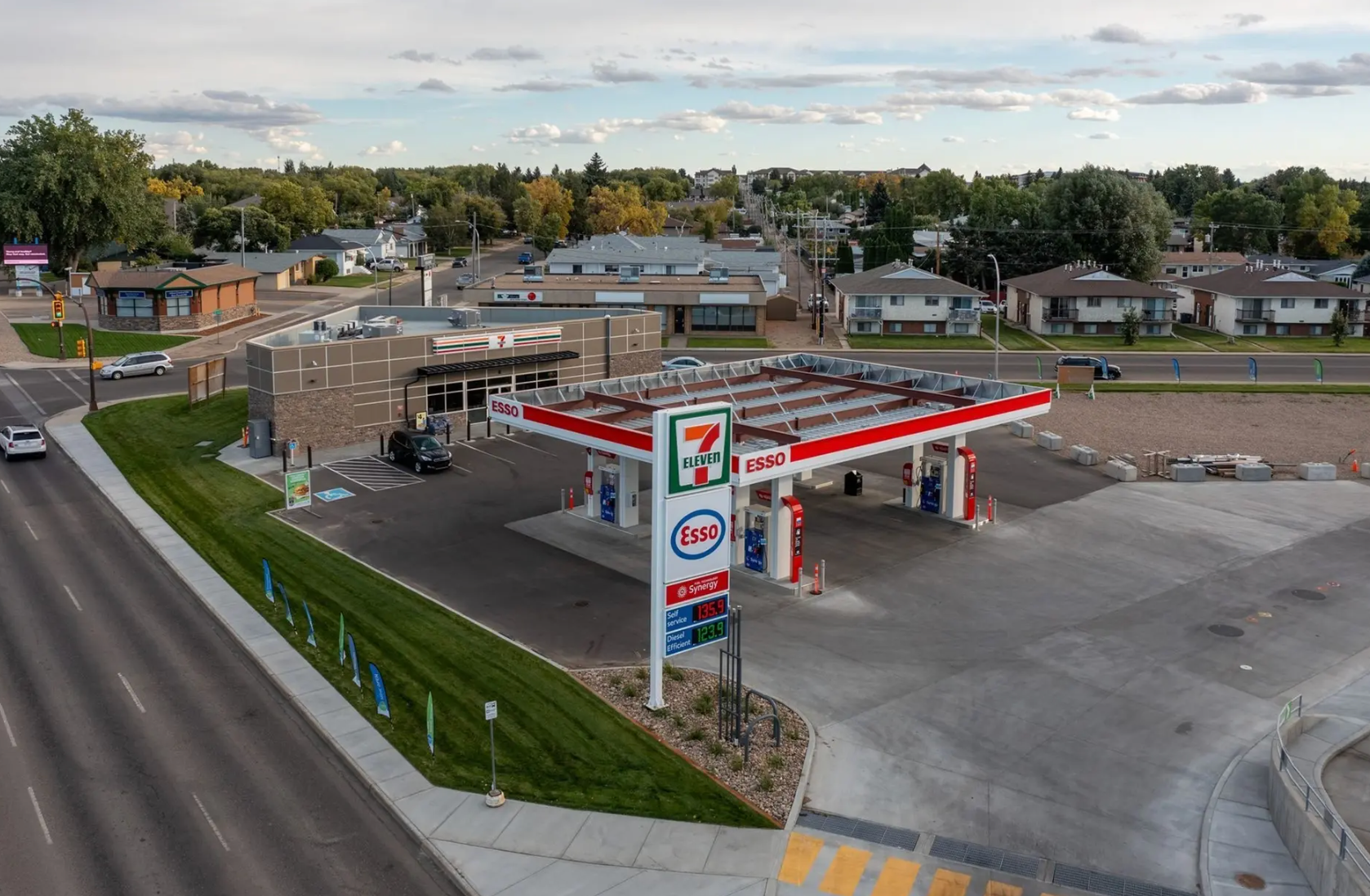
7-Eleven is planning to close hundreds of stores in North America as it doubles down on its goal of selling more food and drinks while it delays the planned initial public offering of its North American division.

The world's largest convenience store chain will close 645 stores in the United States, Canada and Mexico during the 12 months that began March 1, according to a financial report issued by Seven & i Holdings, the Japan-based parent company of 7-Eleven. The company did not identify the stores set to close...
A modern two-story commercial office building with a stone-accented entrance at dusk, seen from a paved parking lot.

Jersey Mike’s Reported Another Year of Growth in 2025

In a lot of respects, it’s been a stretch of change for Jersey Mike’s, a brand that had the same CEO for five decades until former Wingstop, Pizza Inn, and Salad and Go leader Charlie Morrison took over just about a year ago. And that was five months post-sale to private-equity behemoth Blackstone for a reported $8 billion (the deal closed on January 16, 2026)...

A green Publix Food & Pharmacy sign mounted on a white and beige building exterior against a blue sky.

Liability Insurance Costs Surge for Landlords Nationwide

Litigation Drives Insurance Spike


Commercial landlords across the US are facing rapidly escalating liability insurance premiums and decreased coverage, reports Bisnow. Time Equities, a firm with 43M SF under management, reports premiums for umbrella and excess liability insurance have quadrupled since 2020. Federal tort cases climbed 20% from 2022 to 2024, while premises liability cases increased 25% in the same period, according to industry reports...
Two bundt cakes on small plates: one with chocolate drizzle, one with caramel drizzle, with cinnamon sticks nearby.

Warehouse Clubs Drive One-Stop Shop Evolution

Warehouse Clubs See Rising Demand


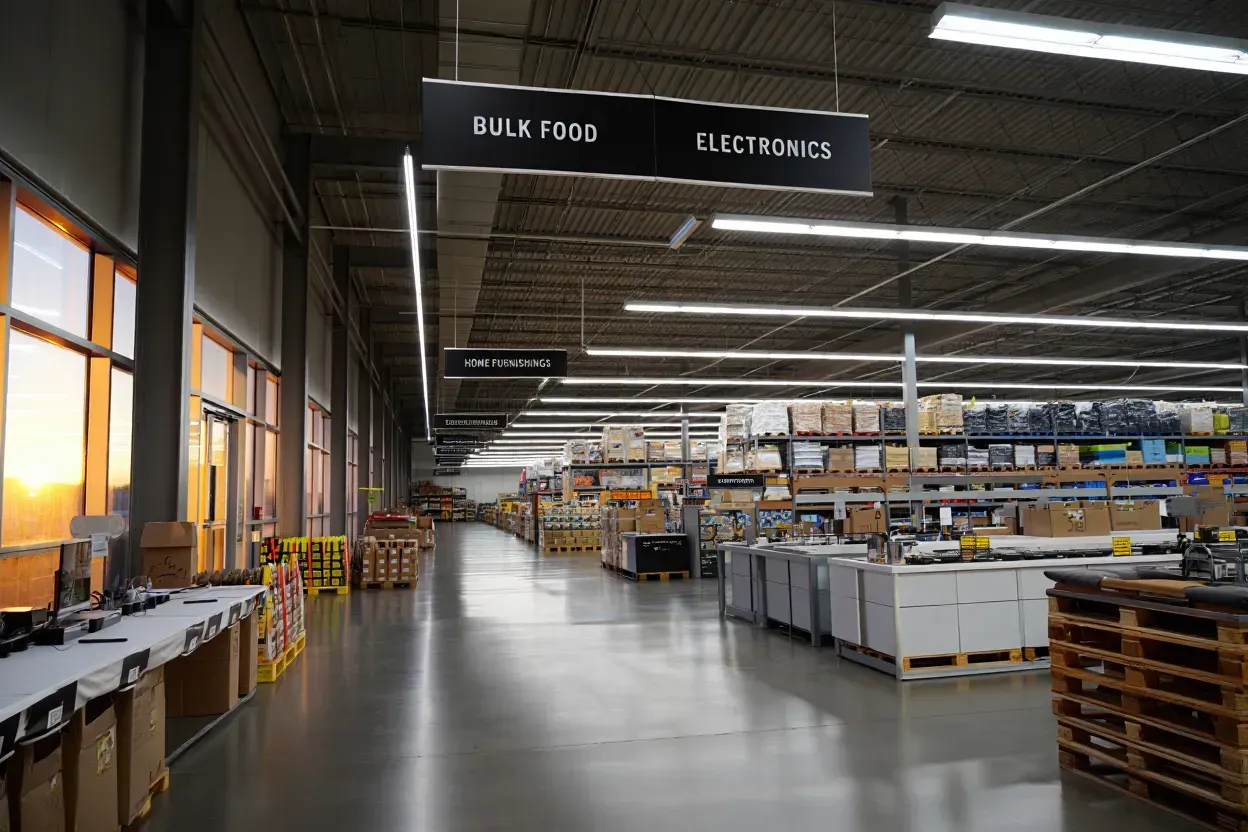
Warehouse clubs are quickly solidifying their role as leading one-stop shop destinations, reports Globe St. Brands like Costco, Sam’s Club, and BJ’s Wholesale Club have grown their market influence, recording notable member and traffic gains in 2025. Their focus on competitive pricing, expanded merchandise, and additional services has helped attract and retain a broader range of shoppers...

Interior of a casual restaurant featuring blue chairs, red accents, brick walls, and a

Walmart, Amazon retain top spots in annual NRF ranking of top 50 global retailers

U.S.-based retail giants giants dominate the upper tier of an annual ranking of the leading international retailers based on their retail revenues in 2025.

Walmart once again took No. 1 spot in the National Retail Federation’s “2026 Top 50 Global Retailers” ranking, which was conducted by Kantar. Amazon retained the No. 2 spot. Rounding out the top five were two Germany-based companies — Schwarz Group (No. 3) and Aldi (No.4.) — and Costco Wholesale Corp. (See list of top 25 global retailers at end of article)...
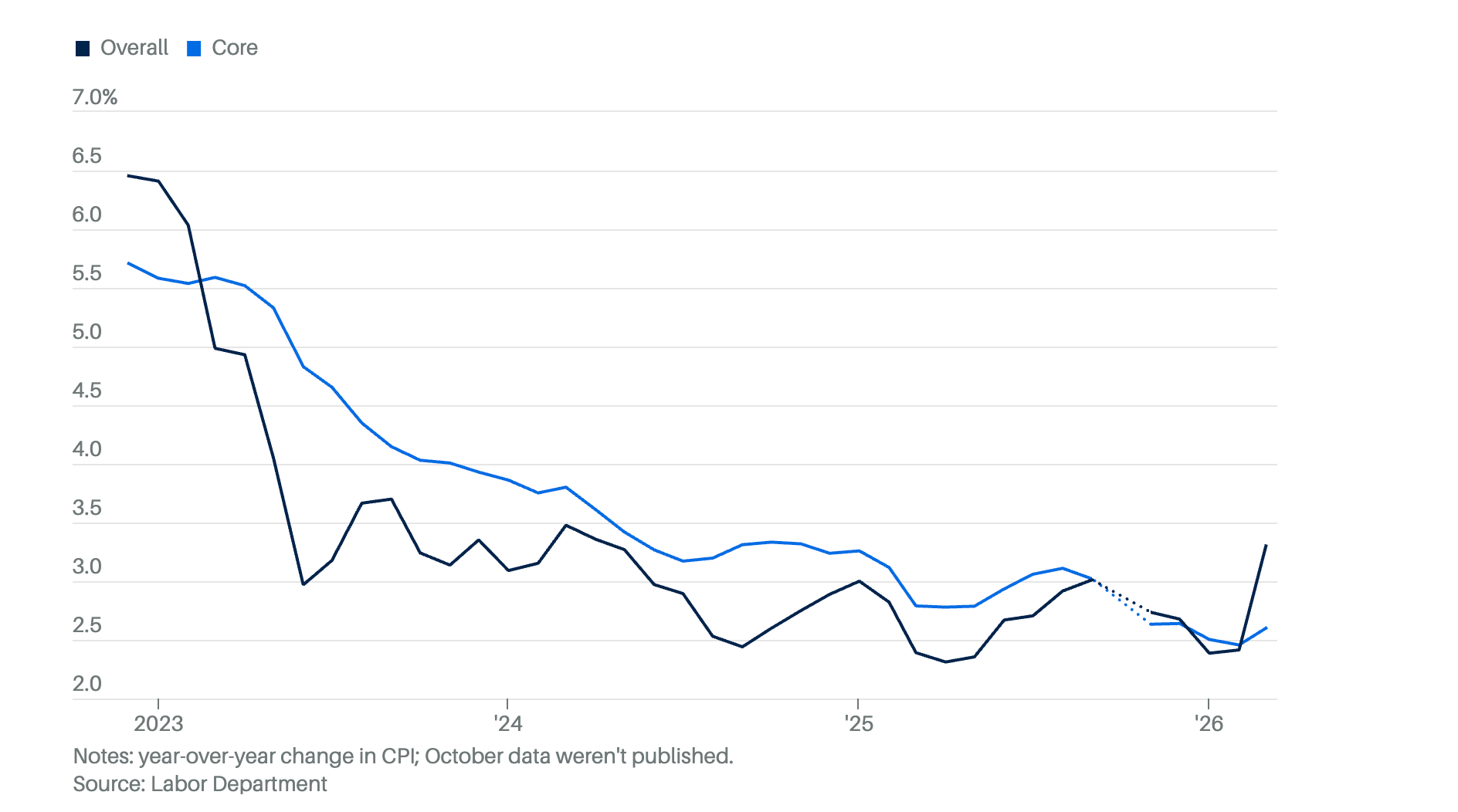

CPI Report Today: Inflation Hits Highest Level in Nearly 2 Years

There was no doubt that the spike in gasoline prices was going to drive up price growth in March, but the latest data show the Iran war's effects on inflation were largely contained to energy, at least for now.

That provided markets with a bit of good news to close out the week, but the U.S. is nowhere near the peak of inflation stemming from this latest Middle East conflict. The coming months could bring more headaches to both Federal Reserve officials and investors—and possibly diminish the market's hopes for lower interest rates later this year...


By Marc Perlof April 13, 2026
By Marc Perlof | MarcRetailGuy CA #01489206 April 13, 2026 If you own retail real estate, here’s what just changed for you. Private equity ownership changes the risk profile of your tenant. Strong brands can become more efficient, but also more sensitive to costs over time. When private equity takes over retailers, your rent may become less predictable. What is changing? Private equity firms are buying or investing in retail brands. After the purchase, they often change how the business is run. One common move is selling the real estate and leasing it back. The company becomes a tenant instead of an owner. This creates fixed rent payments. They also focus on increasing profit quickly. That can include cutting costs, simplifying operations, and shifting more stores to franchisees. These changes can improve efficiency and free up capital, but they can also increase pressure on store-level performance. Why this is happening? Private equity is focused on returns within a set time frame. They use debt and operational changes to increase profits. Real estate is often treated as a source of cash, not a long-term hold. What this does to your value? How does this affect your property value? Your value depends on stable income. Higher leverage and tighter margins make your income less predictable. Uncertainty leads to higher cap rates. Higher cap rates lower your value. A 100 basis point increase in cap rate can reduce your property value by 12% to 18%, depending on income and buyer demand. How are buyers underwriting this today? Buyers are looking past the brand name. They are focusing on unit-level performance and rent levels. If rent is too high compared to sales, they apply a higher cap rate or reduce their offer. What happens if the tenant’s costs increase? When rent, labor, and food costs rise at the same time, weaker locations start to underperform. That is when closures or lease renegotiations happen. Strategic Advice for Retail Property Owners What should you do right now? Review your tenant’s ownership structure. Know if the brand is private equity backed. Do not assume brand strength equals tenant strength. What should you review in your lease? Focus on rent relative to sales, if possible. Rent that gets too high as a percentage of sales creates risk. Also review lease term, options, and guarantor strength. What should you prepare for? Plan for more tenant scrutiny at sale. Buyers will ask deeper questions about store performance and long-term viability. Be ready to support your income with real numbers. Real Deal Insight In today’s market, buyers are underwriting rent relative to store performance or sales, franchisee versus corporate structure, and margin pressure. Deals that once traded aggressively are now being discounted when rent exceeds sustainable levels or when the tenant is more leveraged after a private equity transaction. This is showing up in pricing, cap rates, and buyer demand across Southern California. Owner Self-Assessment If your tenant’s costs increase, can they still comfortably pay your rent? Market Data and Sources Sale-leasebacks are widely used in restaurant and retail sectors to free up capital and create long-term lease obligations.¹ Private equity ownership often increases leverage, which can raise financial risk during downturns.² Restaurant margins are sensitive to labor and food costs, which have increased in recent years.³ If you own retail real estate in Los Angeles or Southern California, this is already showing up in how buyers evaluate NNN properties, strip centers, and single-tenant assets. If you are thinking about selling or refinancing in the next 12 to 24 months, now is the time to evaluate your tenant strength and pricing. Small shifts in cap rates can materially impact your exit value. Is your tenant’s business strong enough to support your rent long term? #RetailRealEstate #NNNProperties #FastFoodRealEstate #CommercialRealEstate #CapRates #LosAngelesRealEstate #CREInvesting #InvestmentProperty #NetLease #RetailInvesting
By Marc Perlof April 10, 2026
Retail Construction Slows Nationwide in 2026 Limited New Supply The Commercial Observer reports that retail construction is slowing significantly in the US, with just 64.2M SF underway in Q1 2026, per CoStar Group data. This marks an 8% decline from 2025 and falls far short of the 10-year average of 90M SF. Industry experts point to rising land prices, higher construction costs, and elevated interest rates as key headwinds for retail construction.
By Marc Perlof April 6, 2026
By Marc Perlof | MarcRetailGuy CA #01489206 April 6, 2026 If you own retail real estate, here’s what just changed for you. The U.S. is not running out of money. But debt is rising and keeping interest rates higher. That is already pushing down retail property values. Higher government debt is keeping borrowing costs high, and that lowers your property value. What Changed What is happening? A recent article from Yahoo Finance claims the U.S. is “insolvent” based on Treasury data.¹ The idea comes from comparing what the government owes to what it owns. What is causing it? The U.S. keeps spending more than it collects. Total debt keeps growing. At the same time, interest rates have gone up. That makes it more expensive for the government to borrow money. This does not mean the U.S. cannot pay its bills. It means the system is under pressure. That pressure affects interest rates across the economy. Why It Matters (Value Impact) How does this affect your property value? Retail property values are tied to income and cap rates. Cap rates follow the 10-year Treasury. When government debt keeps rates higher, cap rates stay higher. Higher cap rates mean lower property values. How are buyers underwriting this today? Buyers are using higher borrowing costs in their numbers. They are also assuming they will sell at higher cap rates later. That lowers what they can pay today. What happens if rates stay high? Your income becomes more exposed. Expenses like insurance and maintenance keep rising. If rent does not keep up, your net income drops. Lower income plus higher cap rates equals lower value. Strategic Advice for Retail Property Owners What should you do right now? Base decisions on today’s borrowing costs. Not past pricing. If you are selling, price to current cap rates. If you are holding, protect your income. What should you review in your lease? Look closely at what expenses you can pass through. Insurance, CAM, and repairs matter more now. If your lease does not fully protect your income, your value is already exposed. What should you prepare for? Plan for rates to stay higher longer. Build in margin for higher costs and slower leasing. Do not rely on rate cuts to fix your deal. Real Deal Insight Buyers are pricing retail deals today based on current debt costs and higher cap rate assumptions. A recent strip center owner in Southern California expected pricing based on a 5.25% cap rate from prior comps. Today, buyers are underwriting closer to 6.25% to 6.75% due to higher debt costs and exit assumptions. On a $1,000,000 NOI: At 5.25% cap → value ≈ $19.0M At 6.50% cap → value ≈ $15.4M That is a ~$3.6M difference, without any change in income. This is the gap sellers and buyers are working through right now. Deals are getting done, but only when pricing reflects today’s cap rates and financing reality. Market POV Pricing is a moving target right now. If you are thinking about selling or completing a 1031 exchange in 2026, looking at your property’s value sooner rather than later is optimal. Waiting for rates to drop may not bring values back to prior peaks. Buyers are already adjusting to a higher rate environment, and pricing is resetting in real time. Owner Self-Assessment If you had to sell today, would your current income support today’s higher cap rates? Market Data and Sources U.S. federal debt is over $34 trillion and continues to grow.² Interest on that debt is now one of the largest government expenses.³ The 10-year Treasury has been around the 4% range, well above prior lows.4 This shift is already showing up in pricing across Los Angeles retail deals today, and it is changing how buyers and sellers are negotiating in real time. If you own retail real estate in Los Angeles or Southern California, this is already showing up in pricing, negotiations, and deal structure across strip centers, shopping centers, and NNN assets. If you own retail real estate, I can show you what your property is worth today based on current cap rates, buyer demand, and real underwriting. Call or DM me for a current value analysis. What happens to your property value if cap rates increase 0.5% to 1.0%? Based in Los Angeles. Serving Southern California. Active across California. Advising clients nationwide. #RetailRealEstate #NNNProperties #CapRates #CommercialRealEstate #RetailInvesting #LosAngelesRealEstate #CREMarket #InvestmentProperty #StripCenters #ShoppingCenters #RealEstateStrategy
More Posts