Weekly Perl: A Commercial Real Estate News Recap

Marc Perlof • March 13, 2026
A banner for weekly commercial real estate news recap
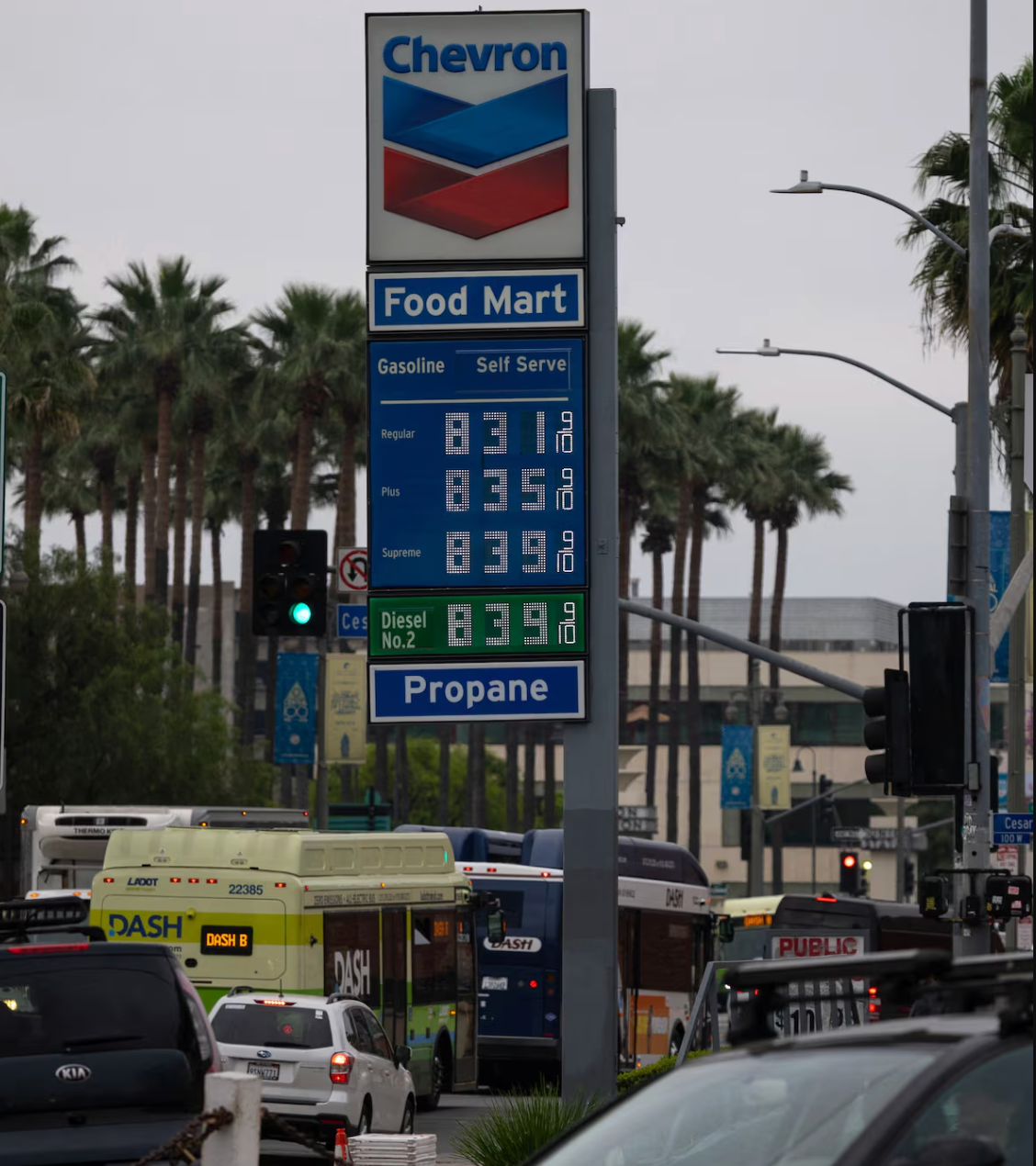
A car is parked in front of a sign that says 223

US consumer inflation steady before Iran conflict drives up oil prices


WASHINGTON, March 11 (Reuters) - U.S. consumer prices rose moderately in February as rents maintained a steady pace of increases, though households paid more for gasoline and at the supermarket and higher costs are in store because of the escalating war in the 
Middle East.


The Consumer Price Index report from the Labor Department on Wednesday, which also showed underlying inflation muted ​last month, covered the period before the U.S. and Israel launched strikes against Iran. The attacks at the end of February were met with retaliation by Tehran and have boosted oil prices...

The front of an aldi store with a sign in front of it.

PopUp Bagels’ ‘Conservatively Aggressive’ Growth Strategy Gains Traction Across U.S.


Tory Bartlett began as PopUp Bagels CEO in October 2024, and it wasn’t too long afterward that the chain began putting together an FDD and a franchising website.


That’s because the engine was already there. The concept began in 2020 as a fun pandemic activity for founder Adam Goldberg, but virality across social media—in large part due to the bagels’ smaller, crispier texture and unique schmears—catapulted the brand into the spotlight...
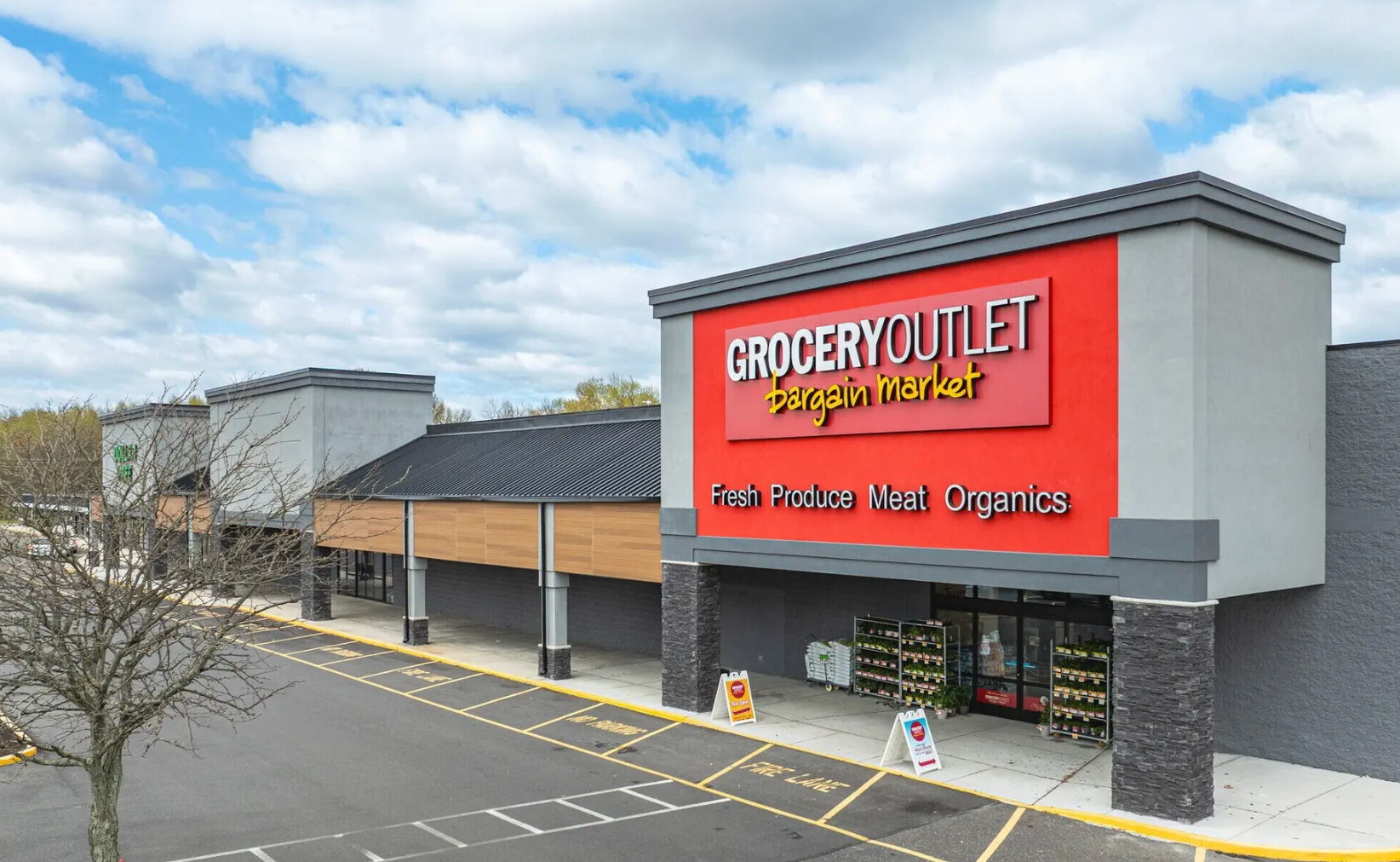

Grocery Outlet Bargain Market storefront in a strip mall with a large red sign and parking lot under a cloudy blue sky.

Grocery Outlet’s closing of three dozen US stores marks rare retreat among discounters

In a rare pullback by a U.S. discounter, Grocery Outlet is closing three dozen underperforming stores this year, most on the East Coast, even as other lower-cost supermarket chains such as Aldi and Lidl are rapidly expanding their retail property nationally.


Grocery Outlet, an Emeryville, California-based specialty retailer, unveiled its plan as it posted a fiscal fourth-quarter net loss of $218.2 million, compared with $2.3 million in net income in the prior-year period. Comparable store sales slipped about 1%...


A person holding an open blue wallet containing several US dollar bills.

NRF: Retail sales grow in February for fifth consecutive month

Retail sales grew again in February on both a month over month and year over year basis.

Core retail sales (excluding restaurants, auto dealers and gas stations) inched up 0.28% month over month in February and were up 6.24% year over year, according to the CNBC/NRF Retail Monitor released Wednesday, March 10, by the National Retail Federation...
A square black sign with the white cursive

Saks Global reveals more Saks, Neiman store closings — here are the locations


Saks Global continues its planned "optimization" across its store portfolio. 

The luxury retail company, which filed for bankruptcy protection in January, announced a new round of store closings that include 12 Saks Fifth Avenue locations and 3 Neiman Marcus stores (all locations listed at end of article). The stores are expected to remain open through May...
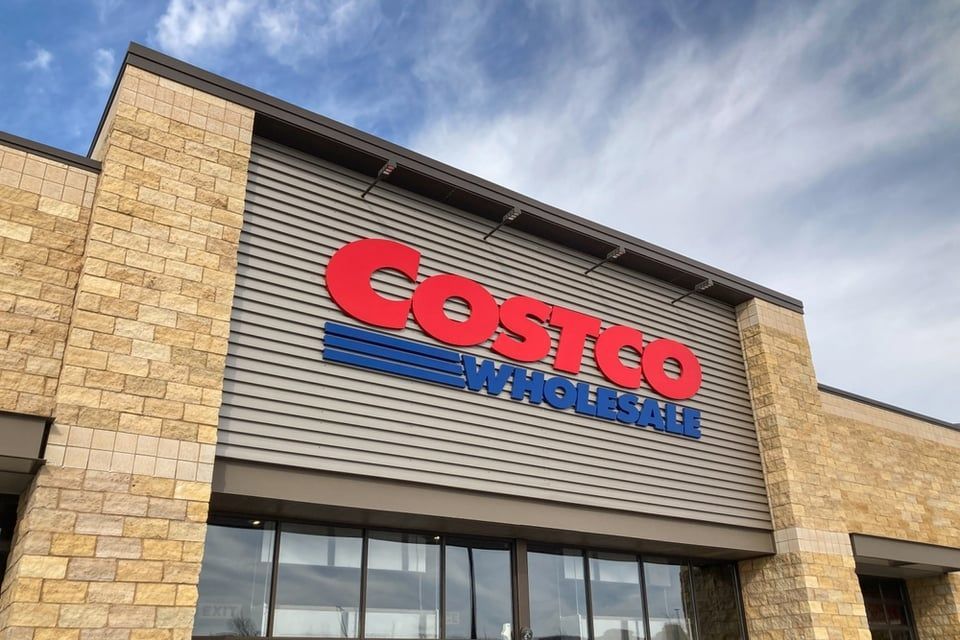
Exterior view of a Costco Wholesale warehouse building featuring a red logo against a gray, horizontally-paneled facade.

Costco tops estimates; eyes 28 new openings, with 30-plus in ‘coming years’


Costco Wholesale Corp. maintained momentum during its holiday quarter with better-than-expected earnings and sales fueled by strong consumer demand in-store and online.

On the company’s earnings call, executives said Costco expects to have 28 net new openings in its current fiscal year, and is targeting 30-plus new opening annually in the “coming years...” 
A blue Ross Dress for Less sign mounted on the white facade of a building against a clear blue sky.

Ross Stores opens 17 locations in February, March — here's where

Ross Stores Inc. is heading into spring with an expanded store footprint.

The off-price apparel giant is opening 17 new stores in February and March, including 13 Ross Dress for Less stores and four DD’s Discounts locations across 11 states (full list of new locations found at later in article)...
A map of the United States showing a dense cluster of red pins and a few green pins concentrated in the eastern half.

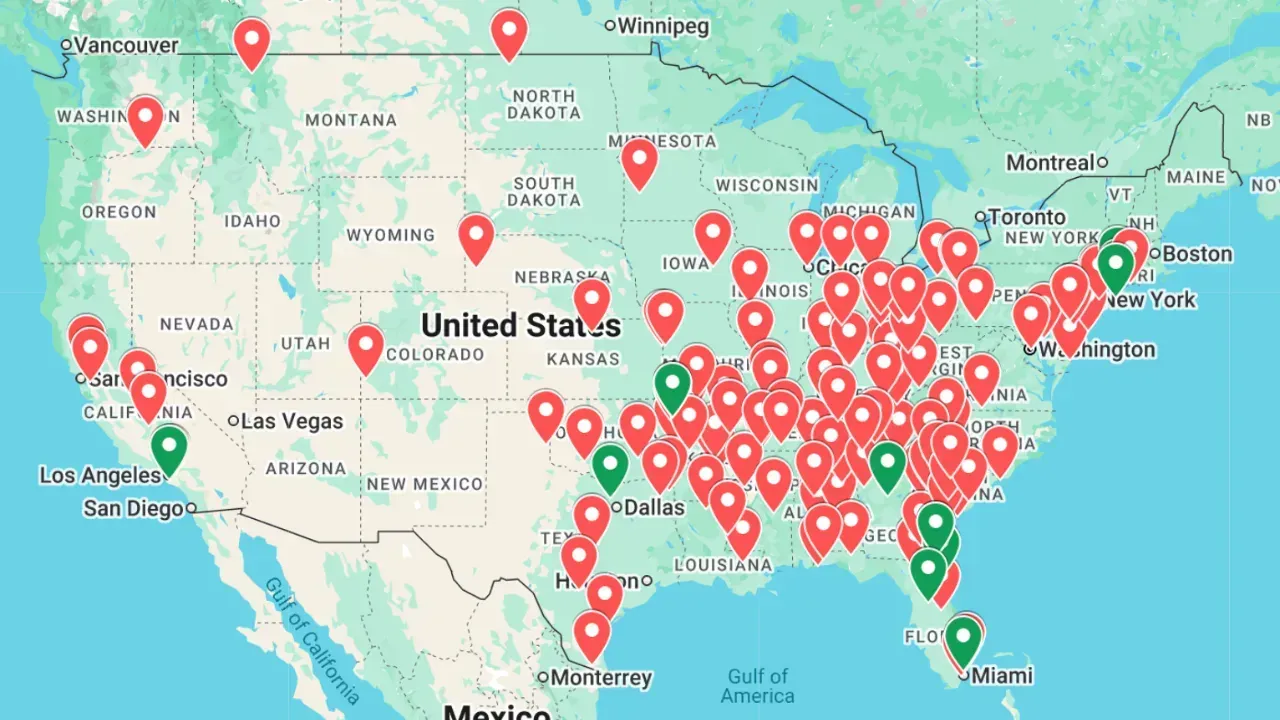
Walmart closes stores in February


Family Dollar stores closures hit the triple digits in February as the retailer continues to develop a new strategy. A total of 100 Family Dollar locations were closed with many happening in the South and Southeast, according to the latest data provided by 
ScrapeHero

Walmart closed four stores, including three Sam’s Club locations in Fayetteville, Ark., Indianapolis, Ind., and Lebanon, Tenn. The Walmart store that closed was in Bentonville, Ark. Dollar Tree closed 9 stores, including three in California. Walgreens closed 6 locations...

A brick strip mall featuring a Crunch Fitness gym and a chiropractic office under a clear blue sky.

It's official: Fitness centers, pickleball courts, other services now dominate retail real estate

Retail leasing reached a structural turning point in 2025. For the first year on record, service-based retailers leased more space than traditional goods-based tenants.

And while the margin was narrow, 50.4% services to 49.6% goods, the crossover is meaningful as it reflects the long-running reallocation of consumer spending and the continued evolution of physical retail space toward uses that are less vulnerable to e-commerce...


By Marc Perlof July 27, 2026
By Marc Perlof | MarcRetailGuy CA #01489206 July 27, 2026 If you own retail real estate, here’s what just changed for you. Last week, we looked at how buyers actually evaluate retail properties. They look at income, leases, tenant quality, property condition, financing, future costs, and exit value. That brings us to the most important owner question in this series: should you sell now or wait? This is not a simple yes or no decision. For some retail property owners, selling now makes sense. For others, waiting may protect value. For others, the right answer may be to lease vacant space, clean up property records and title concerns, fix property issues, or refinance. The key is to make the decision based on numbers, risk, and timing. Not emotion. The Wrong Way to Make the Decision Many owners ask, “What price can I get?” That matters, but it is not enough. The better question is: what is the best decision based on my property, family goals, income, risk, tax position, debt, and long term plans? A property may be worth selling even if pricing is not perfect. A property may be worth holding even if the market is active. The right answer depends on the facts. This is also where the owner’s tax and reinvestment plan matters. Selling and cashing out may create liquidity, reduce management, and simplify life, but capital gains taxes, depreciation recapture, and state taxes can reduce the net proceeds. A 1031 exchange may allow an owner to defer taxes and keep more equity working, but it also requires finding a replacement property, meeting exchange deadlines, and adjusting to the new lifestyle. The real question is not just, “What price can I get?” It is, “What do I keep after taxes, what do I do with the money, and am I better off after the sale?” When Selling Now May Make Sense Selling now may make sense if the property has strong current income and a buyer pool that still wants the asset. This is especially true if the leases are long term, tenants are strong, income is clean, repairs are limited, the location is desirable, and the owner wants to simplify, exchange, reduce management, or avoid future rollover risk. Selling now can also make sense when the property is not fully stabilized, but the lease structure creates flexibility for the right buyer. Short term leases may scare off passive investors, but they can attract value add buyers, syndicators, developers, or owner users who want the ability to raise rents, retenant space, reposition the property, or plan for redevelopment. Timing matters. A property with 10+ years of lease term may price much better for a passive investor than the same property with 3 years left. But a property with short term leases, below market rents, or future redevelopment potential may appeal to a different buyer pool. The key is knowing whether the short term lease structure is a weakness, an opportunity, or both. When Waiting May Make Sense Waiting may make sense if the property is not ready. If an owner has below market rents and can increase them, waiting may create value. If a vacancy can be leased, waiting may improve Net Operating Income (NOI). If records are disorganized, waiting may allow the owner to clean up the file before going to market. If a repair issue is scaring buyers, addressing it first may protect pricing. Waiting may also make sense if selling creates a tax problem and the owner does not have a clear 1031 exchange plan. But waiting is not automatically safe. Waiting has risk. The Risk of Waiting Owners often think waiting is neutral. It is not. Waiting can help, but it can also hurt. Risks include tenant rollover, vacancy, rent collection issues, higher insurance costs, higher repair costs, capital improvements, interest rate changes, buyer demand changes, lending pressure, new competing listings, and local market changes. Some owners also wait because they believe the market will feel clearer after an election, after interest rates move, or after major global uncertainty settles. That may be reasonable, but it is still a bet. Elections, wars, tax law changes, and economic shocks can affect buyer confidence, capital flow, lending, and pricing. The market may improve, stay flat, or get worse. Waiting should be based on a clear reason, not just the hope that uncertainty disappears. A property can look stronger today than it will in 3 to 12 months. That is why waiting should be a strategy, not a default reaction. The Financial Question Sellers Should Ask Before deciding to sell or wait, owners should ask: what needs to happen for waiting to create more value? For example, assume a retail property has $250,000 of NOI and could sell today at a 6.50% cap rate. That value is about $3,846,154. If the owner waits and increases NOI to $275,000, but the market later prices the property at a 6.75% cap rate, the value is about $4,074,074 . That is an increase of about $227,920 . That may sound good, but the owner still needs to consider how much money was spent to create the higher NOI, how long it took, whether there was vacancy risk, whether tenant improvements and/or free rent were required, and whether market risk increased during the wait. Sometimes waiting creates value. Sometimes it creates more work for a small net gain. Selling Now Versus Leasing First Selling now with vacancy may attract value add buyers. The price may be lower, but the owner avoids leasing time, tenant improvement costs, commissions, carrying costs, contractor issues, delays, and the risk of choosing the wrong tenant. That has its own value. Sometimes accepting a lower price and transferring the value add work to the buyer is smarter than spending months dealing with leasing, construction, negotiations, permits, and uncertainty. For those owners, peace of mind can have real internal value, even if it does not show up as a line item on the closing statement. Leasing first may increase NOI and attract more buyers, but the owner needs to invest time and money before selling. The question is not just whether leasing increases value. The question is whether leasing increases value enough after costs, time, and risk. Selling Now Versus Fixing Issues First Some repairs should be handled before going to market. Others should be disclosed and priced into the deal. It depends on the issue. If a smaller repair removes a major buyer objection, it may be worth doing. If a larger repair is expensive and uncertain, the owner may choose to sell as is to a buyer who understands the work. Common items to review include roof, HVAC, parking lot, plumbing, electrical, ADA, environmental, structural issues, and deferred maintenance. The goal is not to make the property perfect. The goal is to avoid surprises that create price cuts during escrow. Selling Now Versus Refinancing Some owners do not really want to sell. They want cash or liquidity. In that case, refinancing may be an option. But refinancing only works if the numbers support it. The owner needs to review current NOI, loan amount, interest rate, debt service coverage, loan costs, prepayment penalty, future cash flow, property risk, and their current lifestyle. If refinancing creates tight cash flow, selling may still be the better decision. If refinancing gives the owner liquidity and allows them to keep a strong asset, holding may make sense. The Decision Should Be Based on Net Outcome Owners should not only ask, “Can I get a higher price later?” They should ask: will I be better off later after time, cost, taxes, risk, and effort? Sometimes the highest price is not the best outcome. A clean sale today may be better than chasing a slightly higher price with more risk. Other times, waiting 3 to 12 months may be smart if there is a clear path to improve income or reduce buyer concerns. The decision has to be specific to the property. Final Thought The question is not always, “Is now the perfect time to sell?” There is rarely a perfect time. The better question is, “What decision puts you in the strongest position moving forward?” For some owners, that means selling now. For others, it means waiting. For others, it means leasing, fixing, refinancing, cashing out, or completing a 1031 exchange. The real risk is not selling or waiting. The real risk is making either decision without understanding how buyers, lenders, taxes, lease rollover, future repairs, and market timing affect the outcome. This concludes the Execution and Decision-Making series. The main takeaway is simple: understanding pricing is important, but execution, timing, and decision making determine the result. If you are trying to decide whether to sell, wait, refinance, cash out, complete a 1031 exchange, or lease first, I can help you review the numbers and risks before you make a move. Based in Los Angeles. Serving Southern California. Active across California. Advising clients nationwide. #RetailRealEstate #CommercialRealEstate #RetailInvestment #PropertyOwners #RetailPricing #PricingStrategy #HoldorSell #CREStrategy #MarcRetailGuy
By Marc Perlof July 24, 2026
10-Year Treasury Yield Rises to 4.628% — Data Talk The 10-year yield rose 0.030 percentage point to 4.628% today. The price fell 7/32 to 98 1/32. --Yield is up for two consecutive trading days --Yield is up 0.085 percentage point over the last two trading days --Largest two-day yield gain since Wednesday, July 8, 2026 --Yield is up three of the past four trading days --Today's yield is the second highest this year --Highest yield since Tuesday, May 19, 2026...
By Marc Perlof July 20, 2026
By Marc Perlof | MarcRetailGuy CA #01489206 July 20, 2026 If you own retail real estate, here’s what just changed for you. Last week, we looked at why retail properties sit on the market. The main point was simple. Properties usually sit when pricing, positioning, buyer targeting, or risk is not aligned with the market. This week, we are going deeper into the buyer side: how do buyers actually evaluate your retail property? Most sellers think buyers only start with price. They do not. For most retail investment properties, buyers first look at the income. Then they test how safe, durable, and financeable that income really is. That is where risk comes in. A buyer may like the Net Operating Income (NOI) at first glance, but if the leases are short, the tenants are weak, expenses are unclear, or future repairs are likely, the buyer will adjust their return requirement and price. That is why understanding buyer underwriting is so important. Buyers Start with Income, Then Adjust for Risk For most retail investment properties, buyers begin with income. They want to know the current rent, current NOI, whether tenants are paying on time, whether expenses are reimbursed, whether rent increases exist, whether there are vacancies, and whether the rent is above or below market. But income alone is not enough. Buyers want to know how reliable that income is. The cleaner and more consistent the income, the easier it is for buyers to underwrite. The messier or riskier the income, the more conservative buyers become. Buyers Care About Income Quality Not all NOI is equal. A property with $300,000 of NOI from strong tenants, long leases, annual increases, and clean reimbursements is very different from a property with $300,000 of NOI from short term tenants, unclear expense payments, and flat rents. Same NOI. Different quality. Different value. Buyers want to know if the income will last. If they think the income may drop after closing, they may lower their price. Lease Term Matters Lease term is one of the biggest drivers of retail pricing. A buyer will view a 15 year lease very differently from a 2 year lease. Longer lease term usually creates more income certainty. Shorter lease term usually creates more risk. That does not mean short term leases are always bad. Sometimes short term leases create upside if rents are below market. But buyers need to believe the upside is real. If the tenant is weak, the space is hard to lease, or the rent is already above market, short lease term can hurt value. Tenant Quality Matters Retail buyers study the tenant. They want to know whether the tenant is national, regional, franchise, or local. They also want to know whether there is a corporate guarantee, personal guarantee, strong payment history, and healthy business operation. For a single tenant net lease (STNL) property, tenant quality can drive the entire valuation. For a strip center or shopping center, tenant quality affects stability, financing, and buyer confidence. A strong tenant lowers perceived risk. A weak tenant increases perceived risk. Lease Structure Can Change the Price Buyers do not just read the rent amount. They read the lease. Important lease terms include rent increases, option periods, reimbursement language, maintenance obligations, assignment rights, termination rights, cotenancy clauses, exclusive use clauses, Common Area Maintenance (CAM) language, landlord repair obligations, and guaranty language. A lease may look strong on the rent roll, but become weaker once the buyer reviews the actual document. That is where many deals get repriced. Buyers Look at Future Costs Buyers do not only care about today’s income. They care about tomorrow’s expenses. They will review roof life, HVAC systems, parking lot condition, plumbing, electrical, signage, ADA issues, environmental concerns, tenant improvement exposure, leasing commissions, and capital reserves. If a buyer sees $300,000 of near-term repairs, that affects value. Even if the buyer does not ask for a full dollar for dollar credit, they will account for it in the return they need. Financing Drives Buyer Behavior Many owners underestimate how much financing affects pricing. A buyer may like the property, but the lender still has to approve the loan. Lenders usually focus on tenant strength, lease term, NOI, debt service coverage, property condition, borrower strength, market rents, environmental issues, and vacancy risk. If the lender is nervous, the buyer may need to bring in more cash. That lowers the buyer’s return, which often means the buyer needs a lower price. This is why financing conditions directly affect retail property values. Buyers Compare Your Property to Other Options Your property is not evaluated alone. Buyers compare it to other retail properties, but they also compare it to other places they can put their money. They may look at other net lease deals, shopping centers, multifamily, industrial, private lending, Treasuries, money market returns, or simply keeping cash available until a better opportunity appears. Inside retail, they ask whether they can buy a better tenant, better location, longer or shorter lease, stronger rent growth, cleaner financing, or lower repair risk somewhere else. A buyer does not need to buy your property. They need a reason to choose it over the alternatives. If another option offers a better risk adjusted return with less uncertainty, that becomes competition for your sale. Buyers Underwrite the Exit Smart buyers think about resale before they buy. They ask who will buy the property from them later, what the lease term will be then, what cap rate the market may use, what expenses they will incur when they sell the property, whether the tenant will still be there, and whether future buyers will see the same risks. If the exit feels uncertain, the buyer usually lowers the price. That is especially true for properties with short leases, weak tenants, or limited future buyer demand. A Simple Example Assume a retail property has $250,000 of NOI. If buyers view the income as stable and price it at a 6.00% cap rate, the value is about $4,166,667. If buyers see more risk and require a 6.75% cap rate, the value is about $3,703,704. That is a difference of about $462,963. The NOI did not change. The buyer’s view of risk changed. What Owners Should Prepare Before Selling Before going to market, owners should prepare the rent roll, leases, amendments, tenant payment history, expense statements, NNN reconciliation history, service records, roof and HVAC information, insurance costs (declaration page), property tax information, recent repairs, known capital needs, and a clear explanation of upside. This helps reduce buyer uncertainty. Less uncertainty usually means stronger buyer confidence, and stronger confidence can support stronger pricing. The seller’s job before going to market is to remove as many reasons as possible for buyers to discount the property pricing. Final Thought Buyers do not just buy income. They buy income after adjusting for risk. The better your property looks under buyer underwriting, the stronger your position. The weaker or less organized the property looks, the more buyers will discount, delay, retrade, or walk away. Next week, we will close this series with the decision many owners are asking right now: Should You Sell Now or Wait? If you are thinking about selling, refinancing, or holding your retail property, I can help you review the property the way buyers will underwrite it. That includes income, leases, tenant quality, repairs, financing risk, and likely buyer demand. Based in Los Angeles. Serving Southern California. Active across California. Advising clients nationwide. #RetailRealEstate #CommercialRealEstate #RetailInvestment #PropertyOwners #MarketUncertainty #BuyerUnderwriting #RetailPricing #CREStrategy #MarcRetailGuy
More Posts