Weekly Perl: A Commercial Real Estate News Recap

Marc Perlof • April 3, 2026
A banner for weekly commercial real estate news recap
A car is parked in front of a sign that says 223

'Mild stagflation': Bank of America rips up economic forecasts, braces for $100 oil all year on Iran war disruptions

Bank of America analysts are projecting slower growth, higher inflation, and $100 per barrel oil all year as a result of the Iran war — even if it ends within weeks.

"The war dividend so far: mild stagflation," BofA economist Claudio Irigoyen and his team wrote in a note on Wednesday, referring to the economic phenomenon of higher inflation coupled with slower growth...

The front of an aldi store with a sign in front of it.

CRE Sentiment Gap Signals a Resilient Market

Sentiment vs. Reality: A Growing Gap


According to Virtus Real Estate Capital, commercial real estate sentiment remains cautious despite improving fundamentals. However, the underlying data points to a strengthening recovery across the US CRE market.


Real GDP grew 2.2% in 2025, while inflation cooled to 2.4%. At the same time, unemployment held near historic lows, reinforcing economic stability. Together, these factors continue to support demand and performance across commercial real estate...

An elevated outdoor view of a modern shopping mall promenade with manicured greenery, palm trees, and pedestrians.

Why Franchisee Yogesh Patel Believes Currito is the Next Big Growth Brand

Franchisee Yogesh Patel’s journey with Currito began when he decided to try the concept for lunch one day around two-and-a-half years ago. The chain was—and still is—a small, emerging health-focused chain, which aligns with Patel’s lifestyle. 


“I went and tried. When I walked in, I loved the atmosphere, the cleanliness, and then the fresh food, obviously,” Patel says. “When I tasted the food, I loved how it tasted and everything. Obviously me being vegetarian, I had a lot of options.”


Patel’s next venture is opening five new Currito locations, on top of the three he already has in Illinois...

The American flag waves against a bright blue sky between towering glass skyscrapers, viewed from a low angle.

Aldi makes debut in 40th state

Aldi has officially staked its claim in the state of Maine.


The discount grocer opened its first store in Portland on Thursday, making Maine the 40th state with an Aldi store. The store is located at 1100 Brighton Ave. and will be open every day from 9 a.m. to 8 p.m.


The opening is one of 180 Aldi expects to celebrate in 2026, which would move the Batavia, Ill.-based grocer to almost 2,800 locations. Aldi wants to have 3,200 stores by the end of 2028. The expansion also includes entering Colorado for the first time and continued growth in the Western and Southeastern markets and the construction of three new distribution centers...
A flat, single-story retail building with a

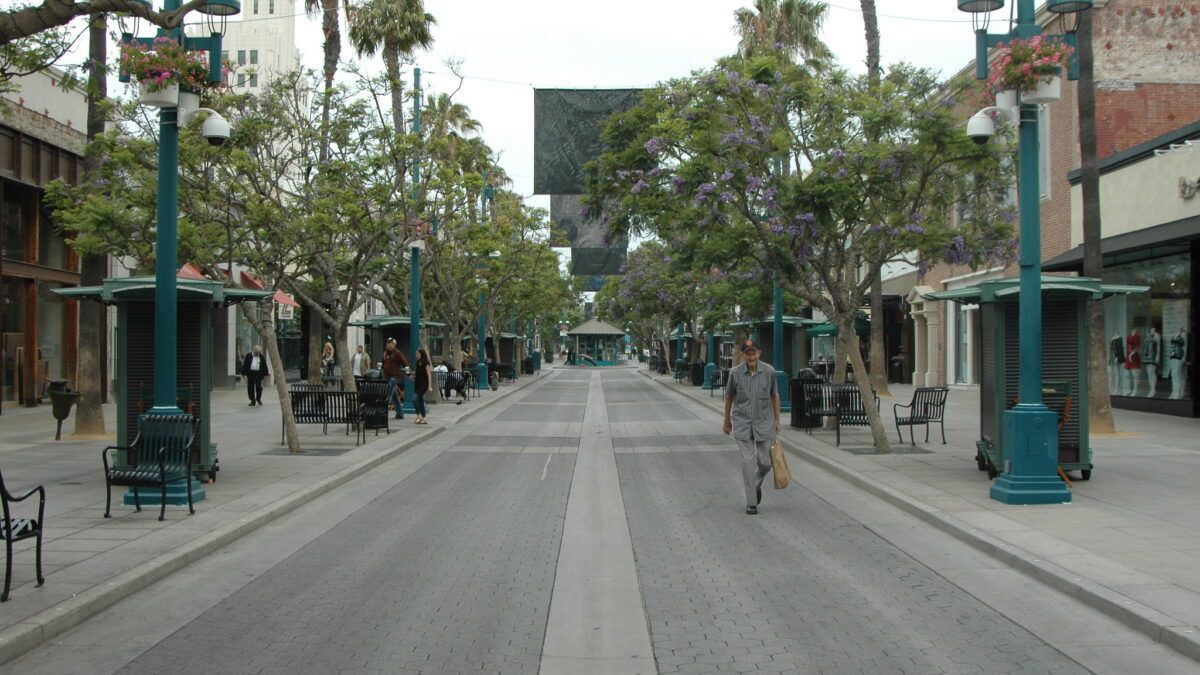
Santa Monica Investing Millions to Bring Back Shoppers

An average home in Santa Monica today sells for about $1.7 million – and double that north of Montana Avenue. Yet, the city’s prime shopping destination along Third Street is suffering high vacancy rates, with long stretches of the famed Promenade sitting empty.


Of course, a national shift to online shopping has caused changes in the retail landscape nationwide, and movie theaters are struggling as viewers watch movies at home. Then the robots came for food delivery, and apparently, that translates into substantial numbers of people never leaving the house...
The main entrance of the NuHAA building, featuring a modern glass and stone facade, at sunset.

CVS plans 20 pharmacy-only stores in shift toward expansion

CVS Health Corp. said it plans to open “nearly 20” pharmacy-only locations in 2026 after the second such outlet opened this week in Chicago.

The openings are among the 60-plus new stores that CVS has planned for this year, as the company said it has optimized its footprint following nearly 1,000 store closures during the last three years...

A modern two-story commercial office building with a stone-accented entrance at dusk, seen from a paved parking lot.

Powell says Fed can 'wait and see' how war affects inflation


CAMBRIDGE, Massachusetts, March 30 (Reuters) - Federal Reserve Chair Jerome Powell on Monday said the U.S. central ​bank can wait to see how the Iran war affects the economy and inflation, noting that policymakers typically look through shocks such as those from higher oil prices.

"We ‌feel like our policy's in a good place for us to wait and see how that turns out," Powell said during a question-and-answer session held as part of a macroeconomics class at Harvard University...

A green Publix Food & Pharmacy sign mounted on a white and beige building exterior against a blue sky.

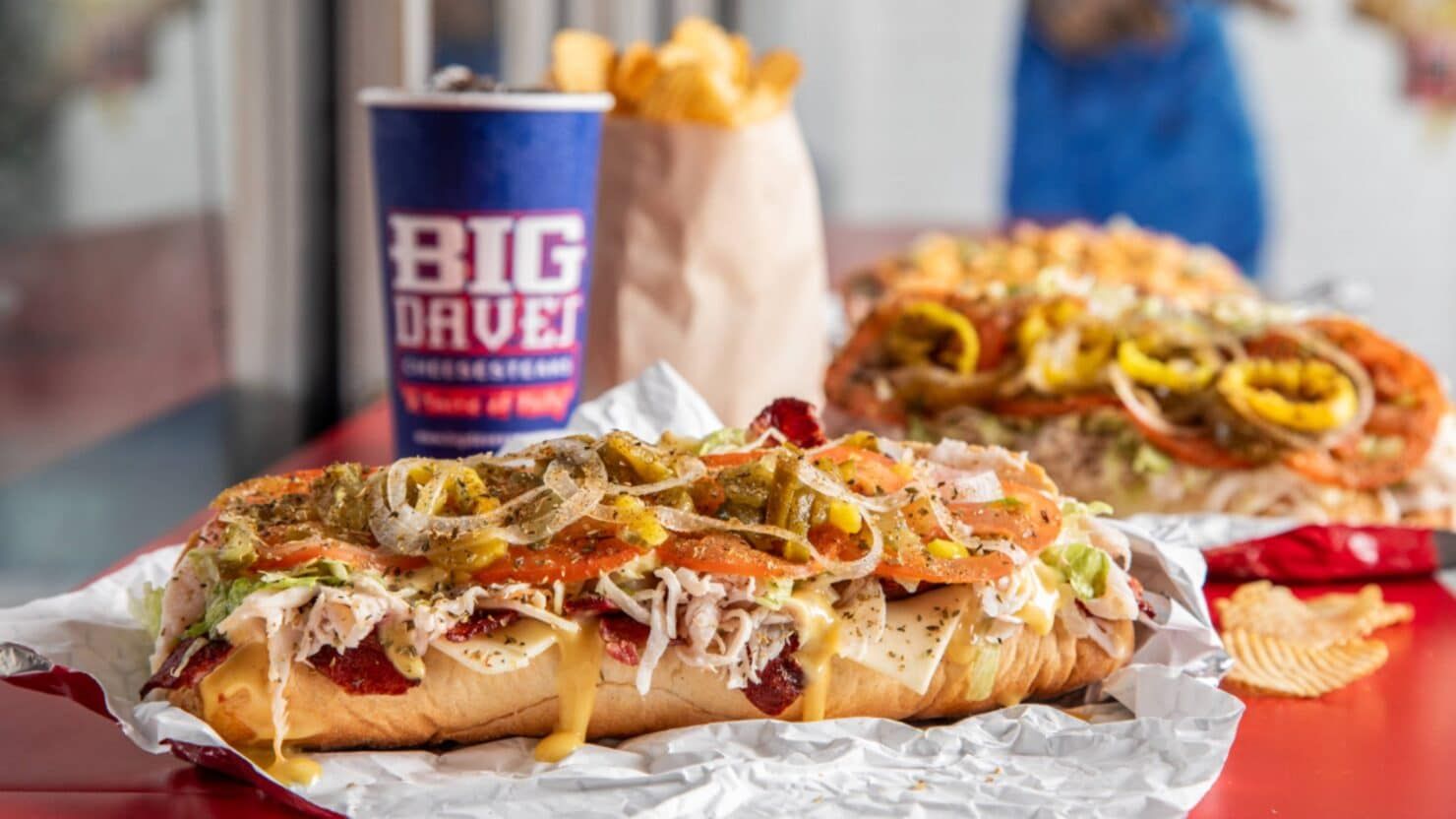
Introducing the Fast Casual FutureMakers: Big Dave’s Cheesesteaks

Fast casual has always been a category defined by evolution.


Built on the promise of quality, speed, and accessibility, it continues to adapt as operators face new pressures.


The Fast Casual FutureMakers is a new annual report from QSR magazine designed to spotlight brands and founders building what comes next. In its inaugural year, the report recognizes leaders who are driving meaningful progress across the category...
Two bundt cakes on small plates: one with chocolate drizzle, one with caramel drizzle, with cinnamon sticks nearby.

Footwear brand Allbirds to be acquired by American Exchange Group

Allbirds is getting a new owner.


The sustainable footwear brand, which launched online in 2014, is being acquired by American Exchange Group. According to the deal, American Exchange Group will acquire all of Allbirds’ intellectual property and other assets and liabilities for an estimated $39 million.


The deal is expected to close in the second quarter of 2026, and a distribution to stockholders of net proceeds -- as well as a winding-down of the public business -- will be complete in the third quarter of 2026...

Interior of a casual restaurant featuring blue chairs, red accents, brick walls, and a

Los Angeles posts major population losses

The most populous state in the nation has posted negative population growth once more, according to recently released estimates from the Census Bureau. Los Angeles, the state’s largest market, lost 62,454 people in 2025 on a net basis...


By Marc Perlof • October 2, 2026
The 2026 QSR® Drive-Thru Report For years, a 5% yield on the Treasury looked like a relic from another interest-rate era—where borrowers faced soaring loan rates. Now it's back, capping a six-year surge from pandemic-era lows near 0.5%. The benchmark yield crossed 5% this month for the first time since 2007, but this appears different than the eve of the Great Recession: the Fed is staring down a lose-lose situation combining high inflation and weak economic growth, a catch 22 that economists termed "stagflation" in the 1970s and long feared through the 10-year's climb upward since the pandemic...
By Marc Perlof • September 28, 2026
By Marc Perlof | @MarcRetailGuy CA #01489206 September 28, 2026 If you own retail real estate, here’s what just changed for you. Americans with Disabilities Act (ADA) risk is not just a legal issue. It can become a pricing issue, a leasing issue, a buyer confidence issue, and a closing issue. For California retail property owners, accessibility concerns can affect value because buyers, tenants, lenders, and attorneys do not only look at income. They also look at risk. If that risk is unclear, they may ask for credits, repairs, holdbacks, price reductions, or stronger lease protections. That is the real “so what” for the owner. ADA issues do not always destroy value. But unmanaged ADA risk can reduce leverage. Reduced leverage can reduce value. Why ADA Risk Becomes a Value Issue Retail property value is usually based on income, lease quality, tenant strength, location, condition, and risk. ADA risk fits into several of those categories. If a property has unresolved accessibility issues, the buyer may not know the true cost. The issue may be small. It may be large. It may involve the tenant. It may involve common areas. It may require permits. It may delay leasing. It may create future claims. When buyers do not know the answer, they usually protect themselves. That protection may come in the form of a lower offer, a repair credit, a price reduction, an escrow holdback, a longer due diligence period, or stronger seller representations. That is how ADA risk moves from a legal issue to a value issue. The cost of the repair may be one number. The buyer’s fear may be a much larger number. How Buyer Uncertainty Can Reduce Price Buyers do not like unknown problems. A buyer may accept a known issue if the cost is clear and the path forward is reasonable. For example, if an accessibility repair is estimated at $20,000, the buyer and seller can discuss that number directly. But if the buyer sees unresolved ADA concerns with no report, no plan, no cost estimate, and no explanation, the buyer may assume the issue is worse. That can hurt the seller. A $20,000 issue can become a $75,000 pricing discussion if the buyer believes there may be hidden risk, future claims, tenant disputes, or closing delays. This does not mean every buyer is right. It means uncertainty gives the buyer leverage. The seller’s job is to reduce uncertainty before the buyer uses it. How ADA Risk Can Affect NOI ADA risk can affect NOI when it changes the economics of a lease or ownership decision. If a tenant requests landlord work, more tenant improvement money, free rent, rent reduction, delayed rent commencement, or repair obligations because of accessibility concerns, the financial impact may show up in the income stream. Lower income can mean lower value. For example, if an owner gives extra free rent or absorbs improvement costs to address accessibility issues, that cost may not appear as a simple repair line item. It may show up as reduced NOI, lower effective rent, or weaker lease economics. That matters because buyers underwrite actual income, future income, and risk. An ADA issue that affects lease terms can affect value even if there is no lawsuit. How ADA Risk Can Affect Leasing ADA risk can also affect tenant negotiations. Restaurants, medical tenants, dental tenants, franchise operators, service tenants, fitness users, coffee shops, and other public facing tenants may care about access before they open. They may review parking, paths of travel, entrances, restrooms, counters, seating areas, signage, and common areas. If the tenant sees a problem, the tenant may ask the landlord to solve it before rent starts. That may lead to landlord work, more TI money, free rent, lease contingencies, delayed opening, or stronger tenant protections. This does not mean the owner should reject the tenant. It means the owner should understand the issue before negotiating. When the owner understands the risk, the owner can decide what is reasonable, what is the tenant’s responsibility, what belongs to the landlord, and what should be addressed in the lease. When the owner does not understand the risk, the tenant may control the conversation. How ADA Risk Can Affect a Sale ADA risk can show up quickly during a sale. A buyer may review leases, property condition, prior claims, CASp reports, settlement history, repair records, tenant complaints, and disclosure materials. If the buyer sees an unresolved issue, the buyer may pause. That pause can become expensive. The buyer may ask for more due diligence time. The lender may ask questions. The buyer’s attorney may request more documents. The buyer may ask for a price credit or holdback. The seller may lose momentum. This is why sellers should not wait until escrow to understand obvious accessibility issues. If an owner plans to sell, the owner should evaluate the property early enough to understand what may come up. The owner does not need to promise perfection. But the owner should know the facts. A seller with facts has more control. A seller without facts gets negotiated against. How Disclosure and Documentation Matter Documentation matters because buyers want to know what happened, what was corrected, and what remains. If there was an ADA claim, settlement, CASp report, or repair plan, the owner should speak with counsel about what should be disclosed and how it should be presented. This is not something owners should handle casually. Poor communication can create more problems. Overstating compliance can create risk. Hiding known issues can create risk. Sharing reports without context can create risk. The better approach is controlled disclosure with proper legal guidance. The owner should understand the facts, the lease responsibilities, the completed repairs, the remaining issues, and the plan before responding to buyers, tenants, lenders, or attorneys. What Retail Property Owners Should Do Before Selling or Leasing Retail owners should prepare before the issue becomes leverage. Review the customer facing parts of the property. Parking, access aisles, signage, entrances, paths of travel, restrooms, counters, and common areas are often important. Review the lease. Understand what belongs to the landlord, what belongs to the tenant, and what may be shared. Consider whether a CASp review or accessibility review makes sense before a sale, refinance, major lease negotiation, or tenant turnover. Speak with an ADA attorney before ordering reports, making written statements, sharing information, or starting repairs. Create a plan. The plan may include repairs, budgeting, tenant coordination, lease language, disclosure strategy, or timing decisions. The goal is not to eliminate every possible risk. The goal is to reduce surprises and protect leverage. Common Questions Retail Owners Ask Can ADA issues lower the value of a retail property? Yes. ADA issues can lower value if they create repair costs, buyer uncertainty, tenant demands, sale delays, credits, or price reductions. Is the repair cost the only value impact? No. The bigger impact may come from uncertainty, lost leverage, weaker lease economics, or buyer fear. Should owners fix every issue before selling? Not always. Owners should get legal and accessibility guidance, understand the cost, and decide whether to repair, disclose, budget, or negotiate around the issue. Final Thought ADA risk affects value when it creates uncertainty. For retail property owners, the issue is not only whether the property has accessibility concerns. The issue is whether the owner understands them before a tenant, buyer, lender, plaintiff, or attorney uses them as leverage. Known risk can be managed. Unknown risk usually gets priced against the owner. That is why ADA risk should be part of an owner’s leasing, sale, and value strategy. If the owner understands the issue early, the owner can plan, budget, negotiate, disclose, repair, or price the risk with more control. If the owner waits, someone else may control the conversation. If you are planning to sell, lease, refinance, or deal with an ADA issue, review it before it becomes leverage against you. This concludes the ADA Risk and Retail Property Value series. Based in Los Angeles. Serving Southern California. Active across California. Advising clients nationwide. #RetailRealEstate #CommercialRealEstate #CaliforniaRealEstate #RetailPropertyOwners #ADACompliance #CASp #PropertyValue #CommercialProperty #MarcRetailGuy
By Marc Perlof • September 25, 2026
The 10-year Treasury yield just hit 5% for the first time since 2007 — is a 1970s-style ‘stagflation’ on the return? For years, a 5% yield on the Treasury looked like a relic from another interest-rate era—where borrowers faced soaring loan rates. Now it's back, capping a six-year surge from pandemic-era lows near 0.5%. The benchmark yield crossed 5% this month for the first time since 2007, but this appears different than the eve of the Great Recession: the Fed is staring down a lose-lose situation combining high inflation and weak economic growth, a catch 22 that economists termed "stagflation" in the 1970s and long feared through the 10-year's climb upward since the pandemic...
More Posts